
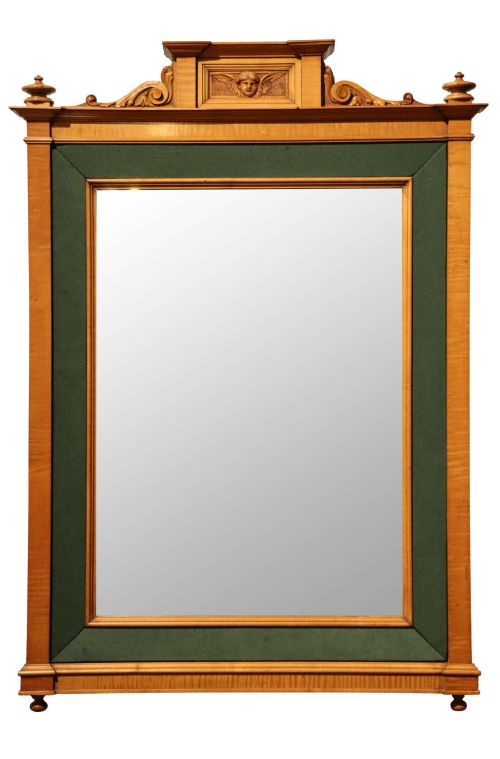
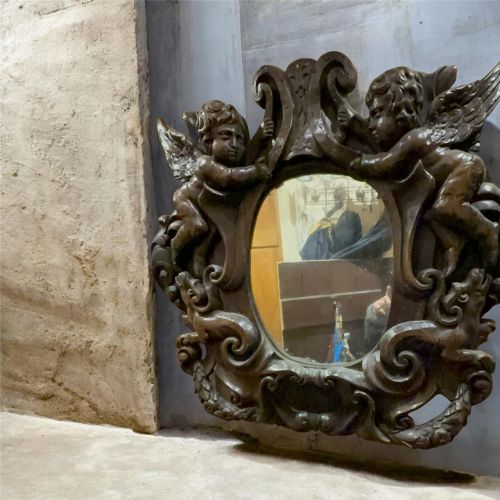


Cherub Carved Mirror
A cherub carved mirror brings sculptural figures and reflective depth to a room, drawing the eye with detailed woodwork and gilt finishes.
Cherub Carved Mirror
When searching for a cherub carved mirror, buyers encounter wall hanging and overmantel formats featuring carved wooden figures, putti, and winged cherubs. These pieces emerge primarily from the nineteenth and eighteenth centuries, reflecting historical European design movements.
The selections available range from Italian and French regional works to ornate Victorian interpretations. Overmantel mirrors and tall decorative formats dominate the selection, often incorporating architectural pediments or crestings alongside the figural carvings.
Stylistic influences span Rococo Revival, Baroque, and Louis XVI, showing how makers integrated classical motifs into domestic interiors. Oak, walnut, and fruitwood provide the structural timber for these carved forms.
How they were made
Makers shaped the frames from solid timbers such as oak, walnut, and fruitwood, executing hand-carved details directly into the wood. Intricate relief work and sculptural cherubs required skilled joinery and deep chisel technique.
Gesso and gold leaf applications frequently finish the wooden frames, building up relief surfaces before gilding. Artisans applied thin layers of metal leaf over prepared grounds to achieve luminous metallic sheens.
Cherub Carved Mirror Retail Price Guide 2026
Typical asking prices for cherub carved mirror among the pieces listed under this phrase on Sellingantiques today, from the lower quarter to the upper quarter. They describe what is for sale here now, not the wider market.
Listings feature eighteenth and nineteenth-century pieces utilising giltwood, gesso, carved oak, and walnut in French and Italian styles.
What varies in quality
The integrity of the original gesso and giltwood surface determines visual consistency across the frame. Gradations in quality depend on how cleanly the original gilding and painted details survive on the wood.
Sir Willian Trotter
The Cherub Carved Mirror Glossary
- Putto
- A representation of a bare-skinned child, frequently winged, appearing often in Renaissance and later decorative art. These figures form the central sculptural focus of cherub mirrors.
- Gesso
- A plaster-like mixture applied to wooden frames as a smooth base for subsequent gilding or painting. It allows artisans to shape sharp decorative details before applying gold leaf.
- Giltwood
- Timber coated with gold leaf or metallic powder over a prepared surface. This treatment creates a brilliant reflective finish characteristic of formal period mirrors.
- Overmantel mirror
- A large mirror designed specifically to hang above a fireplace mantel. These pieces often feature wide proportions and decorative cresting.
- Pediment
- The triangular or decorative architectural crown above the main mirror frame. It provides a formal termination to the top of large wall mirrors.
Cherub Carved Mirror: Frequently Asked Questions
Where should I hang a cherub carved mirror?
These mirrors suit principal reception rooms, hallways, or above fireplaces where their reflective glass and sculptural frames command attention. Their substantial scale makes them effective focal points on large expanses of wall.
Pairing them with period furniture enhances their decorative context within a room scheme.
How do I identify the period of a mirror?
Dating relies on examining the timber construction, the formulation of the gesso, and stylistic markers such as Rococo curves or Louis XVI symmetry. Regional carving techniques also point toward specific European origins.
Comparing the backing boards and glass characteristics helps confirm the age of the piece.
What is the difference between putti and cherubs?
Putti represent secular mythological figures akin to cupids, whereas cherubs carry celestial associations in traditional iconography. In antique mirror descriptions, the terms often describe similar winged child motifs.
Both versions appear frequently as carved wooden crestings on nineteenth-century frames.
Are these mirrors heavy to hang?
Solid wood construction combined with gesso and glass creates considerable weight that requires secure wall fixings. Professional installation into masonry or wall studs ensures proper support for large overmantel formats.
Checking the stability of the frame joints before hanging remains essential.