


Blonde Wood Vanity Mirror
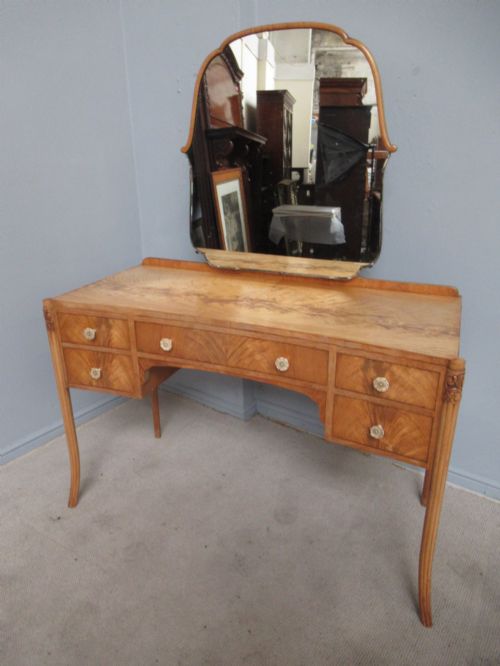
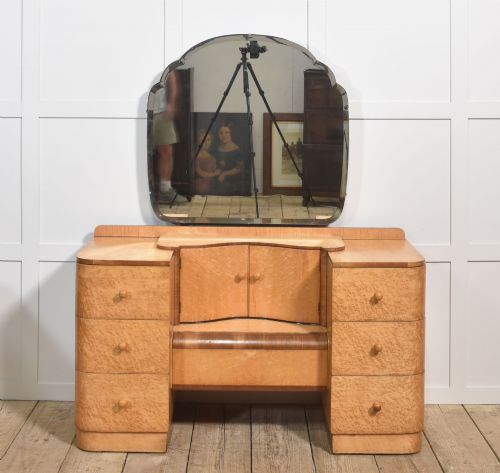
A blonde wood vanity mirror offers a warm, pale reflection of historical design, bringing light and natural grain to a dressing space.
Blonde Wood Vanity Mirror
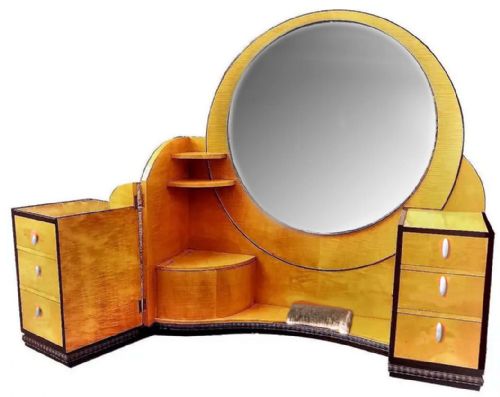
The selection on this page leans heavily toward Art Deco dressing tables featuring integral mirrors, alongside Georgian and nineteenth-century mirrors in maple, birch, and satinwood. These forms showcase the natural figure of the wood rather than dark stains.
How these pieces were made
Cabinetmakers utilised timbers such as maple, birch, satinwood, and pale mahogany to build these dressing pieces, often selecting veneers with distinct bird's-eye patterns. These light woods were paired with clear mirror glass to achieve a cohesive, luminous appearance.
Construction techniques combined traditional cabinet joinery with the sleek geometric lines characteristic of the Art Deco and Swedish Grace periods. Surface finishes were kept clear to highlight the natural grain and colour of the blonde wood.
Bird's-eye maple gets its charming spots from tiny tree stresses that twisted the wood fibres into little dots.
What varies in quality
Quality in these blonde wood pieces lies in the selection of timber veneers and the precision of the cabinetwork. Fine examples display carefully matched grain patterns across large surfaces, particularly on Art Deco dressing tables.
The integration of the mirror frame with the base structure distinguishes standard pieces from finer works. Superior construction shows balanced proportions and clean lines that respect the natural properties of the light wood.
Harry and Lou Epstein·John Taylor of Edinburgh·Betty Joel
The Blonde Wood Vanity Mirror Glossary
- Birdseye Maple
- A figured timber showing small, swirling dots that resemble tiny eyes across the pale wood surface. This grain pattern occurs naturally and is prized in decorative cabinetmaking.
- Art Deco
- A design style from the early twentieth century characterised by streamlined geometric forms and modern materials. Pieces from this period often feature bold shapes and polished pale veneers.
- Swedish Grace
- A refined neoclassical style popular in Sweden during the 1920s that bridges traditional craftsmanship and early modernism. It favours understated elegance and light-toned woods.
- Satinwood
- A durable, yellowish timber with a natural sheen that resembles satin. It takes a high polish and appears in fine eighteenth and nineteenth-century furniture.
- Dressing Table
- A low table fitted with one or more mirrors and drawers for cosmetics and grooming items. They serve as functional centrepieces in bedrooms.
Blonde Wood Vanity Mirror: Frequently Asked Questions
What is a blonde wood vanity mirror?
A blonde wood vanity mirror refers to dressing tables and standalone mirrors constructed from light-coloured timbers like maple, birch, and satinwood. These items provide a bright, reflective surface combined with functional storage or support.
Buyers typically find these pieces dating from the Georgian era through to the 1930s. They suit interiors that benefit from pale, natural wood grains.
How do I identify Art Deco vanity pieces?
Art Deco vanity pieces display symmetrical geometric shapes, stepped outlines, and unadorned surfaces that emphasise the natural pattern of pale veneers like maple. They often feature large circular or rectangular mirrors attached directly to the dressing table base.
These designs emerged during the 1920s and 1930s, shifting away from heavy Victorian ornamentation in favour of sleek, modern silhouettes.
Where were these dressing tables used?
These dressing tables were placed in bedrooms and dressing rooms as dedicated spaces for personal grooming. Their integrated mirrors and surface areas held grooming implements and personal items.
Today, they function similarly in modern bedrooms, bringing historical craftsmanship and light timber tones into contemporary living spaces.
How do I care for antique blonde wood?
Antique blonde wood benefits from dusting with a soft, dry cloth and protection from direct sunlight to prevent the pale timber from darkening or fading. Maintaining stable room humidity protects the wood veneers from lifting.
Avoid using harsh chemical polishes, as traditional wax or gentle cleaners preserve the historic finish and natural grain of the light wood.