

Antique Table Mirror with Drawers
These antique table mirrors with drawers bring practical surface storage and adjustable reflection together on a dressing chest, and you want one for the sheer proportion and warmth of the timber.
Antique Table Mirror with Drawers
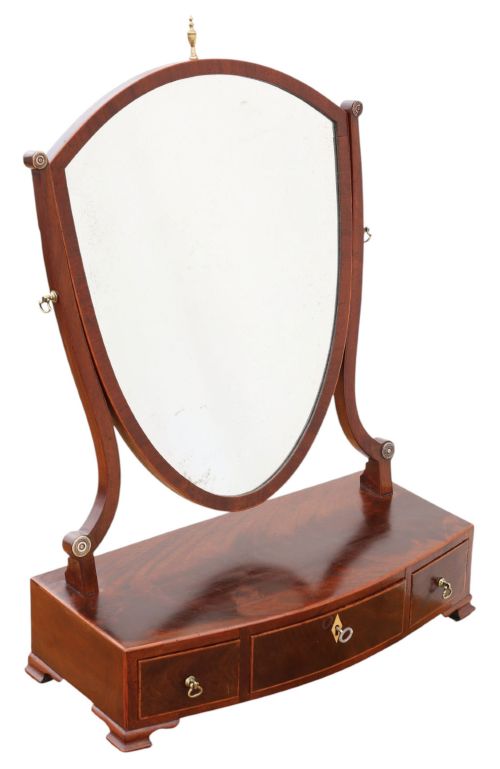
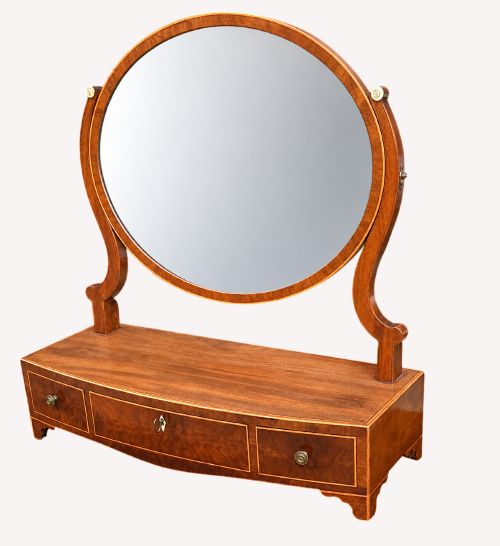
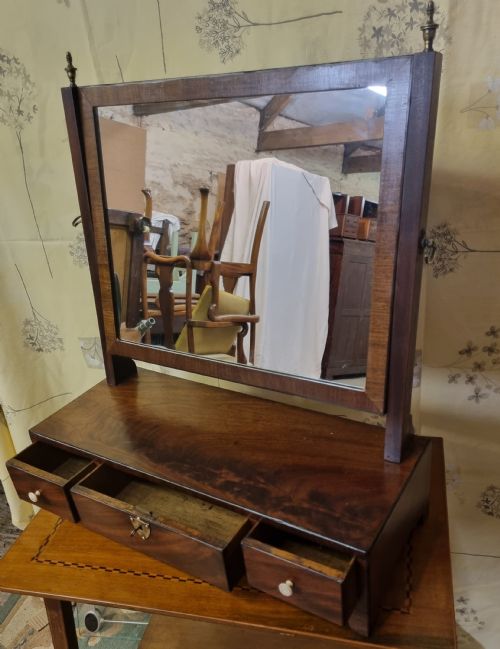
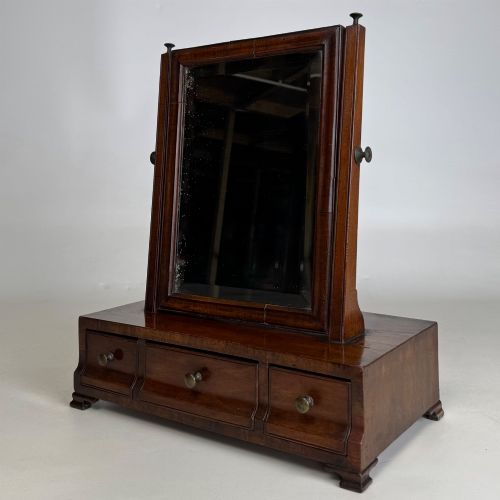
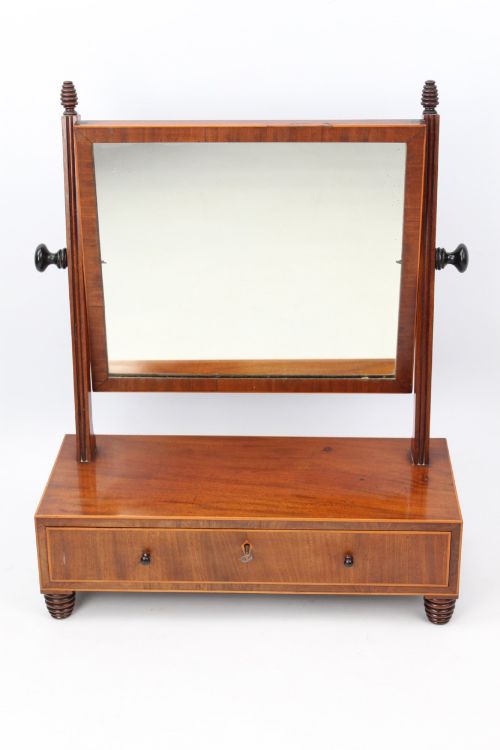
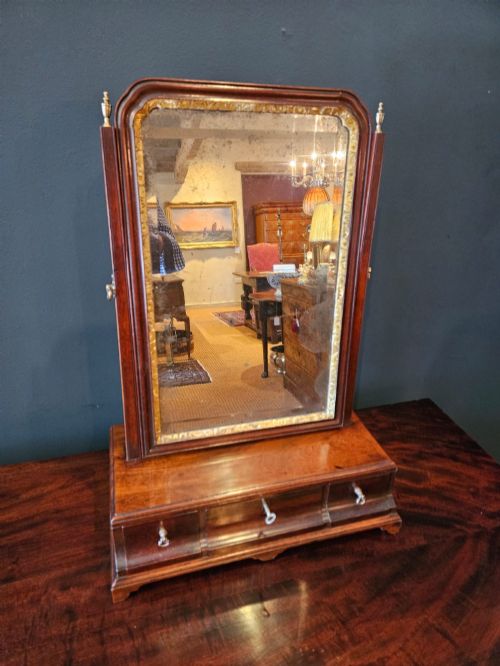
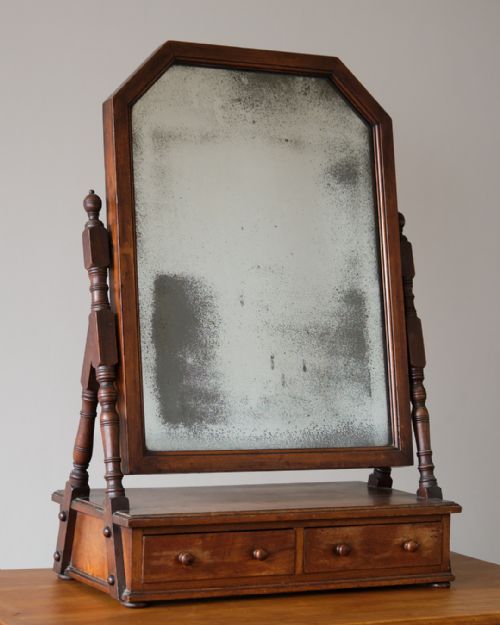
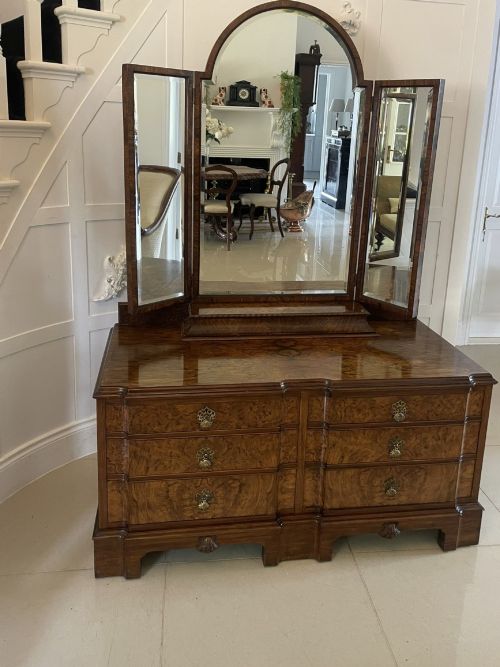
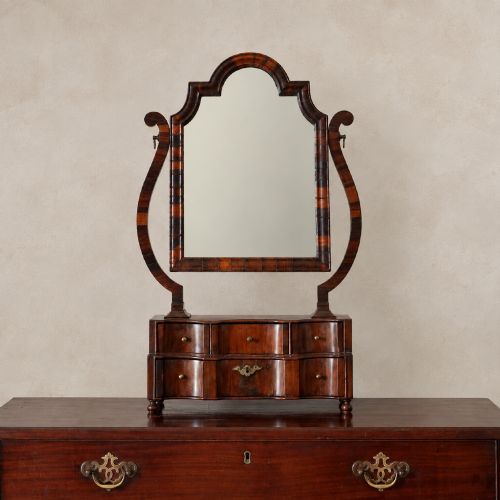
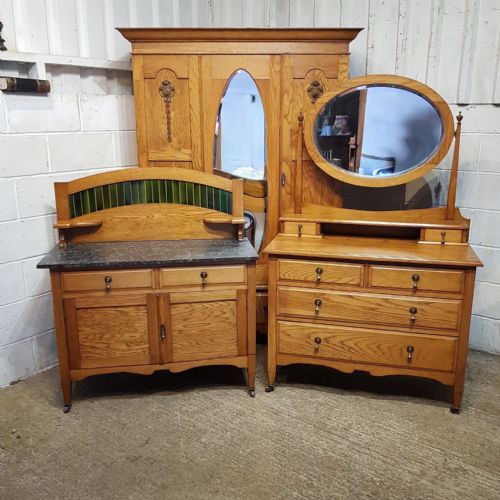
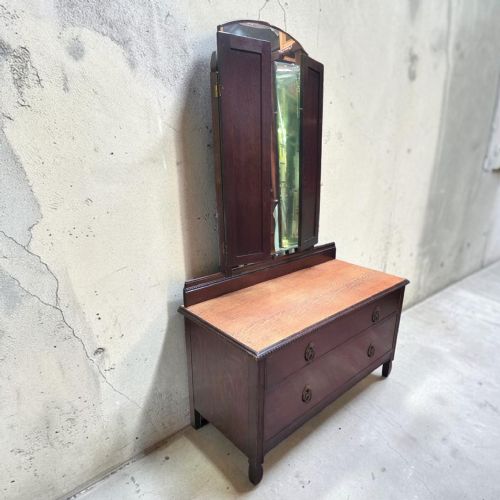
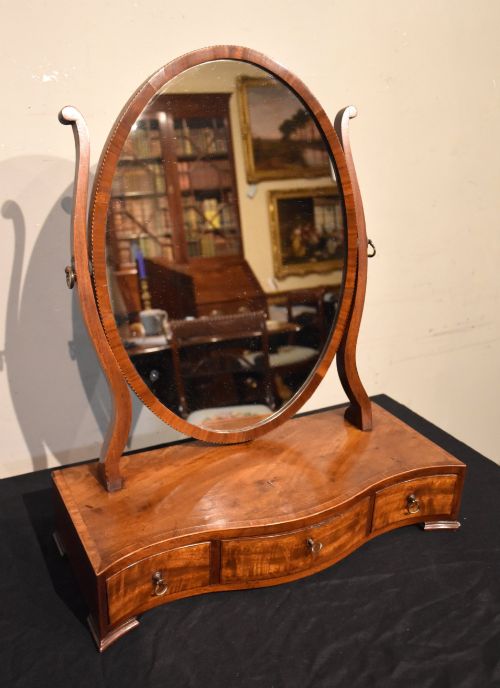
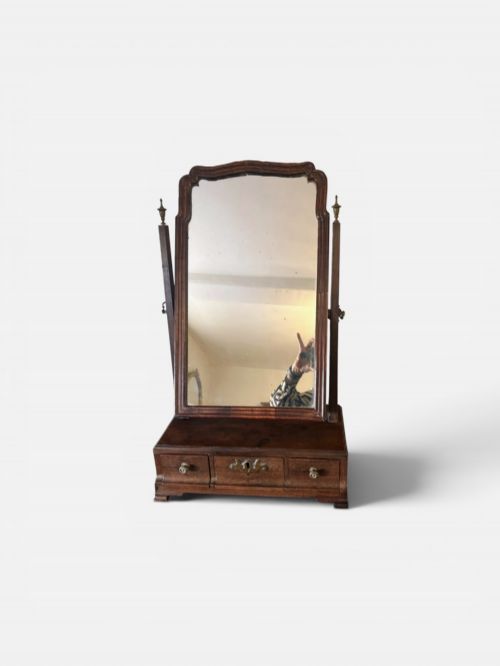
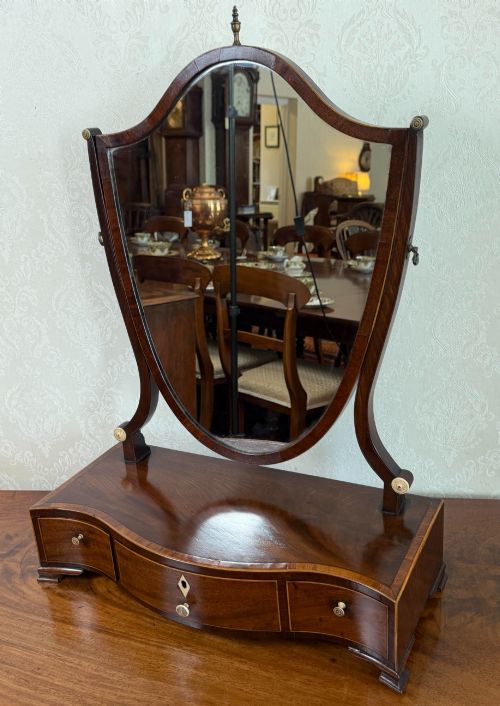
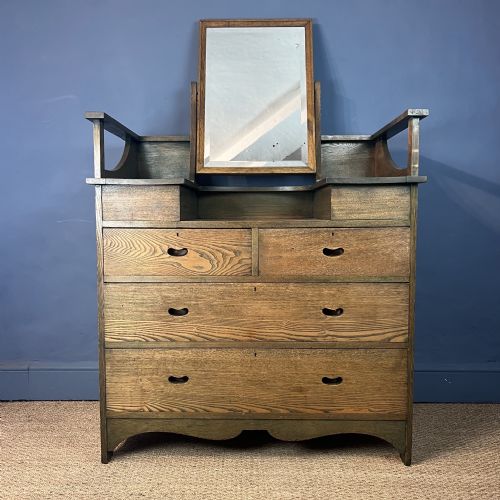
An antique table mirror with drawers sits upon a chest, base or bureau to provide a personal reflection while housing small trinkets or cosmetics in integrated compartments. The most frequent versions you encounter here are upright or swing mirrors framed in mahogany, walnut or oak, supported by upright arms above a small plinth fitted with one, two or three drawers.
The form developed through the eighteenth and nineteenth centuries, moving from simple Georgian and Regency toilet mirrors into elaborate Victorian and Edwardian iterations. You will find shield-shaped, oval and rectangular glass plates, often pivoting on brass screws between shaped uprights, perched directly over serpentine or straight drawer boxes.
How they were made
Cabinetmakers built these pieces using solid and veneered hardwoods such as mahogany, walnut and oak, occasionally incorporating secondary woods like pine or bone escutcheons. The drawer boxes rely on traditional hand-cut dovetails, while the mirror plates are held within rebated frames secured by pegged joints or small pins.
Surfaces received hand-applied finishes, ranging from polished French polish to wax over figured veneers, sometimes embellished with marquetry inlay or satinwood stringing. The glass itself rests within a hinged or fixed surround, connected to the base by turned or shaped wooden arms fitted with brass adjustment screws.
Several models hide tiny secret compartments beneath the lowest drawer floor for storing coins and letters.
What varies in quality
The distinction between a standard piece and a superior one lies in the selection of the timber and the crispness of the joinery. Finer examples display carefully matched flame mahogany or burr walnut veneers across the drawer fronts, paired with hand-cut dovetails and well-proportioned ogee bracket feet.
Hardware and glass retention also dictate the grade of the object. Top-tier pieces retain original mercury glass plates with minimal foxing, coupled with substantial brass finials, escutcheons and swing arms that hold the mirror steady at any chosen angle.
George Walton·Wright & Hunter of Belfast·Maple & Co.
The Antique Table Mirror with Drawers Glossary
- Toilet mirror
- A portable dressing mirror designed to stand on a table or chest, typically incorporating small drawers in the base.
- Shield mirror
- A dressing glass cut into the shape of a heraldic shield, popular during the Georgian period.
- Swing mirror
- A glass plate hung on pivots between two upright posts, allowing the user to tilt the angle of reflection.
- Serpentine
- A curved line of furniture fronts or drawer boxes that undulates outward in the centre and inward at the sides.
- Dovetail
- A joint formed by interlocking wedge-shaped fingers, used to join drawer corners with high tensile strength.
Antique Table Mirror with Drawers: Frequently Asked Questions
What is an antique table mirror with drawers?
An antique table mirror with drawers is a tabletop dressing glass mounted on a small base containing one or more storage compartments. These pieces were designed to sit on top of a larger chest of drawers or dressing table for personal grooming.
They combine a pivoting mirror plate with a diminutive chest, allowing users to store small valuables and cosmetics close at hand. The form evolved through the Georgian, Regency and Victorian eras, reflecting the prevailing cabinet styles of each period.
How do I date a Georgian mirror?
Dating a Georgian example involves examining the construction of the drawer boxes, the timber species, and the edge profile of the mirror glass. Earlier pieces from the mid-eighteenth century often feature finely figured mahogany, slender ogee feet, and hand-beveled glass plates.
Later nineteenth-century interpretations tend to have heavier proportions, machine-sawn internal components, and different veneer grain patterns. Checking the secondary woods inside the drawers also helps confirm the manufacturing era.
Were these mirrors made separately from chests?
Yes, these mirrors were constructed as independent portable units designed to rest unsecured upon a dressing chest or table. This allowed them to be moved or placed on any flat surface according to the light in the room.
While they were frequently paired with matching dressing chests of the same period, they were manufactured as distinct items of case furniture. The base often matches the construction methods of larger chests from the same workshop.
How do I care for the mirror glass?
Maintaining the glass requires gentle cleaning with a soft, dry cloth and avoiding harsh chemical sprays that might seep behind the plate. Many older mirrors feature original silvering or mercury backing that can be delicate.
Keeping the piece away from direct sunlight and excessive humidity prevents the wooden frame from warping and protects the historical finish of the timber and the integrity of the antique glass.