
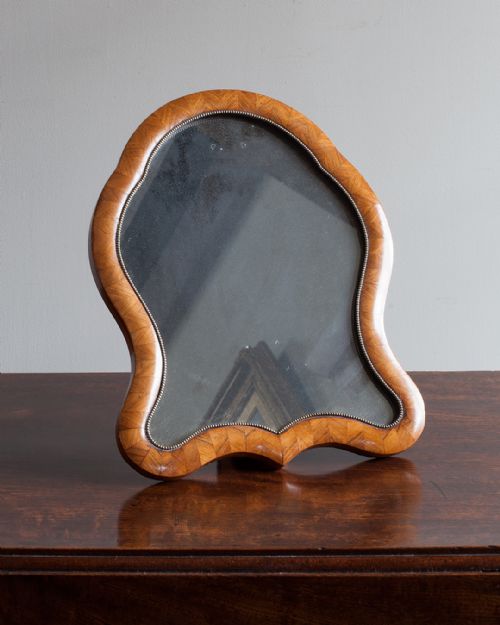


Marquetry Dressing Table Mirror
A marquetry dressing table mirror brings rich inlaid wood and functional pivoting glass straight to the bedroom.
Marquetry Dressing Table Mirror
A marquetry dressing table mirror combines a tilting glass plate with a decorative wooden base or frame adorned with intricate veneers. These pieces range from compact tabletop swing glasses to larger cheval and toilet mirrors designed for historical dressing furniture.
The selections here frequently showcase Dutch marquetry alongside Georgian, Victorian and Edwardian examples. Buyers will regularly encounter walnut, mahogany, satinwood and rosewood structures decorated with floral or pictorial inlay.
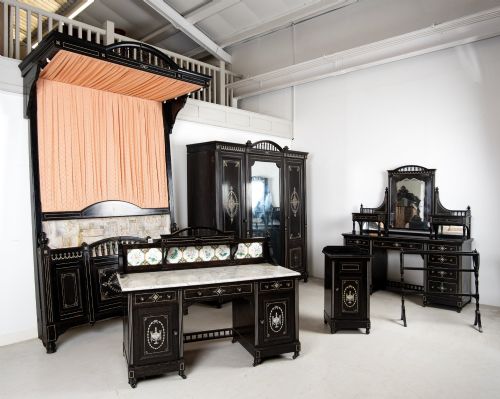
Beyond standalone mirror frames, the inventory also encompasses related bedroom pieces including dressing tables, full bedroom suites and work tables featuring matching inlaid surfaces.
How they were made
Cabinetmakers cut contrasting pieces of fine timber veneer by hand, assembling floral and geometric patterns before pressing them onto a solid wood carcass such as mahogany, walnut or oak. The resulting surfaces rely on natural wood tones rather than paint to create depth and contrast.
Mirror glass plates were bevelled or cast before being fitted into adjustable swinging frames supported by upright arms and secured with brass hardware.
Listings feature woods including satinwood, kingwood, rosewood, walnut and mahogany across the 18th, 19th and early 20th centuries.
What varies in quality
The precision and complexity of the veneer work set finer examples apart from simpler productions, with tighter joints and more intricate floral motifs indicating greater skill. The choice of timbers, such as figured satinwood or kingwood versus standard mahogany, also shifts the standard of the piece.
Originality of the glass plate and hardware adds to the integrity of a mirror, alongside the structural balance of the swing mechanism and the stability of the supporting frame.
Edwards & Roberts·Gillows·B Cohen & Sons
The Marquetry Dressing Table Mirror Glossary
- Marquetry
- A decorative technique where small pieces of coloured wood veneer are fitted together to form pictorial or geometric designs on a wooden base. It differs from inlay by covering the entire surface of the carcass.
- Swing mirror
- A glass plate mounted on vertical pivots within a frame that tilts forward and backward. This allows the user to adjust the angle for personal grooming.
- Toilet mirror
- A historical term for a tabletop dressing mirror designed to sit on a chest of drawers or a dedicated dressing table. They often feature small drawers within the base for storage.
- Satinwood
- A durable hardwood with a natural golden sheen and smooth grain, frequently utilised for fine veneers during the Georgian and Victorian periods. Its bright appearance made it popular for delicate inlay work.
- Cheval glass
- A tall, free-standing mirror mounted in a frame that allows the entire reflection of the user to be seen. These large pieces often incorporate sophisticated pivoting mechanisms.
Marquetry Dressing Table Mirror: Frequently Asked Questions
How do I date a marquetry mirror?
Dating relies on examining the timber species, the style of the marquetry, and the construction methods used on the frame and base. Secondary woods and the type of brass fixings also offer clues to the period.
Earlier Georgian pieces often feature simpler mahogany or walnut frames with restrained inlay, while Victorian and Edwardian examples can display busier Dutch-inspired floral marquetry or exotic woods.
Are the mirror plates original?
Many older mirrors have replacement glass due to the fragility of historic silvered surfaces over centuries of use. Slight foxing or minor imperfections often indicate original or older glass.
When replacement glass has been fitted, it is typically chosen to match the thickness and bevel style appropriate to the period of the frame.
How do I place one in a modern room?
These mirrors work effectively placed on top of modern chests of drawers, sideboards, or dedicated dressing desks to add warmth and texture. Their reflective glass helps bounce natural light around a bedroom or hallway.
Ensure the surface is stable and deep enough to support the weight and footprint of the specific mirror base.
What is the difference between Dutch and English styles?
Dutch marquetry mirrors typically feature dense, elaborate floral and bird motifs executed in contrasting light and dark veneers across the entire wooden surface. English versions from the Georgian and Victorian eras tend to use inlay more sparingly as borders or central medallions.
English pieces often prioritise the rich grain of mahogany, satinwood or rosewood alongside the marquetry decoration.