


Inlaid Wood Vanity Mirror
An inlaid wood vanity mirror brings subtle pattern and warmth to a dressing space, combining practical glass with decorative craft.

Inlaid Wood Vanity Mirror
An inlaid wood vanity mirror sits on dressing tables, chests and desks, serving as a movable looking glass for personal grooming.
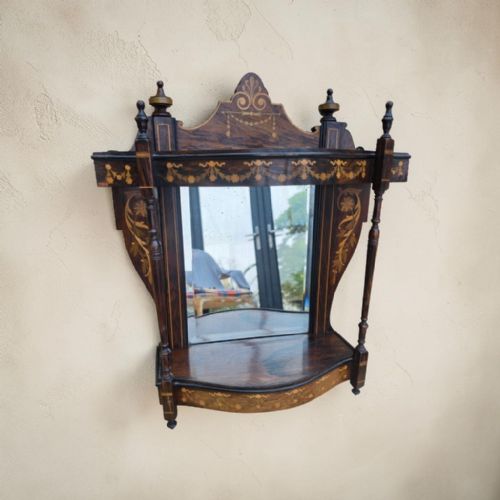
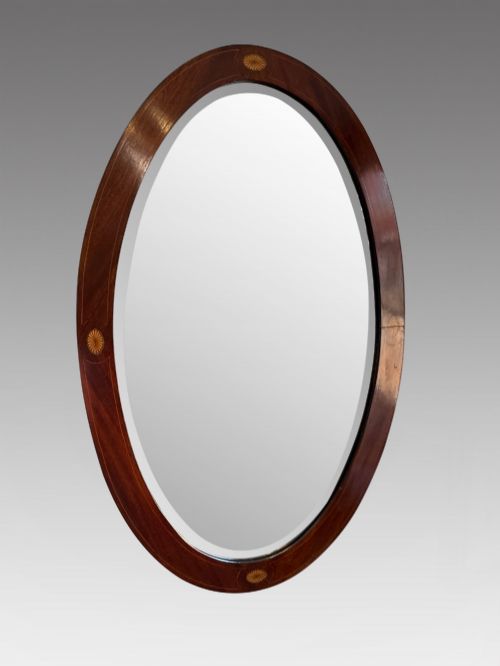
You will most frequently encounter mahogany toilet mirrors and swing mirrors featuring satinwood, boxwood or contrasting wood inlay from the nineteenth and early twentieth centuries.
The selection ranges from simple Georgian and Regency dressing mirrors to elaborate Dutch marquetry pieces and Edwardian Sheraton Revival designs.
Materials and construction
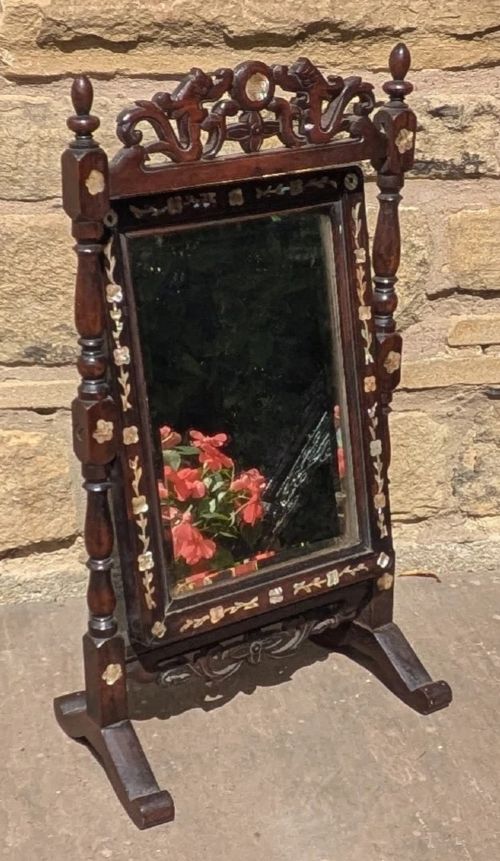
Carpenters built the frames primarily from solid timbers like mahogany, walnut and oak, often mounting swing glasses on upright pillars supported by miniature drawer bases.
Craftspeople applied decorative surface patterns using contrasting veneers such as satinwood and boxwood, alongside elaborate floral or geometric marquetry.
Some regional variations incorporate specialised techniques, including mother-of-pearl inlay in hardwood frames or intricate pierced brass work.
Listings feature woods such as mahogany, walnut, satinwood, and boxwood across periods spanning the eighteenth to the early twentieth century.
Distinguishing quality
The precision and complexity of the woodwork define the standard, from simple geometric stringing lines to elaborate pictorial Dutch marquetry scenes.
Integration of the hardware matters significantly, with superior examples utilising well-fitted brass support arms and secondary timbers of matching quality.
Edwards & Roberts
The Inlaid Wood Vanity Mirror Glossary
- Swing mirror
- A looking glass hung on pivots between two upright posts, allowing the angle of reflection to be adjusted.
- Marquetry
- The art of applying pieces of veneer to a structure to form decorative patterns and pictures.
- Toilet mirror
- A small mirror designed to sit atop a dressing table or chest of drawers.
- Stringing
- A narrow strip of contrasting wood inlaid flush into the surface of a furniture piece to create a border line.
- Sheraton Revival
- A late nineteenth and early twentieth century design style drawing inspiration from the lighter neoclassical furniture of the eighteenth century.
Inlaid Wood Vanity Mirror: Frequently Asked Questions
How do I date an inlaid mirror?
Dating relies on combining the timber choice, the style of the inlay work, and the construction methods used in the frame or base.
Earlier pieces from the Georgian and Regency periods tend to feature restrained stringing, whereas Edwardian and later nineteenth-century examples often display richer marquetry or Sheraton Revival motifs.
Can these mirrors be wall mounted?
Most pieces designed for vanity use sit on a dedicated base or dressing table, though some specific variations are built for hanging.
Check the reverse of the frame for original rings or brackets before attempting to mount a mirror intended for a table stand.
What is the difference between a toilet mirror and a dressing mirror?
In historical terms, both refer to portable looking glasses used during grooming, often fitted onto a small box or chest with tiny drawers.
Regional descriptions vary, but both terms generally describe a table-standing swing mirror rather than a full-length cheval glass.
How should I clean the wood frame?
Maintain the timber by dusting gently with a dry, soft cloth and occasionally applying a suitable wax to nourish the polished surface.
Avoid using modern liquid polishes or getting moisture near the edges of the mirror plate where it meets the frame.