

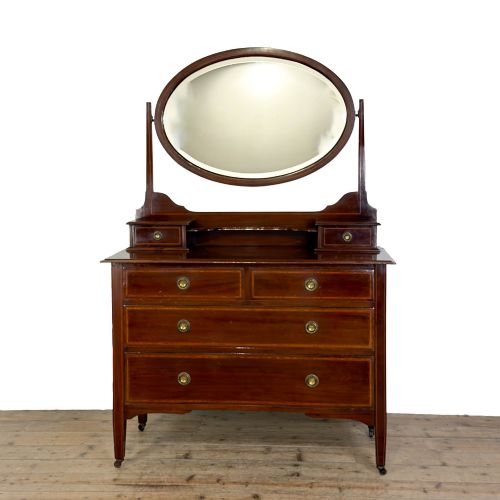


Inlaid Dressing Table Mirror
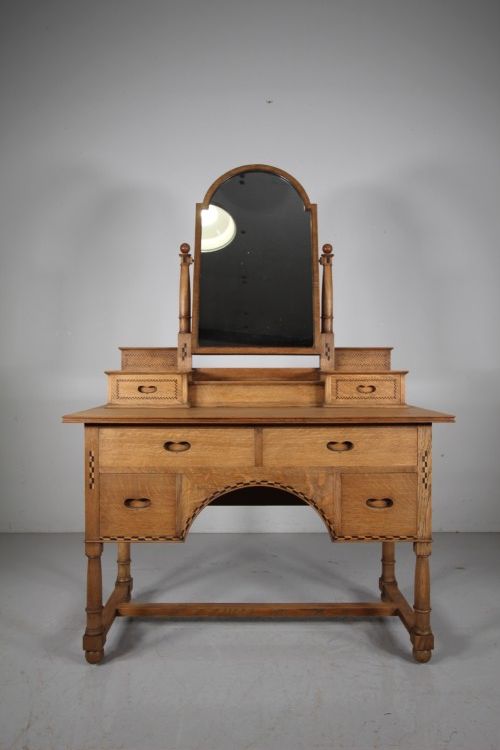
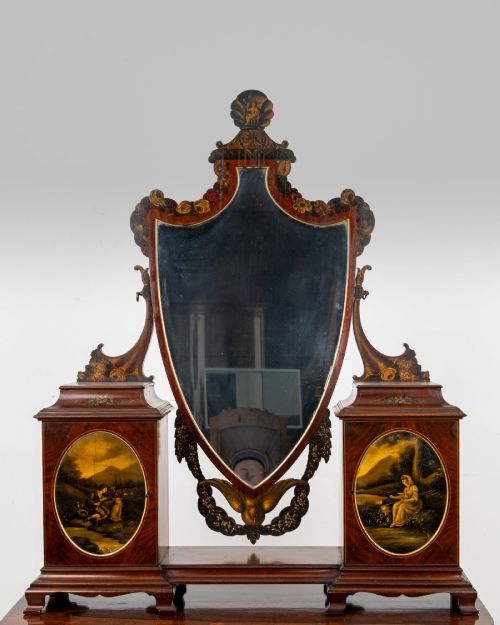
An inlaid dressing table mirror sits on a chest or counter to catch the light, bringing polished mahogany and bright stringing into a bedroom.

Inlaid Dressing Table Mirror
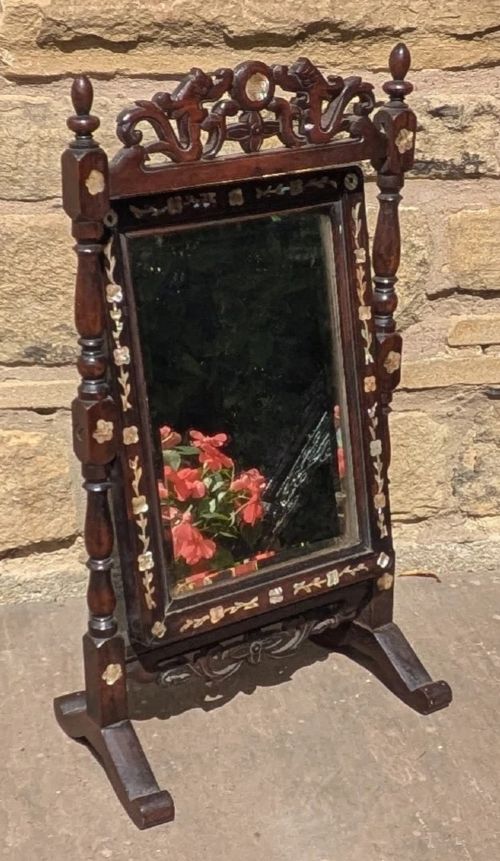
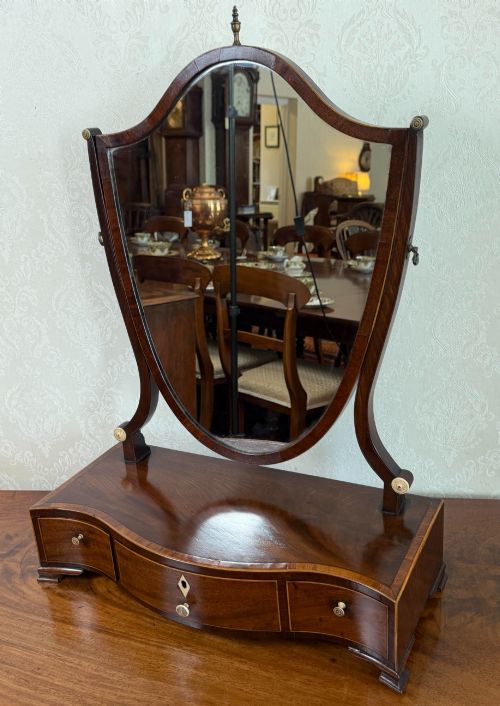
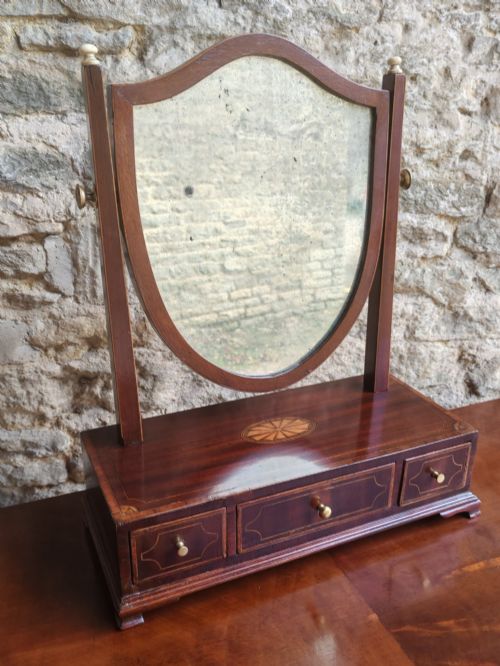
An inlaid dressing table mirror is a portable or table-standing glass panel housed in a tilting wooden frame, supported by upright arms and a small box base containing drawers. The form developed through the eighteenth and nineteenth centuries, appearing in Georgian, Victorian and Edwardian iterations across British and continental workshops.
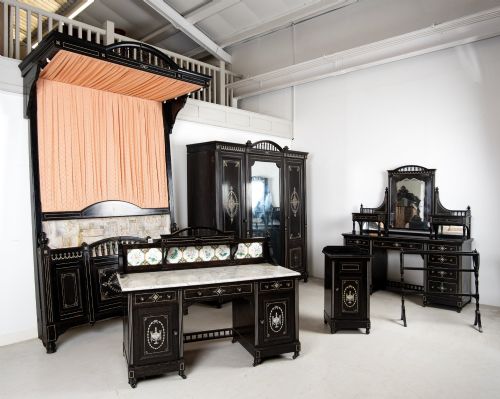
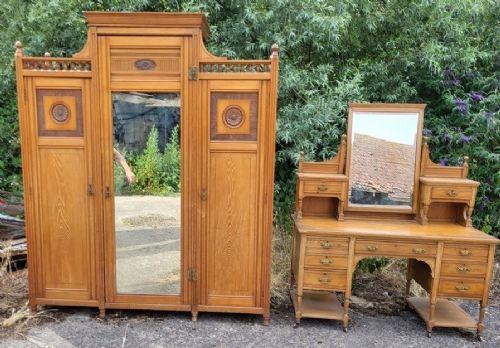
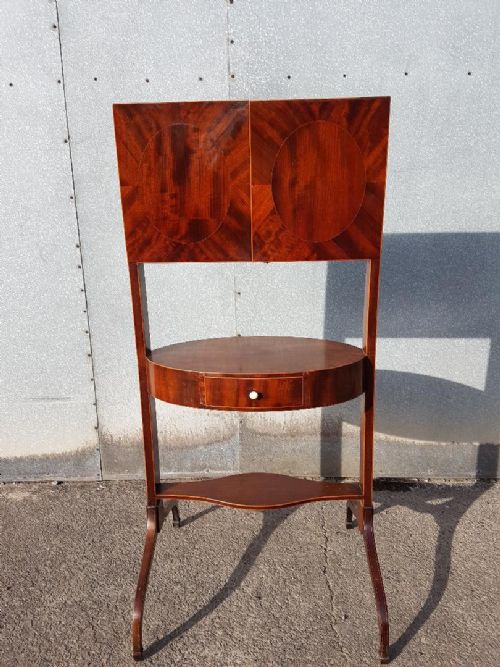
Buyers meet walnut, mahogany and satinwood examples most frequently on this page, often decorated with delicate boxwood and wood inlay. These pieces range from compact shield-shaped toilet mirrors to larger cheval glasses and swing mirrors designed for bedroom suites.
How they were made
Cabinetmakers constructed these frames primarily from mahogany, walnut and oak, applying veneers of satinwood or harewood to the primary surfaces. Wood inlay, boxwood stringing and occasional brass or bone details were meticulously let into the timber to form geometric borders and floral motifs.
The mirror glass itself, often original, is held within a pivoting swing frame secured by brass screw knobs or side pins that allow the user to adjust the angle of reflection.
Listings feature mahogany, satinwood and walnut frames enriched with boxwood inlay, spanning the Georgian, Victorian and Edwardian periods.
What varies in quality
Quality reveals itself in the crispness of the wood inlay and the choice of primary timbers, where figured mahogany and rich satinwood distinguish finer examples from plain utilitarian pieces. The proportion of the mirror frame to the supporting base, alongside the weight and finish of the brass hardware, dictates the overall elegance of the object.
Attention to detail on the concealed secondary woods of the small drawers and the fidelity of period styles, such as Sheraton Revival or Dutch marquetry, mark the distinction between standard production and exceptional workshop output.
Edwards and Roberts·Gillows·Shapland and Petter·Wright and Hunter of Belfast
The Inlaid Dressing Table Mirror Glossary
- Cheval mirror
- A full-length mirror hung in a standing frame that tilts vertically between four pillars. These large pieces allowed a complete view of attire in nineteenth-century dressing rooms.
- Marquetry
- Elaborate pictorial or geometric patterns formed by fitted veneers of various coloured woods. Craftsmen cut these decorative elements to fit precisely into a prepared background.
- Boxwood
- A dense, pale yellow timber frequently utilised for fine stringing and inlay work. Its uniform grain allows for sharp, contrasting lines against darker woods like mahogany.
- Toilet mirror
- A smaller table-standing glass designed to sit upon a chest of drawers or a dedicated dressing table. They typically feature small storage compartments or drawers in the base.
- Shield-shaped
- A mirror plate cut into the contour of a heraldic shield, popular during the eighteenth century. This silhouette softened the geometry of period bedroom furniture.
Inlaid Dressing Table Mirror: Frequently Asked Questions
How do I date an inlaid dressing table mirror?
Dating relies on timber choices, construction methods of the base drawers, and the overall style of the inlay work. Georgian pieces typically show finer dovetailing and simpler primary woods compared to later Victorian or Edwardian revivals.
Secondary woods like oak or pine inside the drawers also offer clues, alongside the manufacturing techniques used on the mirror plate and its bevel.
Are the mirror glasses usually original?
Many surviving examples retain their original mercury or silvered glass, which often displays characteristic light foxing or speckling from age. Replacing a mirror plate was common practice over the centuries if the original silvering degraded.
Examining the backing boards and the way the glass is secured in the rebate helps determine whether the mirror plate belongs to the original period of the frame.
Where should I place a table mirror?
These mirrors work best placed on top of a sturdy chest of drawers, a low sideboard, or a dedicated dressing table where the height allows comfortable use. Positioning them near a natural light source maximises their reflective purpose in a modern bedroom.
Ensure the surface is level so the pivoting frame stays in the chosen position without slipping.
What is the difference between a toilet mirror and a cheval mirror?
A toilet mirror is designed to sit on top of furniture, featuring a compact base with small drawers for storing cosmetics or trinkets. In contrast, a cheval mirror is a much taller, freestanding piece that rests directly on the floor.
Both utilise pivoting frames, but their scale and intended placement within the bedroom differ significantly.