


Edwardian Satinwood Mirror
These edwardian satinwood mirror pieces bring light and refined timber grain to a room, combining practical reflection with the graceful design of the period.

Edwardian Satinwood Mirror
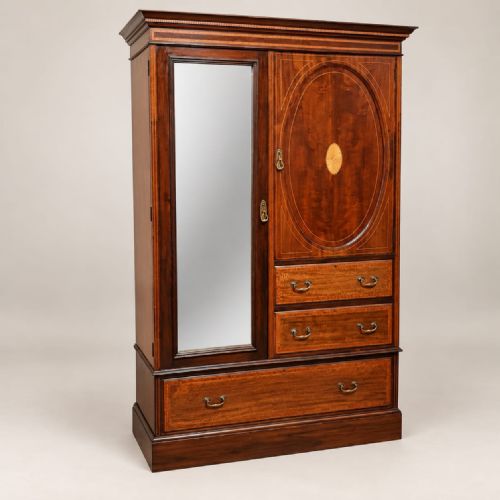
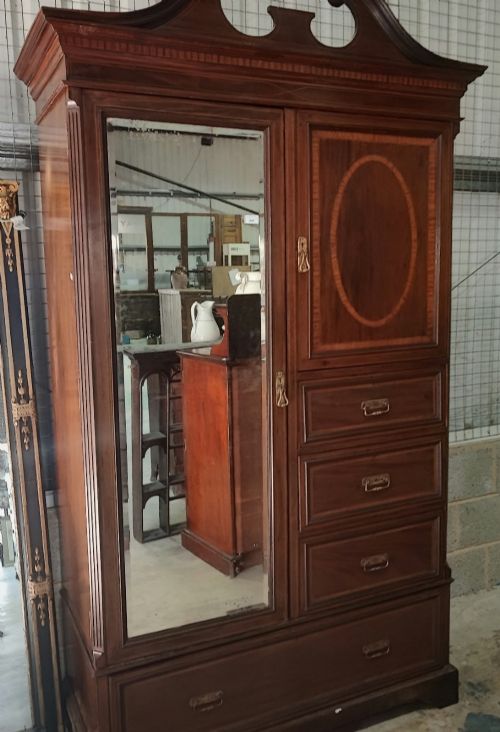
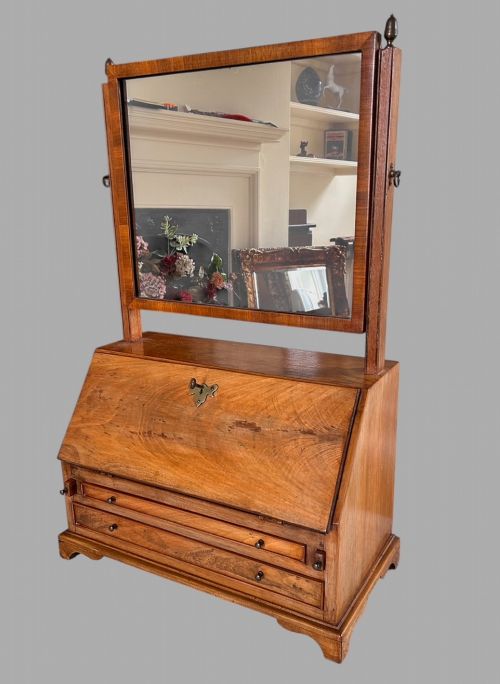
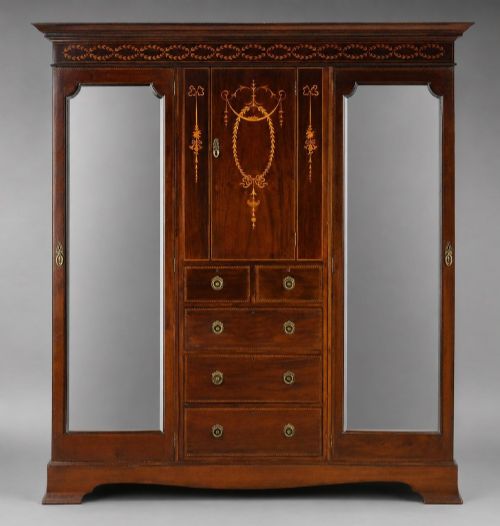
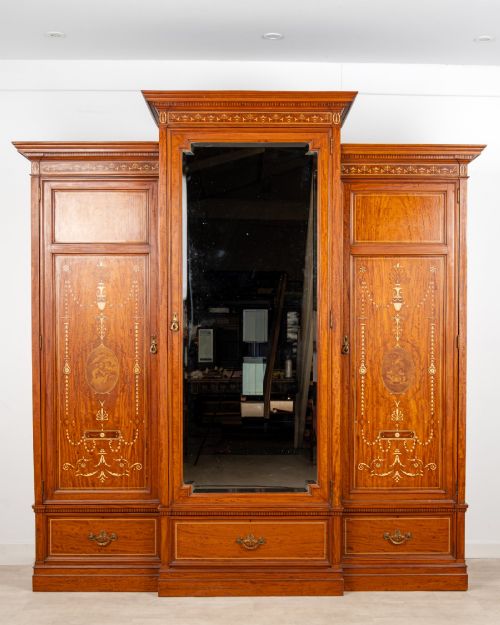
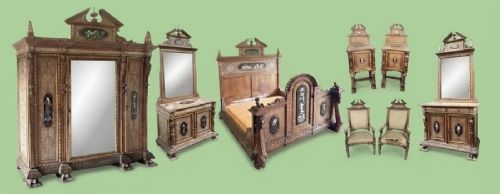
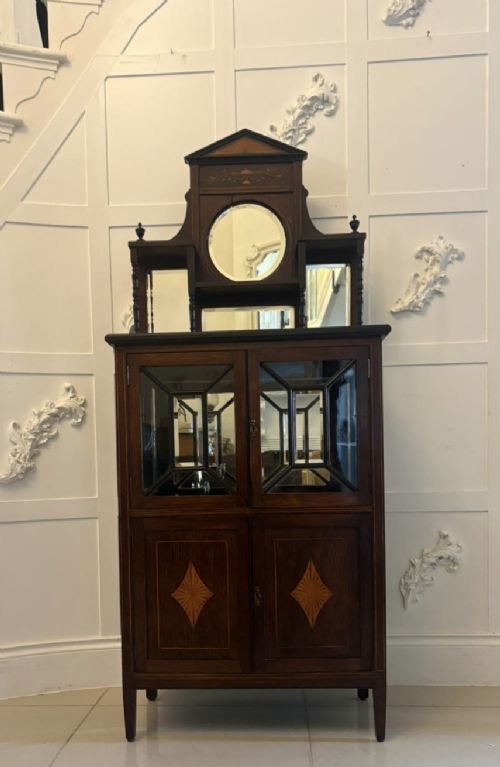
An edwardian satinwood mirror appears on this page in forms ranging from freestanding cheval glasses to dressing table attachments, wall-hung plates and overmantels. The pieces belong primarily to the Edwardian era and the nineteenth century, often reflecting Sheraton Revival tastes.
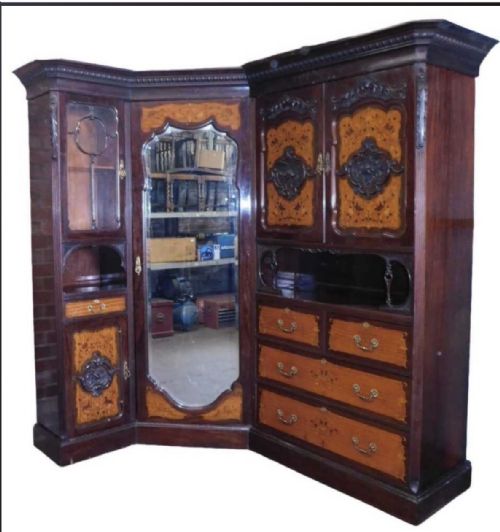
Buyers frequently encounter satinwood utilised alongside mahogany, walnut and satin walnut, built into larger items such as wardrobes or presented as standalone mirrors. The objects serve both functional reflection and decorative enrichment within domestic interiors.
How they were made
Makers constructed these mirrors using satinwood veneers and solid timbers like mahogany and walnut, frequently applying brass fittings and detailed marquetry or hand-painted motifs. Mirror glass is set into frames designed either for wall hanging, placement upon dressing tables, or pivoting on floor-standing cheval frames.
The integration of contrasting wood inlays follows classic Sheraton Revival traditions, relying on precise carpentry to secure delicate veneers around the glass plates without warping the wooden structure.
Some dressing tables hide tiny compartments behind their mirrors, perfect for tucking away secret love letters or stray hairpins.
What varies in quality
The standard of an edwardian satinwood mirror depends upon the crispness of the marquetry inlay, the depth of the hand-painted decoration, and the clarity of the timber grain selected by the maker. Superior examples exhibit balanced proportions and refined timber matching across the frame.
Execution of the joinery and the retention of original mirror glass and brass hardware further distinguish finer workshops from more utilitarian production.
Edwards and Roberts·Waring and Gillows·Gillows·John Taylor of Edinburgh
The Edwardian Satinwood Mirror Glossary
- Cheval mirror
- A freestanding full-length mirror mounted on a pivoting frame with four supporting legs. This form allows the glass to tilt to various angles.
- Sheraton Revival
- A design movement drawing inspiration from late eighteenth-century neoclassical furniture, characterised by slender proportions and satinwood veneers. It gained widespread popularity during the Edwardian period.
- Marquetry
- Decorative woodwork where pieces of veneer are fitted together to form pictorial patterns on a solid wooden background. It often incorporates contrasting timbers.
- Overmantel mirror
- A large mirror designed to hang upon the wall directly above a fireplace mantelpiece. These pieces frequently feature architectural framing or painted details.
- Compactum
- A large fitted wardrobe combining hanging space, drawers and shelving within a single multi-section piece of furniture.
Edwardian Satinwood Mirror: Frequently Asked Questions
How do I hang a wall mirror?
Heavy wall mirrors require secure fixings anchored directly into wall studs or masonry using appropriate brackets. Ensure the hanging wire or D-rings match the weight of the timber frame.
Position the mirror at eye level to maximise light distribution and reflection within the room, avoiding damp locations that could affect the wooden backing.
Where should I place a cheval mirror?
Cheval mirrors function best in bedrooms or dressing areas where floor space permits the pivoting frame to tilt freely. Position them near natural light sources to brighten the room.
Keep the freestanding base on level flooring to prevent strain on the side pivots and ensure stability during use.
How do I date an Edwardian mirror?
Examine the construction methods, timber choices, and secondary woods visible on the reverse of the frame. Edwardian pieces often utilise satinwood or inlaid mahogany alongside turn-of-the-century cabinetmaking techniques.
Check for original bevelled glass plates, brass hardware, and paper labels or stamps left by makers active during the period.
How do I care for satinwood?
Clean satinwood surfaces with a soft, dry cloth to remove dust without scratching the delicate veneer. Avoid using harsh chemical sprays or excess water on antique timber.
Maintain stable indoor humidity levels to protect the wood and inlay work from shrinking or expanding over time.