
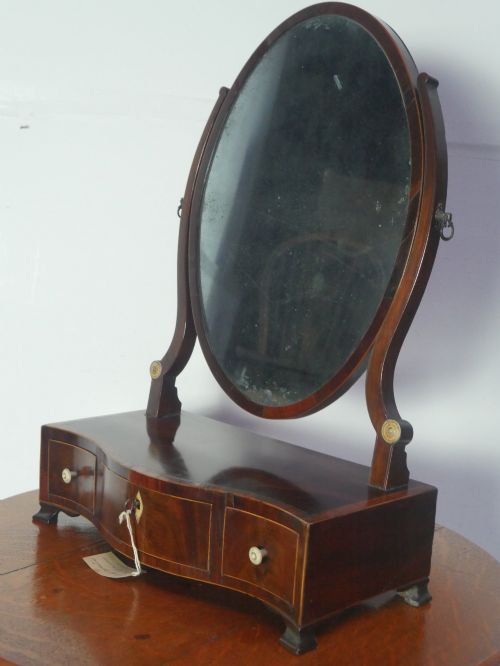
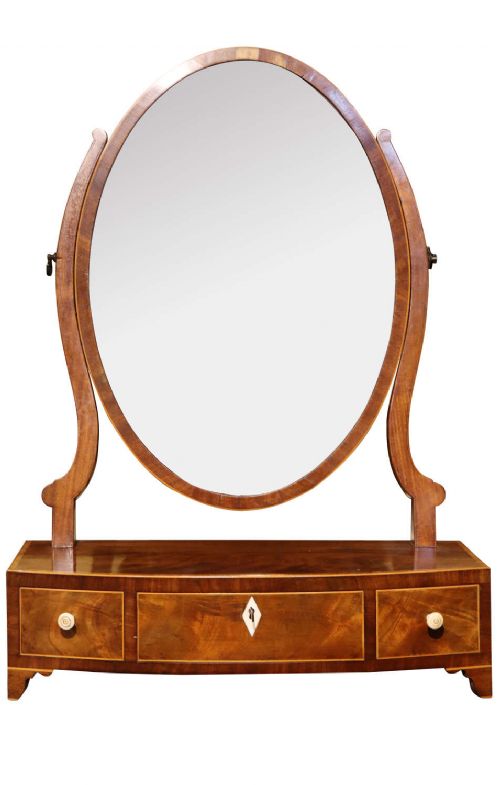


Oval Swing Dressing Mirror
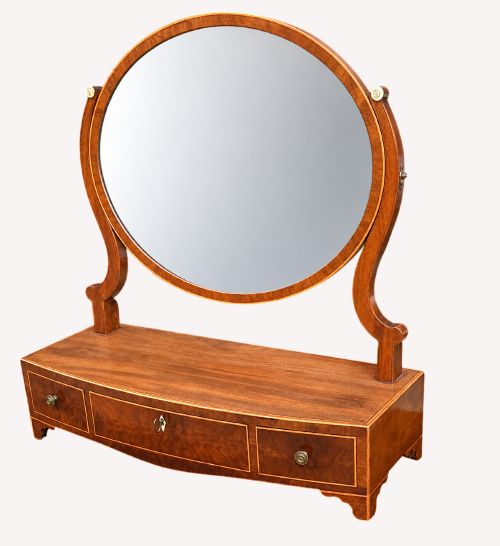
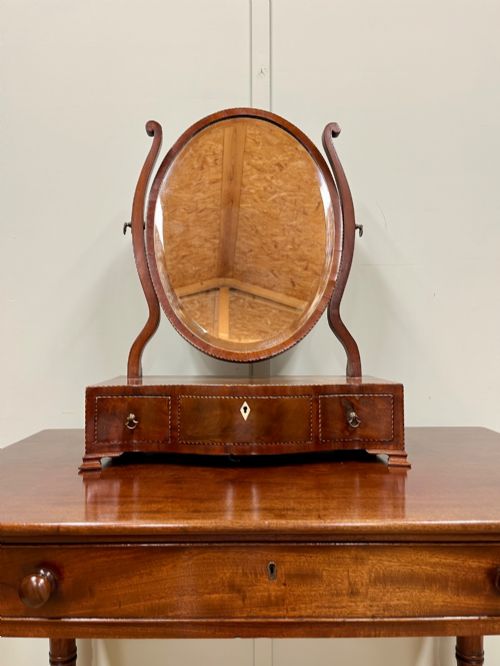
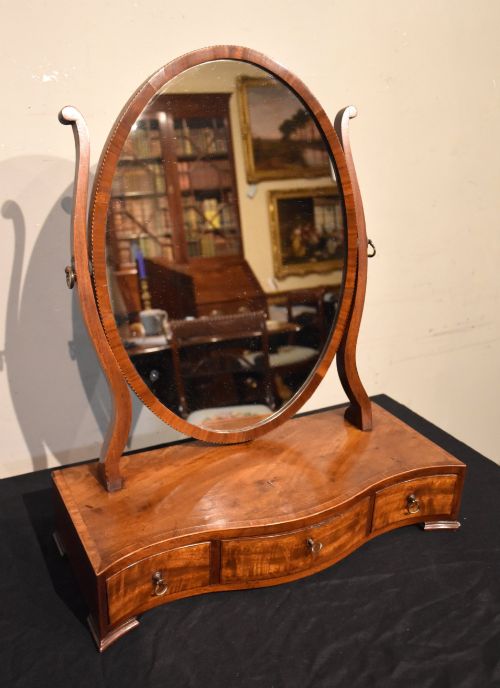
An oval swing dressing mirror sits upon a chest or table, tilting to catch the light for morning toilette.

Oval Swing Dressing Mirror
An oval swing dressing mirror is a tabletop glass plate mounted on upright supports that pivot within a small base, often fitted with drawers. Buyers search for these pieces to add a functional antique accent to a bedroom or dressing room.
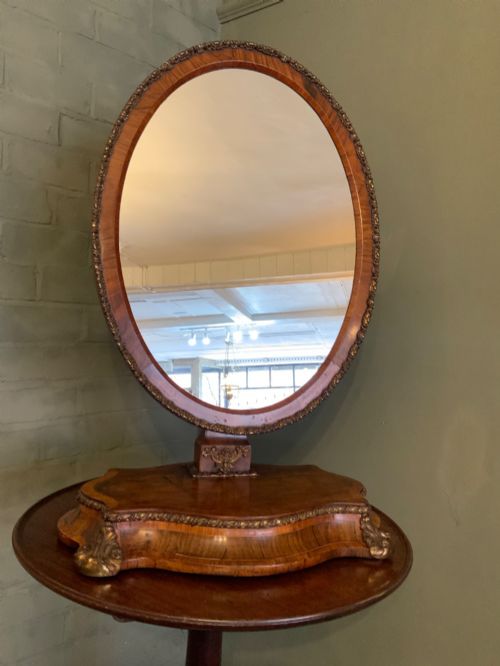
The versions most common on this page date from the Georgian and Victorian periods, constructed primarily in mahogany with occasional satinwood or walnut variations. These pieces range from simple rectangular box bases with serpentine fronts to elaborate carved frames.
Makers designed these mirrors to sit securely on dressing tables, offering adjustable angles through brass pivot screws. Smaller examples rest on bracket feet, whilst larger Victorian editions incorporate triple drawers and squashed bun feet.
Materials and Construction
Cabinetmakers constructed the main bodies of these mirrors using solid mahogany, flame mahogany veneers, and occasionally walnut or satinwood. Many Georgian and Victorian examples feature intricate boxwood inlay, crossbanding, and brass fittings such as candle sconces or decorative adjusters.
The mirror plates are held within shaped wooden frames attached to upright arms, which are mortised into a box base or set upon pedestal supports. Giltwood and gesso appear on Italian and continental pieces, providing ornate carved surfaces distinct from British cabinetwork.
Listings feature mahogany, satinwood, walnut, and giltwood materials across 18th-century, Georgian, and Victorian periods.
Judging Quality and Craftsmanship
Quality in an oval swing dressing mirror depends upon the selection of timber veneers, such as well-figured flame mahogany, and the precision of the boxwood inlay. Superior examples display refined proportions, dovetail joints on the drawer boxes, and original brass hardware.
The finesse of the upright supports and the shape of the base distinguish finer pieces from plain utility models. Serpentine fronts, multiple small drawers, and carved shaped supports indicate higher-status workshop production during the Georgian and Victorian eras.
The Oval Swing Dressing Mirror Glossary
- Serpentine front
- A curved furniture front featuring a convex centre flanked by concave wings. This contour appears frequently on the drawer bases of Georgian dressing mirrors.
- Crossbanding
- A strip of veneer applied to the border of a panel, with the grain running perpendicular to the centre. It frames the mahogany surfaces on better cabinetwork.
- Gesso
- A plaster-based material applied to wood surfaces and carved or moulded before gilding. It provides the decorative relief on Italian and continental frames.
- Flame mahogany
- A veneer cut from the fork of the mahogany tree, producing a distinctive flickering flame pattern. Cabinetmakers reserved this timber for principal display surfaces.
- Cheval mirror
- A full-length swing mirror supported on four freestanding legs or upright pillars. These large dressing glasses permit a view of the entire outfit.
Oval Swing Dressing Mirror: Frequently Asked Questions
How do I distinguish a Georgian mirror from a Victorian one?
Georgian mirrors tend to feature lighter timber frames, delicate bracket feet, and simpler serpentine drawer bases constructed with fine dovetailing. Victorian examples often display heavier proportions, deeper flame mahogany veneers, and squashed bun feet.
Hardware differences also provide clues to the period. Georgian pivot screws and brasses are generally finer and hand-finished, whilst Victorian fittings reflect industrial manufacturing methods with heavier cast brass components.
What were the drawers used for?
The small drawers beneath the mirror plate held rings, pins, cosmetics, and small personal valuables used during daily grooming. Multiple drawers allowed users to organise their daily accessories close at hand.
Many surviving pieces retain their original wooden compartments and tiny brass knobs. These drawers also provide structural weight to anchor the pivoting mirror above.
Are the mirror plates usually original?
Silvered glass plates frequently suffered damage or degradation over centuries of use, leading many pieces to receive replacement mirror glass at a later date. Surviving original glass often exhibits minor foxing or light distortion.
When examining a piece, look at the backboards and the method of securing the glass to determine if the plate is contemporary with the wooden frame.
Where should I place a table mirror at home?
These mirrors function effectively atop a modern chest of drawers, a low sideboard, or a dedicated dressing table. Their compact footprint requires only a shallow surface.
Position the piece near a natural light source to make full use of the pivoting frame, which tilts to adjust the reflection angle for the user.