



Wooden Desktop Mirror
A wooden desktop mirror brings warmth and practicality to a dressing space, offering a clear reflection framed in period timber.
Wooden Desktop Mirror
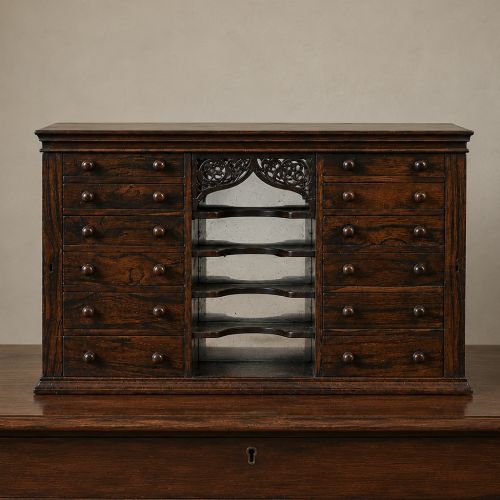
A wooden desktop mirror sits upon a table or chest, serving as a functional looking glass and a decorative accessory. The selection on this page ranges from compact swing mirrors to elaborate tabletop cabinets and bureau mirrors.
The materials and styles span multiple eras, including Georgian, Regency, and Victorian pieces alongside Edwardian and later examples. Mahogany and walnut appear frequently, often complemented by brass fittings and boxwood inlay.
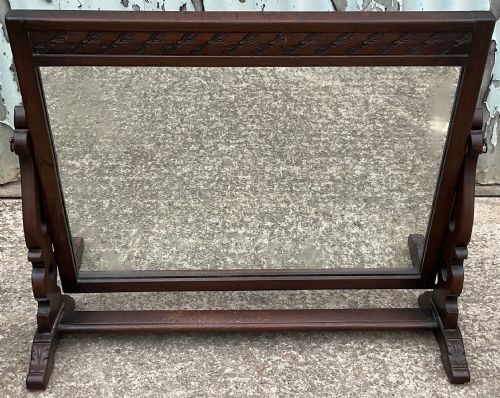
Forms vary from simple swing mirrors on upright supports to complex designs featuring drawers or miniature cupboards. Many pieces integrate storage beneath the glass, combining utility with fine cabinetmaking.
How they were made
Cabinetmakers utilised dense timbers such as mahogany, walnut, oak, and rosewood to construct the frames and base units. These woods were chosen for their durability and grain patterns, sometimes accented with boxwood inlay.
Brass fittings, including hinges, knobs, and adjustment screws, provide structural movement and visual contrast against the dark timber. Mirror glass is set within pivoting frames that allow the user to tilt the reflection.
Tabletop formats range from simple swing mirrors to compactum wardrobes in miniature.
What varies in quality
Quality rests in the precision of the joinery and the selection of timber figures. Superior pieces display thoughtful grain matching and well-executed boxwood inlay.
The refinement of the carved details and the robustness of the brass adjustment mechanisms distinguish finer examples from simpler utilitarian versions.
The Wooden Desktop Mirror Glossary
- Swing mirror
- A looking glass hung on pivots within a frame that tilts back and forth. This mechanism allows the user to adjust the viewing angle easily.
- Toilet mirror
- A historical term for a dressing table mirror used during personal grooming. These often include small drawers in the base for trinkets.
- Boxwood inlay
- Contrasting light wood inserted into recesses of a darker timber to create decorative patterns. It adds geometric or floral detail to the frame or base.
- Bureau mirror
- A desktop mirror that incorporates a small writing slope or document drawers beneath the glass. This form combines the functions of a desk and a looking glass.
Wooden Desktop Mirror: Frequently Asked Questions
Where should I place a wooden desktop mirror?
These mirrors suit dressing tables, chests of drawers, or sturdy sideboards where they provide a practical height for daily use. Ensure the surface is level and stable to support the weight of the timber frame.
Position the piece near a natural light source to maximise the reflection in the glass without straining the supporting pivots.
How do I adjust a swing mirror?
Most swing mirrors use brass screw caps or side pins that tighten to hold the glass at the desired angle. Adjust these gently to avoid putting undue pressure on the wooden uprights.
If the glass slips, check the tension of the fittings on both sides to ensure even support across the frame.
What is the difference between a toilet mirror and a dressing mirror?
In historical terms, toilet mirrors were designed specifically for powdering and grooming on a tabletop or dressing chest. They frequently include small drawers or compartments in the base.
Dressing mirrors encompass a broader category that can include larger floor-standing cheval glasses as well as desktop variations.
How do I care for the timber frame?
Dust the wood regularly with a soft, dry cloth to prevent a buildup of particles in the grain and carvings. Avoid using modern silicone polishes that can leave a residue on antique surfaces.
Keep the piece away from direct heat sources and strong sunlight to protect the polish and prevent the timber from drying out.