

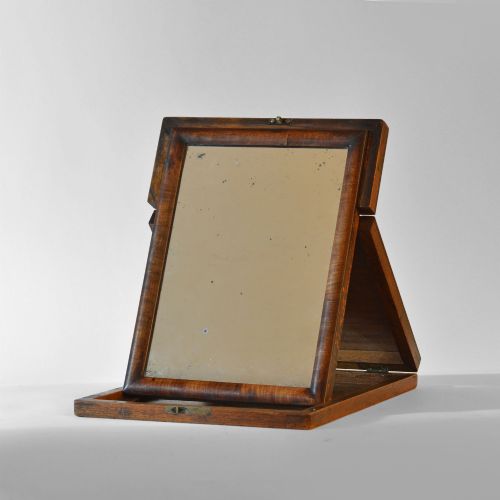
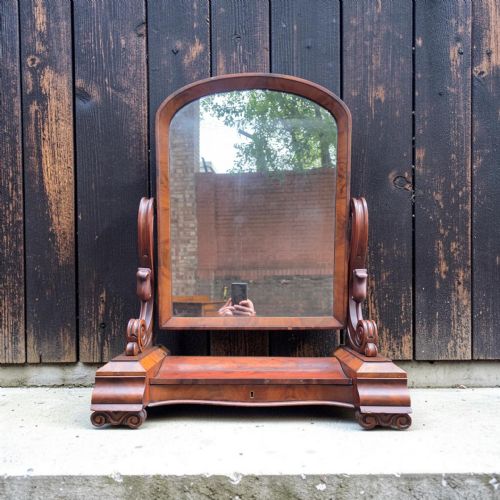
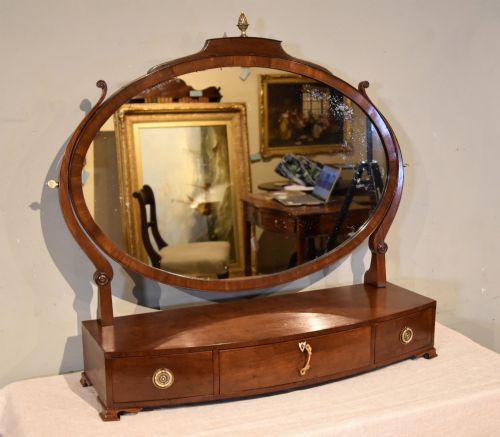
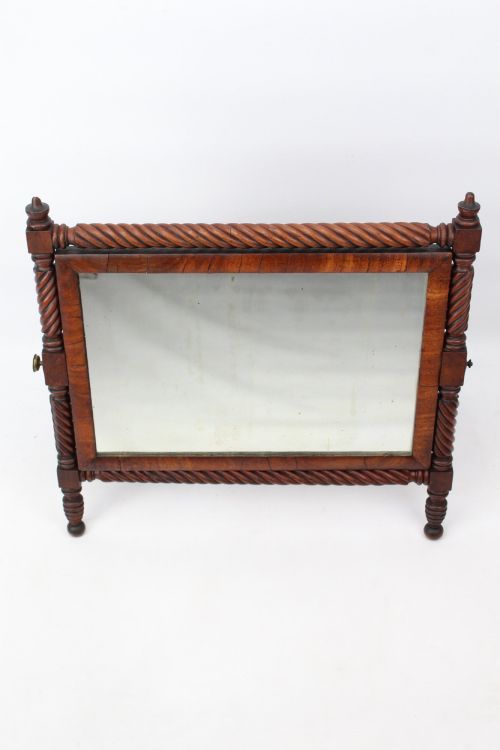
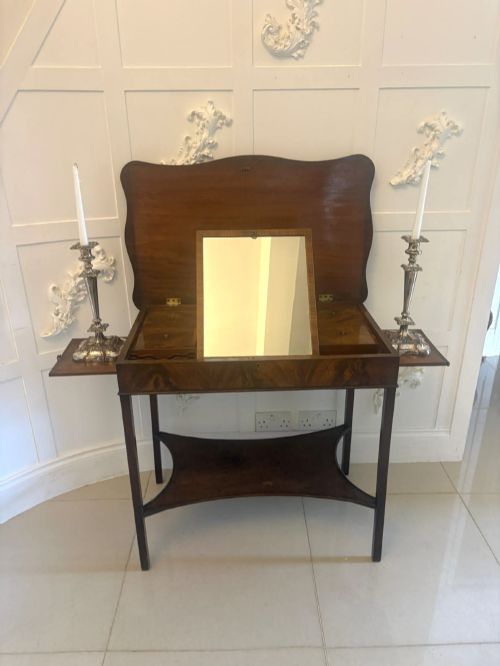
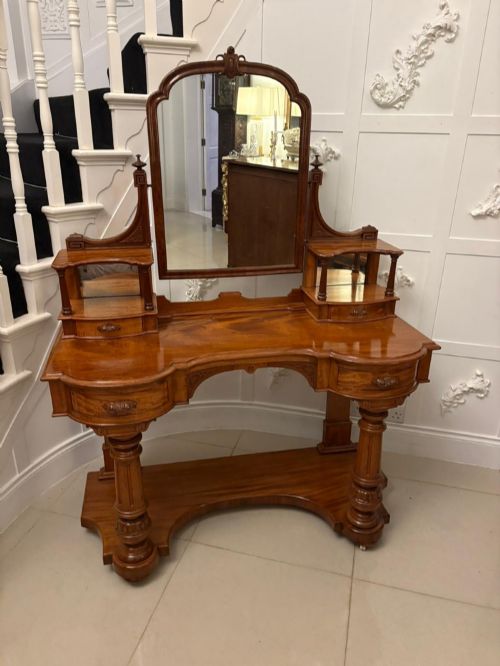
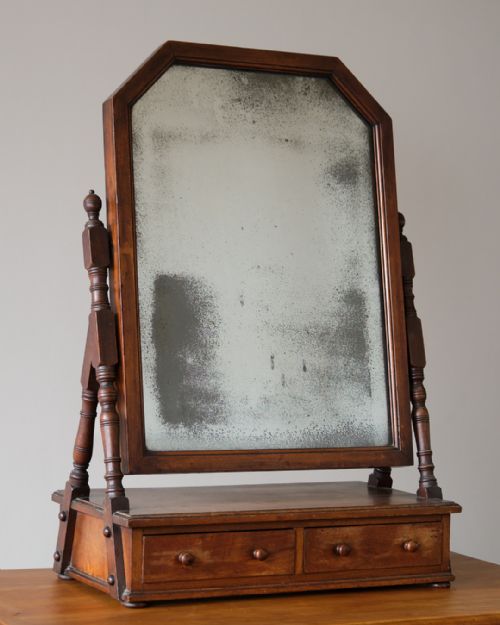
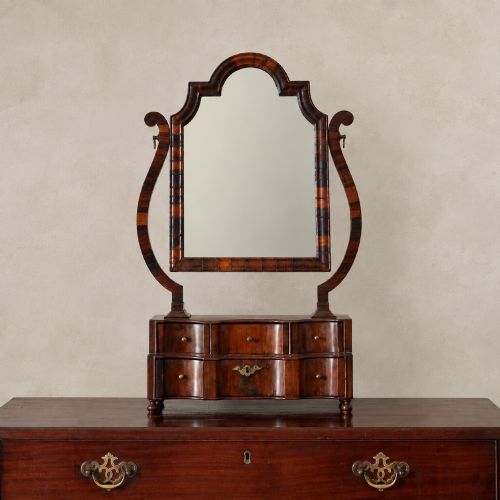


Brown Wooden Toilet Mirror
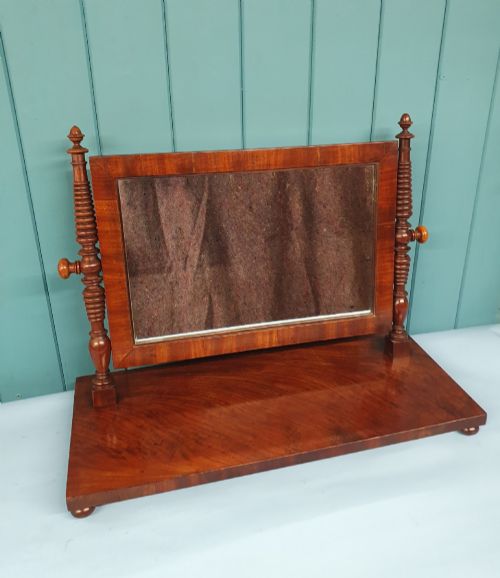
A brown wooden toilet mirror sits upon a chest or table, offering a portable reflection framed in rich timber.
Brown Wooden Toilet Mirror
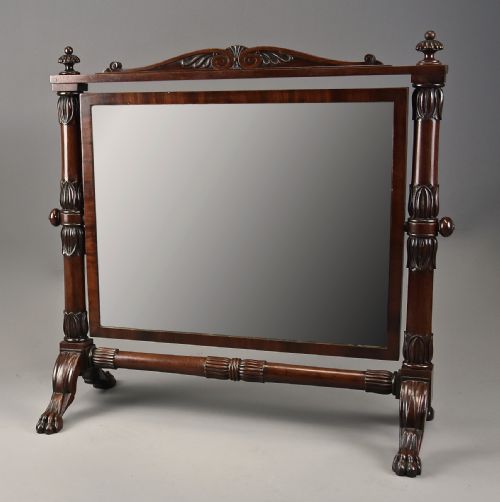
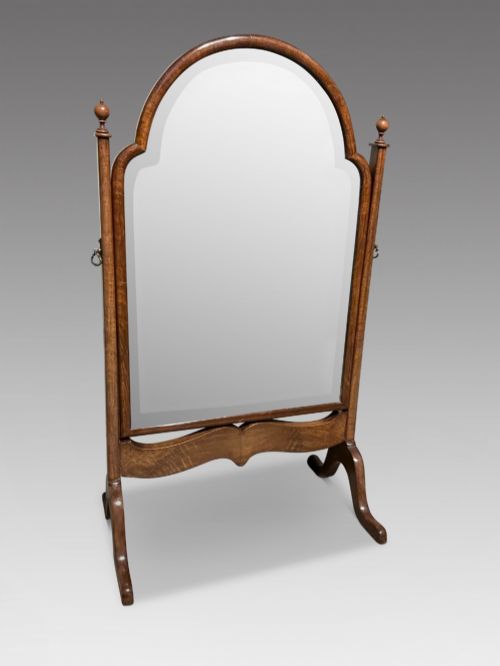
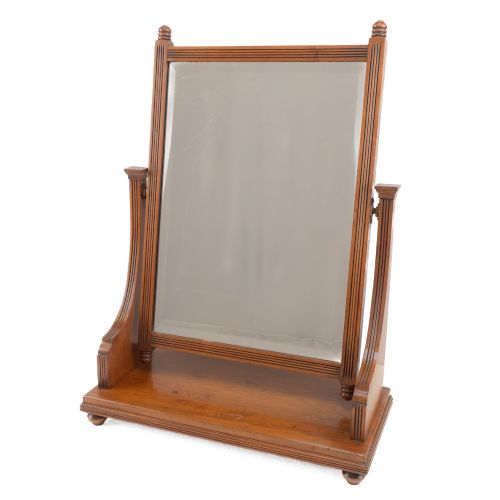
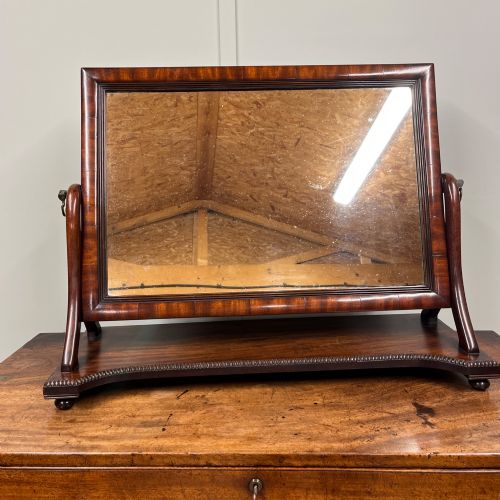
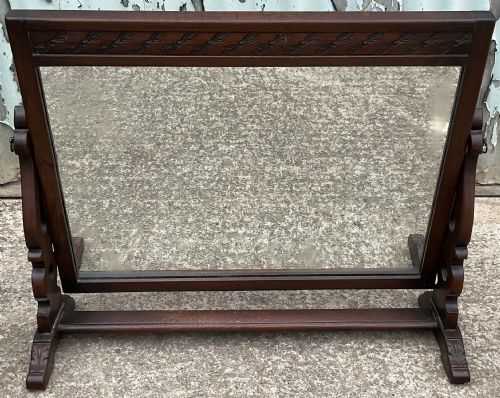
When you search for a brown wooden toilet mirror, you encounter pieces designed for grooming and dressing upon a surface, spanning several centuries of cabinet-making. The listings on this page consist primarily of 18th-century, Regency, and Victorian examples configured as swing mirrors mounted on small stands or box bases.
Forms range from simple rectangular table models to serpentine-fronted designs with integrated drawers and large cheval mirrors. Walnut and mahogany predominate, often featuring figured veneers or solid construction intended for the bedroom or dressing room.
How they were made
Cabinet-makers utilised solid timbers such as mahogany, walnut, and oak alongside carefully cut veneers to build the frames and supporting boxes. Brass fitments, including pivot screws and delicate knobs, secured the swing plates while bone inlay occasionally accented the joinery.
Mirror glass was set into rebated frames and held with wooden slips, allowing the reflective plate to tilt freely between upright supports. Traditional hand-cut dovetails formed the small drawer boxes nestled in the bases of many surviving examples.
Brown Wooden Toilet Mirror Retail Price Guide 2026
Typical asking prices for brown wooden toilet mirror among the pieces listed under this phrase on Sellingantiques today, from the lower quarter to the upper quarter. They describe what is for sale here now, not the wider market.
Design variations include simple box bases, serpentine drawer fronts, and adjustable cheval formats.
What varies in quality
The standard of a brown wooden toilet mirror rests upon the selection of timber and the sophistication of the base construction. Dense Cuban mahogany or figured walnut with balanced grain patterns distinguishes finer pieces from plain utilitarian alternatives.
Carved details, serpentine shaping of the drawer fronts, and the original integrity of the brass pivot hardware indicate the skill of the original workshop. Secondary woods used for drawer linings and the preservation of the early mirror glass further separate standard production from exceptional examples.
Heal And Sons·P And MA Nicholson
The Brown Wooden Toilet Mirror Glossary
- Cheval mirror
- A full-length dressing mirror suspended on a vertical floor-standing frame. These pieces allow a complete view of attire.
- Serpentine front
- A curved furniture front shaped with a convex centre flanked by concave wings. This contour requires precise woodworking skill.
- Swing mirror
- A glass plate hung on side pivots between two upright posts. The mechanism lets the user tilt the reflection angle.
- Toilet mirror
- A small mirror designed to stand upon a dressing table, chest, or commode. They frequently incorporate small drawer compartments in the base.
Brown Wooden Toilet Mirror: Frequently Asked Questions
What is a brown wooden toilet mirror?
A brown wooden toilet mirror is a tabletop dressing glass housed in a timber frame, designed for personal grooming.
These pieces typically sit upon a chest of drawers or a dedicated dressing table, often featuring small storage drawers in the base.
Where were they placed?
They were placed on top of chests of drawers, sideboards, or dressing tables in bedrooms and dressing rooms.
Because they were portable, they could be moved to catch the best natural light near a window.
How do I date a mirror?
Dating relies on timber choices, construction methods, and the style of the base and support arms.
Earlier 18th-century pieces often use walnut with candle slides or small box drawers, while Victorian examples frequently feature heavy mahogany frames.
Are the mirror plates original?
Many older mirrors retain their original glass, which may show light foxing, silvering loss, or minor distortion.
Replacement glass is common in pieces that survived heavy daily use over centuries.
How do I care for the wood?
The wooden frame benefits from occasional gentle cleaning with suitable wax to nourish the grain and protect the finish.
Keep the piece away from direct sunlight and damp environments to preserve the timber and mirror silvering.