




Swing Frame Dressing Mirror
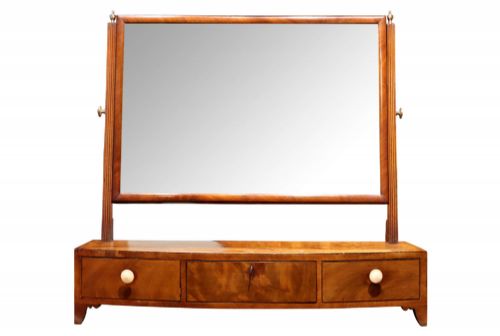
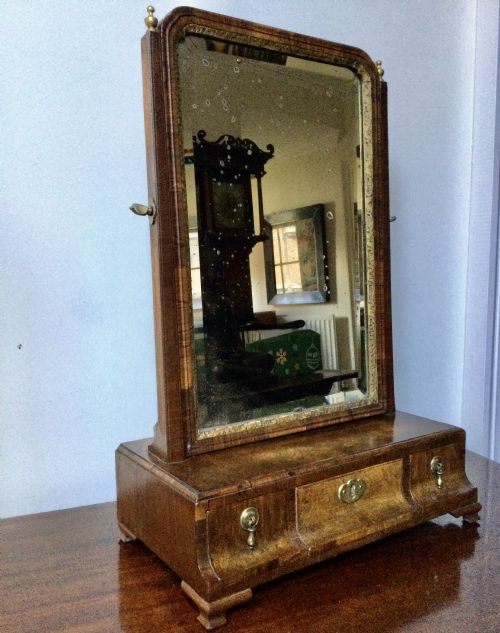
These swing frame dressing mirror examples offer adjustable glass set within pivoting frames, giving you a movable reflection for the dressing table.
Swing Frame Dressing Mirror
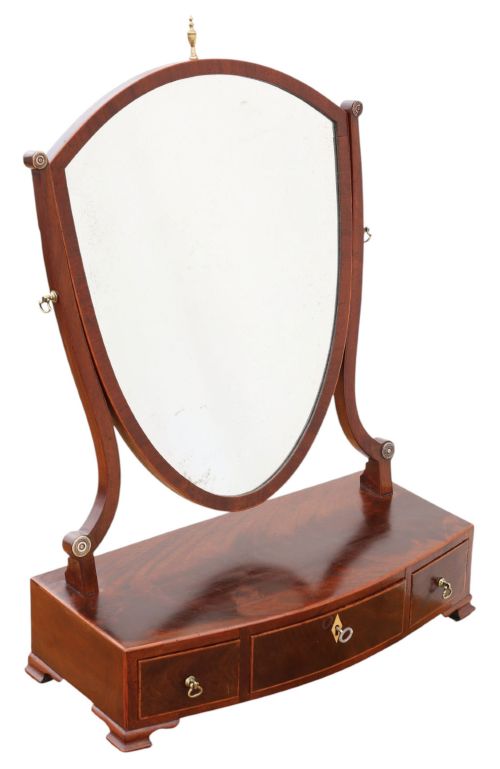
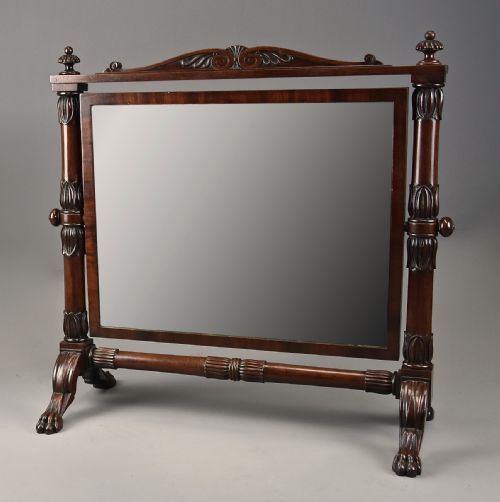
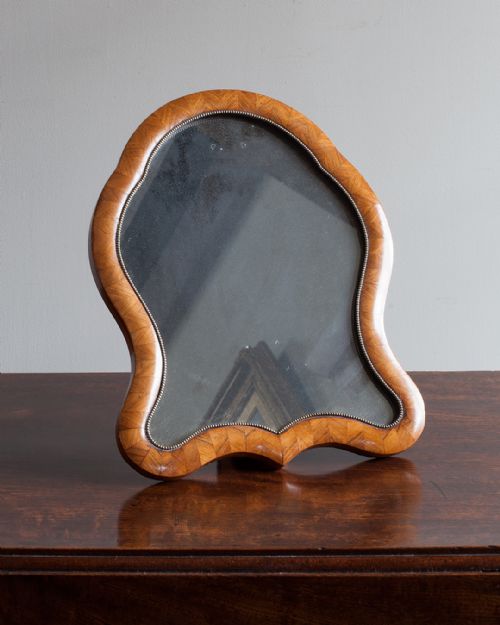
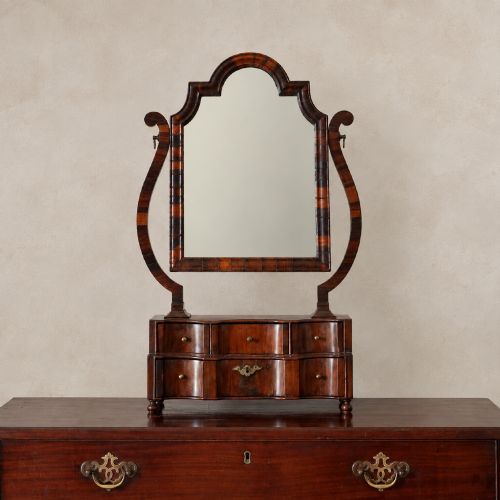
A swing frame dressing mirror sits on a chest or dressing table, featuring a pivoting glass plate held between two upright posts. The form spans the eighteenth, nineteenth, and early twentieth centuries, drawing on Georgian, Regency, Queen Anne, and Victorian styles.
Makers often integrated small drawers into the base plinth to hold trinkets and cosmetics. Examples range from simple walnut frames to elaborate French Rococo Revival designs and skeleton mirror constructions.
How they were made
Cabinetmakers utilised solid hardwoods like mahogany, walnut, and Cuban mahogany, frequently incorporating fine wood inlay and brass fittings to secure the pivoting plates. Frames were joined with traditional cabinetry techniques to support the weight of the glass during adjustment.
Glass plates were silvered by hand in earlier periods, fitted into rebated wooden frames with backboards held by turnbuckles. Brass swing screws and side arm pivots allowed the mirror angle to tilt smoothly without slipping.
Some tiny eighteenth-century toilet drawers still retain traces of powdered wig starch in the corners.
What varies in quality
The choice of timber creates a distinct visual hierarchy, moving from plain deal or standard pine carcasses up to figured Cuban mahogany, kingwood, and laburnum veneers. Finer pieces display carefully matched grain patterns across the drawer fronts and frame borders.
Construction refinement separates standard utilitarian items from master cabinetwork, visible in the dovetailing of base drawers, the weight of cast brass hardware, and the subtlety of carved scrollwork or inlay details.
Waring and Gillow·P and MA Nicholson
The Swing Frame Dressing Mirror Glossary
- Cheval mirror
- A full-length swing mirror supported by four upright legs rather than resting on a table base. These tall glasses allowed a complete view of attire.
- Toilet mirror
- A smaller tabletop dressing mirror designed to sit on a commode, dressing table, or chest of drawers. They frequently incorporated miniature trinket drawers beneath the glass.
- Serpentine
- A curved cabinet front featuring a convex centre flanked by concave curves. This contour required precise woodworking skill to execute on small mirror bases.
- Bowfront
- A convex curved front contour popular on late eighteenth and nineteenth-century furniture bases. It added visual depth to compact dressing mirror drawers.
- Skeleton mirror
- An open framework construction dispensing with the traditional solid board back or enclosed box base. This lighter configuration appeared in Georgian designs.
Swing Frame Dressing Mirror: Frequently Asked Questions
What is a swing frame dressing mirror?
A swing frame dressing mirror is a tabletop or freestanding glass plate mounted on pivots between two vertical supports. This allows the user to tilt the angle of reflection.
Such pieces date primarily from the eighteenth and nineteenth centuries, serving both functional dressing purposes and decorative roles on chests of drawers.
How do I date a dressing mirror?
Dating relies on timber selection, construction methods, and stylistic cues like serpentine drawer fronts or bracket feet. Georgian examples often show fine mahogany framing, while Victorian pieces utilise heavier flame veneers.
Hardware such as brass swing screws and the composition of the mirror glass provide further clues to the period of manufacture.
Where should I place a toilet mirror?
Toilet mirrors require a stable surface of appropriate height, traditionally a dressing table, low chest, or sideboard. Placing them near natural daylight improves visibility for grooming.
Ensure the supporting furniture can bear the weight of the pivoting wooden frame and base drawers.
Are swing mirrors stable?
Stability depends on the tension of the side pivot screws and the weight distribution of the base. Well-maintained brass hardware holds the glass firmly at the desired angle.
Models featuring fitted drawer bases offer added weight at the bottom, which keeps the entire structure steady during adjustment.