
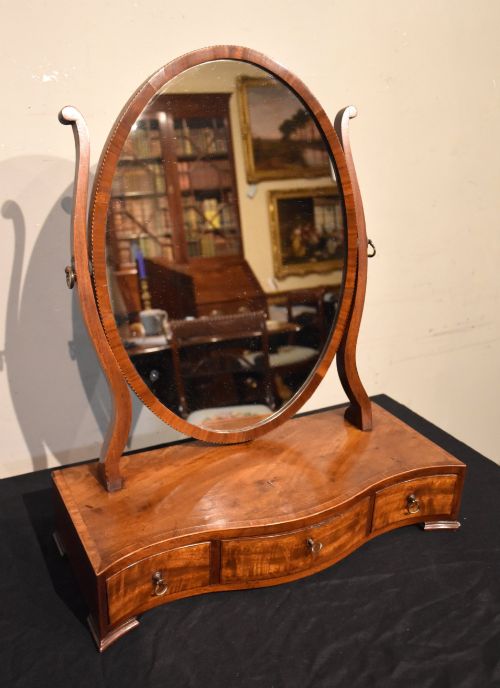


Wooden Table Mirror Drawer
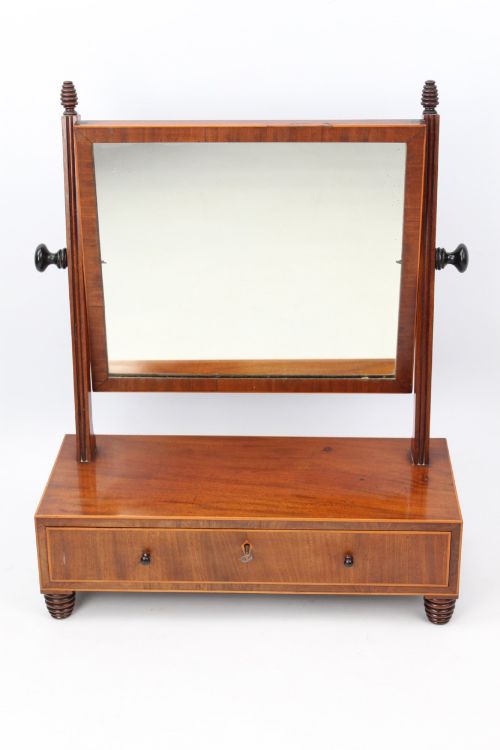
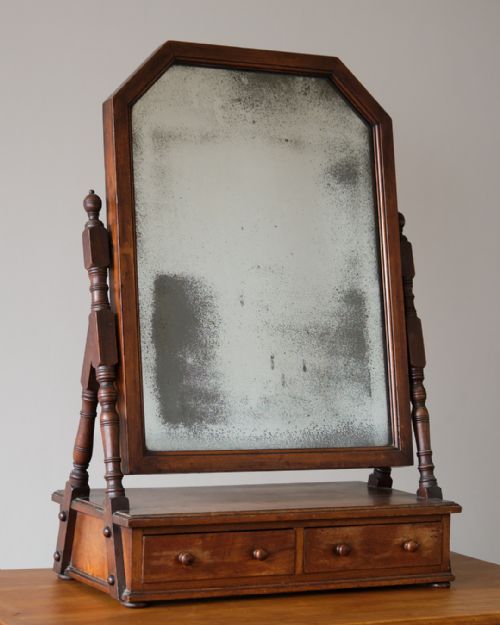
These wooden table mirror drawer pieces are classic dressing and toilet mirrors designed to sit on a surface while offering small compartments.
Wooden Table Mirror Drawer
A wooden table mirror drawer combines a pivoting glass plate with a small base containing functional storage compartments. These pieces appear frequently in Georgian, Regency, and Victorian iterations, spanning the eighteenth and nineteenth centuries.
Most examples function as dressing or toilet mirrors designed to rest securely upon a larger chest or dressing table. The base typically houses one, two, or three small drawers intended for jewellery or small daily accessories.
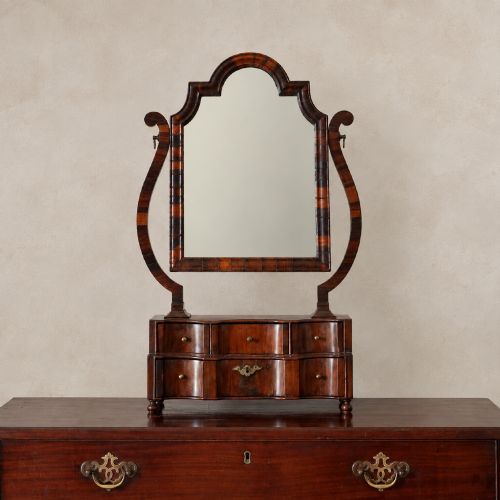
Makers often shaped the base frames in rectangular, serpentine, or bow fronts to suit changing domestic tastes. Walnut and mahogany dominate the surviving forms, frequently accompanied by brass adjusters and bone escutcheons.
Materials and construction
Cabinetmakers constructed these frames primarily using solid hardwoods such as mahogany, walnut, oak, and fruitwood. Selected examples incorporate decorative elements including satinwood, laburnum, ebony inlay, and intricate marquetry.
The mirror plates pivot between two upright arms attached to a box base using threaded brass screws or peg joints. Dovetail joints typically secure the internal drawer construction, while original mirrored glass often exhibits subtle bevels or silvering variations.
Listings feature eighteenth-century walnut and nineteenth-century mahogany iterations alongside marquetry and serpentine fronts.
Distinctions in quality
Quality rests heavily upon the selection of timber veneers and the crispness of internal joinery like hand-cut dovetails. Pieces featuring shaped serpentine fronts and controlled stringing or marquetry require advanced cabinetmaking skill compared to plain rectangular boxes.
The survival of original brass hardware, secondary wood linings, and unblemished mirror glass elevates an example's integrity. Proportions matter significantly, ensuring the upright standards balance the weight of the swiveling frame above the drawers.
Heal & Sons
The Wooden Table Mirror Drawer Glossary
- Toilet mirror
- A smaller dressing mirror traditionally placed on a table or chest for personal grooming. These usually incorporate a small drawer base.
- Serpentine front
- A furniture front curved in a wave pattern with a convex centre flanked by concave wings. This shape demands precise woodworking skill.
- Marquetry
- Decorative veneer work arranged in pictorial or geometric patterns using various coloured woods. It appears on selected Dutch and English pieces.
- Escutcheon
- A small protective plate surrounding a keyhole, frequently fashioned from bone or brass on these drawer bases.
- Swing mirror
- A glass plate hung on pivots between two upright posts allowing the user to tilt the angle. This forms the upper section of a table mirror.
Wooden Table Mirror Drawer: Frequently Asked Questions
How do I date a wooden table mirror drawer?
Dating relies on observing timber choices, secondary woods, and cabinet construction methods. Eighteenth-century pieces frequently employ fine walnut or early mahogany with hand-cut dovetails.
Later Victorian versions often feature heavier mahogany frames and machine-sawn components. Hardware such as brass screw knobs and escutcheons also provides chronological clues.
Where should I place a table mirror at home?
These mirrors suit dressing tables, chests of drawers, or sideboards where they add height and reflective light to a room. Their compact footprints allow them to sit comfortably on surface tops without requiring floor space.
Ensure the supporting surface is stable and level to protect the antique base joints.
Are the mirror plates usually original?
Many surviving pieces retain their original mercury or early silvered glass plates, which often display light foxing or speckling. Replacement glass occurs frequently because mirrors are fragile over centuries of use.
Inspect the backboards and retaining pins to understand whether the glass has been changed.
What is the difference between a toilet mirror and a dressing mirror?
The terms often describe the same object, though eighteenth-century pieces were frequently catalogued as toilet mirrors for personal grooming. These versions sit upon existing furniture rather than standing independently.
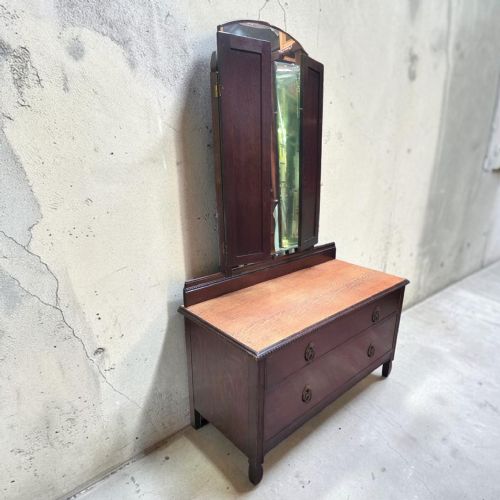
Dressing mirrors can also refer to larger freestanding cheval styles or pieces integrated directly into dressing tables.