



Georgian Swing Dressing Mirror
A georgian swing dressing mirror brings tilting reflection and lidded box storage to a dressing table.
Georgian Swing Dressing Mirror
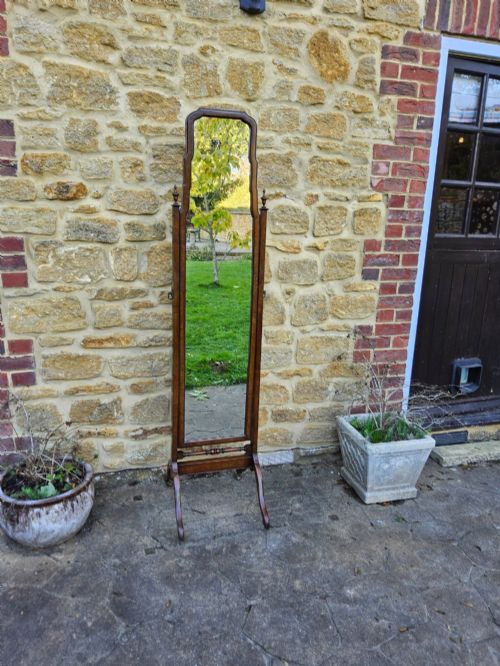
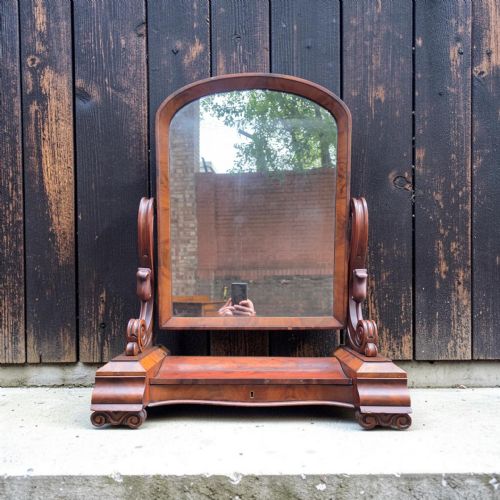
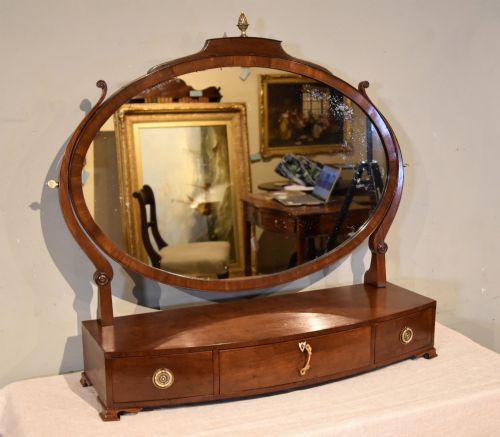
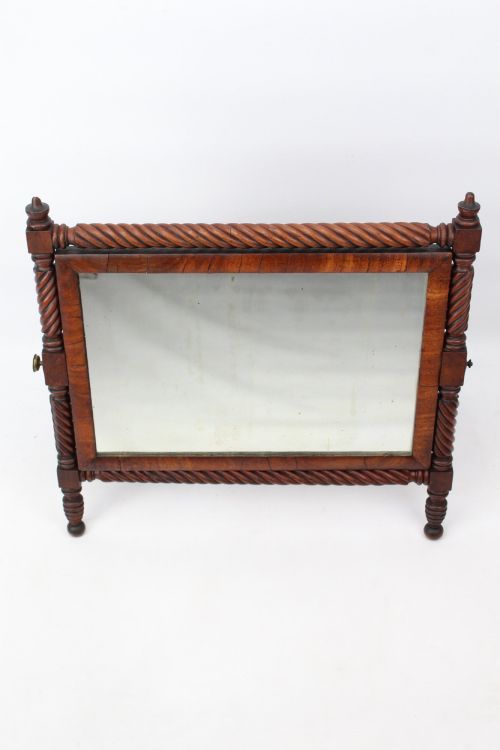
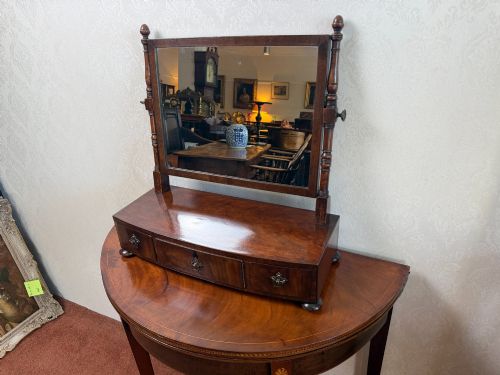
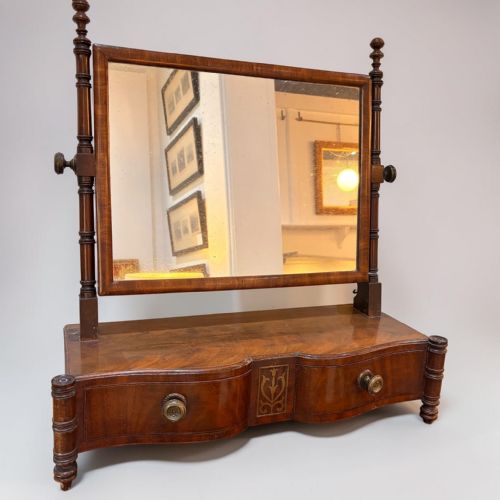
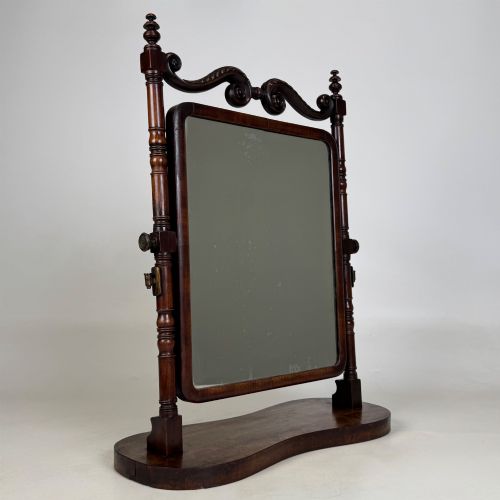
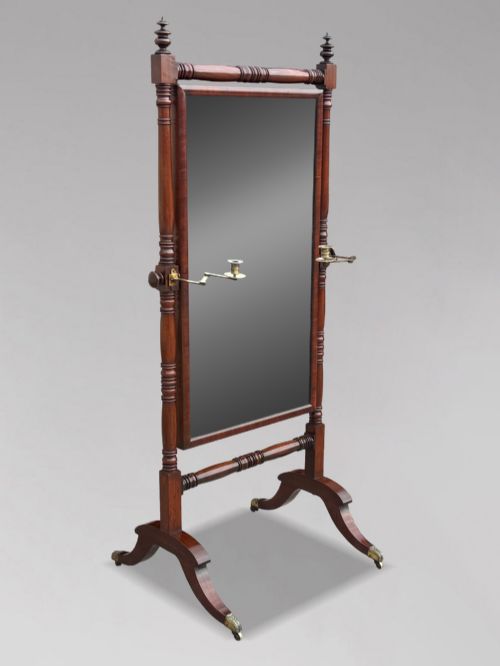
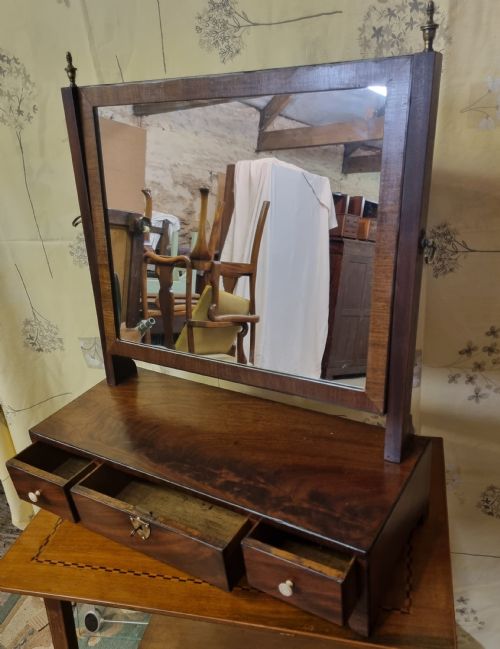
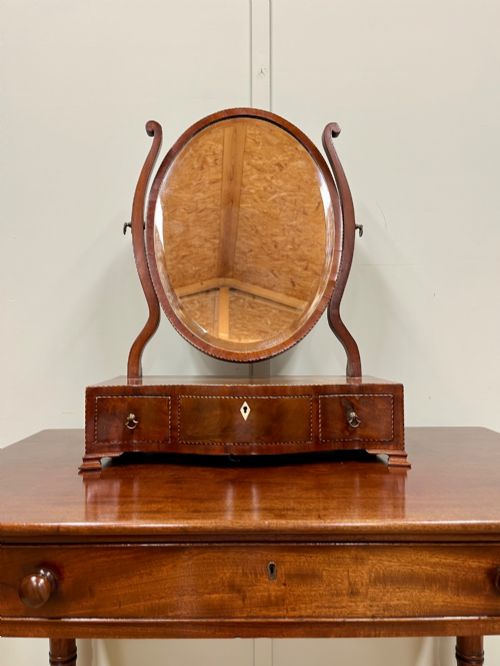
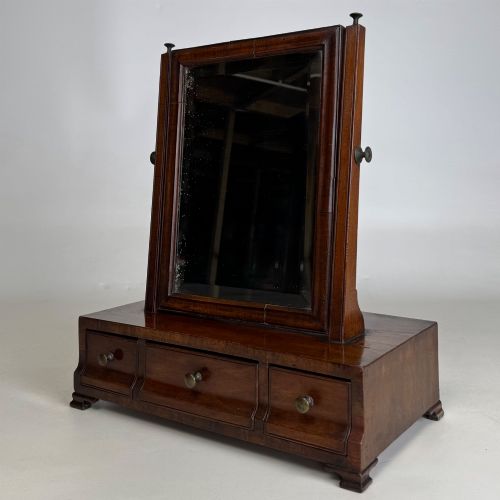
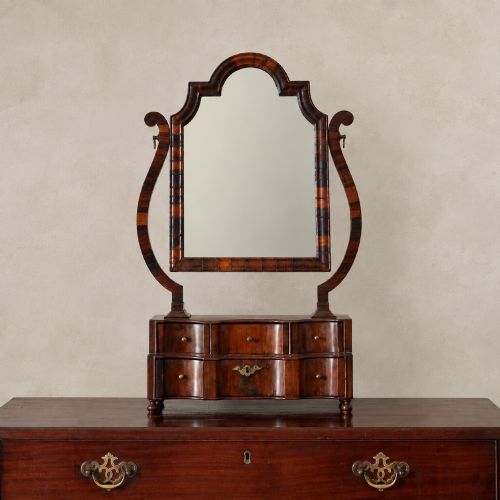
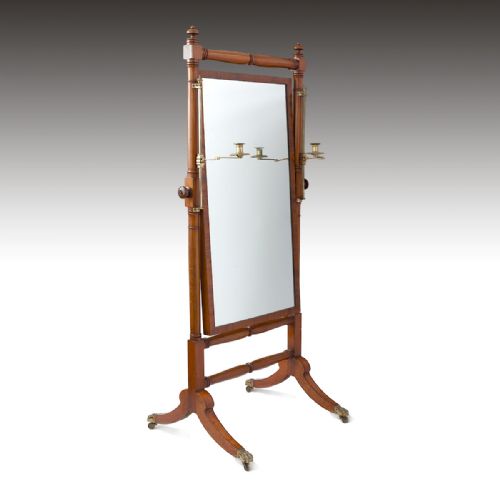
A georgian swing dressing mirror sits on a tabletop or stands full-length as a cheval frame, tilting on side pivots to adjust the angle of the glass. The form combines a pivoting looking glass with a small box base fitted with drawers for jewellery and cosmetics.
Most examples found here date from the eighteenth century into the nineteenth century, spanning the Georgian and Regency periods. The evidence shows frequent appearances of mahogany alongside walnut, satinwood, and giltwood.
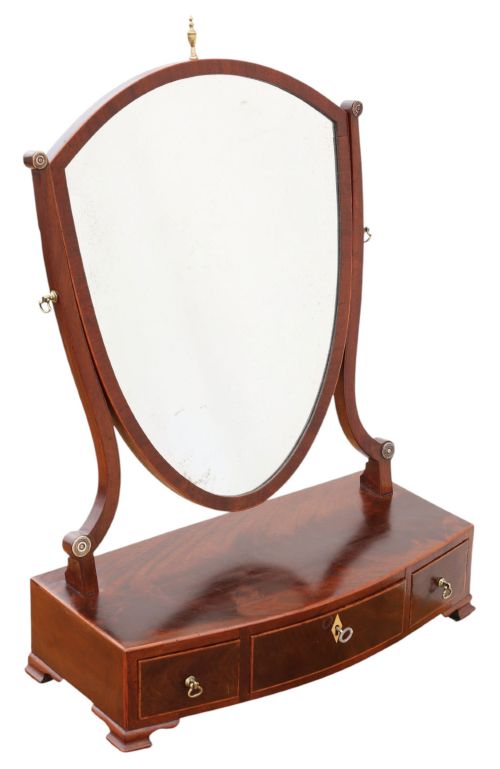
Makers produced variants ranging from compact shield-shaped toilet mirrors to large scale cheval mirrors and Dutch marquetry inlaid dressing table mirrors.
How they were made
Cabinet makers constructed the frames and box bases using timbers such as mahogany and walnut, frequently incorporating crossbanding and bone escutcheons. Mirror glass plates sat within adjustable frames held by brass side pivots.
Drawers within the box bases relied on traditional joinery, with specific pieces noting oak linings and serpentine fronts.
Georgian Swing Dressing Mirror Retail Price Guide 2026
Typical asking prices for georgian swing dressing mirror among the pieces listed under this phrase on Sellingantiques today, from the lower quarter to the upper quarter. They describe what is for sale here now, not the wider market.
Listings feature mahogany predominantly, alongside walnut, satinwood, and giltwood frames.
What varies in quality
The sophistication of the timber grain and the precision of inlaid details distinguish finer examples from simpler country workshop pieces. Fine crossbanding, burr veneers, and parcel-gilt highlights elevate the visual weight of the frame.
Proportion and the integration of the box base relative to the pivoting glass plate determine the overall harmony of the dressing mirror.
Gillow
The Georgian Swing Dressing Mirror Glossary
- Cheval mirror
- A large standing dressing mirror supported by a frame with four legs allowing the glass to swing fully.
- Toilet mirror
- A smaller tabletop mirror, often incorporating a box base with small drawers.
- Shield mirror
- A looking glass shaped like a heraldic shield, popular in the latter half of the eighteenth century.
- Crossbanding
- A strip of veneer applied across the grain of the primary wood to form a decorative border.
- Parcel-gilt
- Partially gilded with gold leaf, highlighting specific carved details on a wooden frame.
Georgian Swing Dressing Mirror: Frequently Asked Questions
Where were these mirrors placed?
These mirrors sat atop dressing tables, chest of drawers, or washstands in bedrooms and dressing rooms to assist with grooming and personal care.
Larger cheval versions stood directly on the floor to provide a full-length reflection.
What are the small drawers for?
The box base houses small drawers intended for storing jewellery, pins, and cosmetics used during daily dressing routines.
These compartments kept vanity items organised close to the glass.
How do the mirrors tilt?
Brass pivots mounted on the upright support posts allow the glass frame to swing smoothly forward or backward.
Thumb screws or threaded pins tighten within the frame to hold the selected angle in place.
How do I date a mirror?
Dating relies on timber choices, such as early walnut or later mahogany, alongside the outline of the mirror plate and base.
Shield shapes and serpentine drawer fronts point toward the late eighteenth century, while cheval forms align with the Regency era.