





Georgian Walnut Box Mirror
A georgian walnut box mirror combines the warmth of figured timber with a compact tabletop frame, offering both a functional glass and fine period proportion.
Georgian Walnut Box Mirror
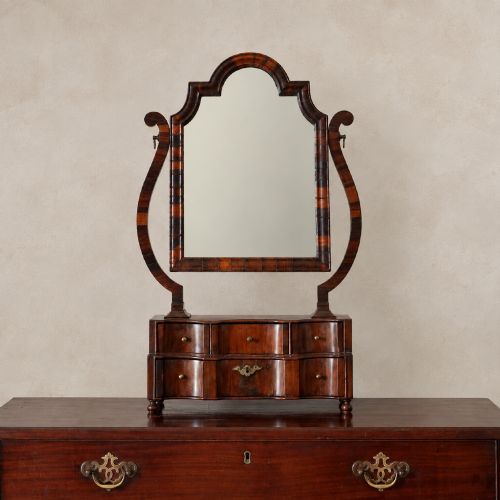
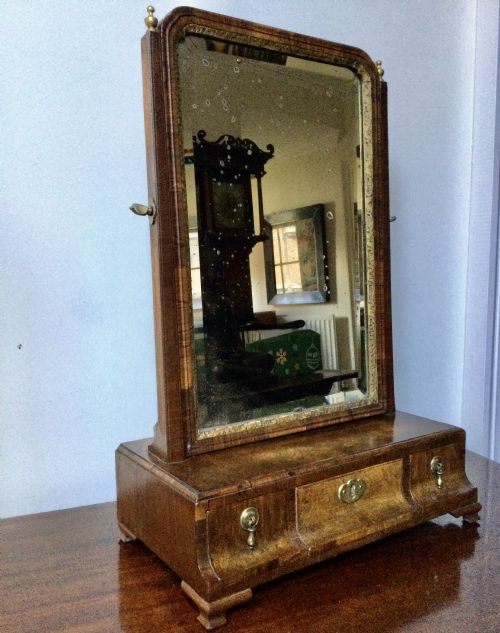
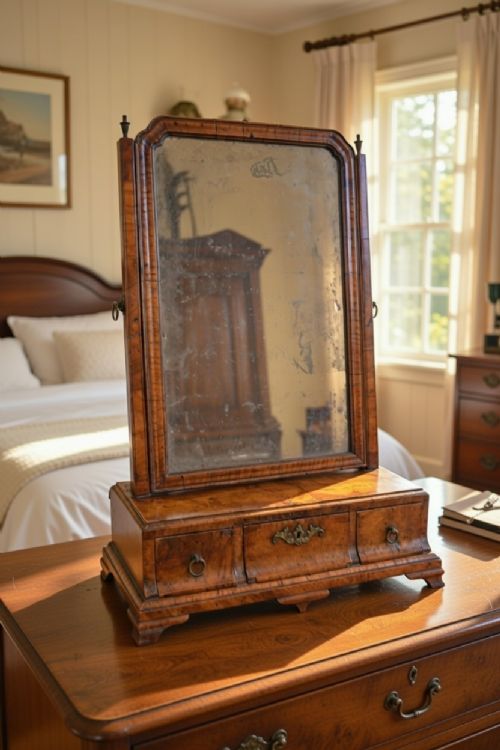
Buyers searching for a georgian walnut box mirror encounter compact dressing glasses designed for the eighteenth-century toilette. These pieces combine a pivoting mirror plate set within a freestanding frame, mounted atop a small box base fitted with drawers.
The most common examples on this page date from the eighteenth century, spanning the reigns of Queen Anne through to George III. They appear across various styles including Early Georgian and George II, constructed primarily in rich walnut and occasional laburnum.
Forms vary slightly in designation, appearing as toilet mirrors, dressing table mirrors, or dressing glasses. Despite these nomenclature differences, each serves the dual purpose of a tabletop glass and a miniature chest for small valuables.
Materials and construction
Cabinetmakers built these mirrors using figured walnut veneers applied to secondary timbers, frequently enhanced by contrasting laburnum banding or giltwood accents. The plates themselves utilise original or replacement mirror glass housed in slender moulded frames.
Brass is standard for the small pivoting side hardware and tiny drawer pulls that operate the base compartment. Joinery typically relies on fine dovetails for the box sections and tenons for the upright support arms.
Assessing quality
Quality rests primarily in the depth of grain figure across the walnut veneers and the crispness of the moulding profiles. Finer examples display harmonious proportions between the pivoting frame and the box base beneath.
The retention of original brass hardware and untouched mirror plates elevates a piece significantly. Superior construction shows in the neatness of the dovetailing within the miniature drawers and the stability of the upright support arms.
The Georgian Walnut Box Mirror Glossary
- Box mirror
- A tabletop dressing glass featuring a small drawer base beneath the pivoting frame. It provides stability and storage for small personal items.
- Toilet mirror
- A period term for a dressing table glass used during personal grooming. These items sat atop larger chests or dedicated dressing tables.
- Laburnum
- A dense hardwood often utilised for oyster veneers or contrasting crossbanding on eighteenth-century furniture. Its rich grain pattern creates distinctive circular rings.
- Giltwood
- Wood carved and coated with gold leaf or metallic paint to provide decorative highlights. It appears sparingly on select mirror mouldings of the period.
- Dovetail
- A traditional interlocking joint used to secure the corners of the small storage box. Fine, tight pins indicate skilled cabinetwork.
Georgian Walnut Box Mirror: Frequently Asked Questions
How do I date a walnut box mirror?
Dating relies on observing changes in style, framing profiles, and hardware from the Queen Anne period through the reign of George III. Early pieces often feature softer crestings and laburnum banding.
Later examples tend toward cleaner architectural lines and simpler mahogany or red walnut integrations. Examining the construction of the base drawers also offers clues to the decade of manufacture.
Where were these mirrors placed?
They were designed for domestic bedchambers and dressing rooms during the eighteenth century. Owners placed them on top of dedicated dressing tables, low tallboys, or chests of drawers.
Because they were portable, they could be moved around the home to catch the best natural light near windows. Their compact footprint made them versatile furnishings for smaller rooms.
Are the mirror plates usually original?
Many eighteenth-century mirrors have received replacement glass plates over the centuries due to breakage or degradation of the original silvering. Finding a mirror with its untouched antique glass is uncommon.
Replacement glass is often bevelled and fitted carefully into the historic frame to maintain the correct visual appearance. Collectors accept period replacements provided the frame and box base remain undisturbed.