
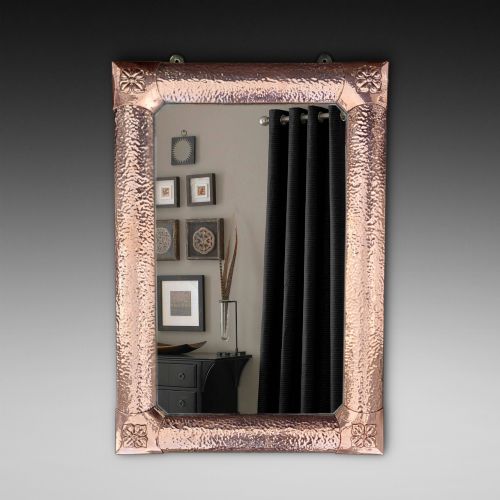


Embossed Metal Mirror
An embossed metal mirror brings tactile warmth and reflectivity to a room through beaten copper, brass and silver.
Embossed Metal Mirror
When you search for an embossed metal mirror, you are looking at wall mirrors featuring frames shaped from copper, brass and silver. These pieces range from Victorian cushion-framed wall mirrors to Arts and Crafts copper designs and Dutch Baroque revival styles.
You are most likely to meet Arts and Crafts copper framed mirrors and Victorian brass wall mirrors on this page. These objects combine reflective glass with worked metal surfaces, originating from periods spanning the nineteenth century up to mid-century Peru.
How they were made
Makers fashioned these frames using sheet copper and brass, working the metal by hand to create raised patterns. Designs such as stylised trees and ornamental borders emerge directly from the metal surface through beating and embossing techniques.
Supporting wooden structures often back the metal frames to provide rigidity for the wall mirrors. Mirror glass sits within these secured mounts, accompanied in certain pieces by cast brass elements and silver borders.
The listings on this site include pieces from the nineteenth century, Victorian era, Edwardian period, nineteen hundred, and nineteen fifty.
What varies in quality
Depth and clarity in the hand-beaten metal define the upper tier of these pieces. Crisp relief work in the copper or brass demonstrates greater skill than shallow, machine-pressed stamping.
The integration of the frame with its wooden backing and the preservation of the original mirror glass determine the overall integrity. Well-executed designs, such as specific Arts and Crafts tree motifs, show deliberate artistic control across the metal surface.
Liberty & Company
The Embossed Metal Mirror Glossary
- Embossed
- Decorated with raised patterns or designs hammered or pressed into the metal surface. This technique creates a tactile relief that catches the light.
- Arts and Crafts
- A design movement valuing handcraftsmanship and simple forms over mass production. Pieces from this period frequently utilise copper with stylised natural motifs.
- Cushion frame
- A frame profile with a rounded, convex section resembling a cushion. This style appears frequently in Victorian brass and 1880s examples.
- Dutch Baroque Revival
- A revival style drawing on seventeenth-century Dutch aesthetic traditions. Mirrors in this style often incorporate elaborate metalwork mounts.
Embossed Metal Mirror: Frequently Asked Questions
What periods do these mirrors come from?
The pieces span the nineteenth and twentieth centuries, including Victorian, Edwardian, and nineteen-fifties examples. Arts and Crafts items from around nineteen hundred appear alongside earlier Victorian and eighteen-eighties designs.
Specific periods are identified through construction methods, material usage, and stylistic markers recorded in the titles.
How were these mirrors used?
These objects served as functional wall mirrors and decorative focal points in domestic interiors. Their reflective glass and worked metal frames brought light and texture to hallways and parlours.
Today they function similarly, adding historic character and reflective depth to modern living spaces.
How do I distinguish Arts and Crafts mirrors?
Arts and Crafts pieces are typically framed in beaten copper and often feature stylised natural designs such as trees. They reflect the movement's focus on hand-worked materials.
These pieces contrast with the cast brass and cushion-framed variants of the Victorian era.