
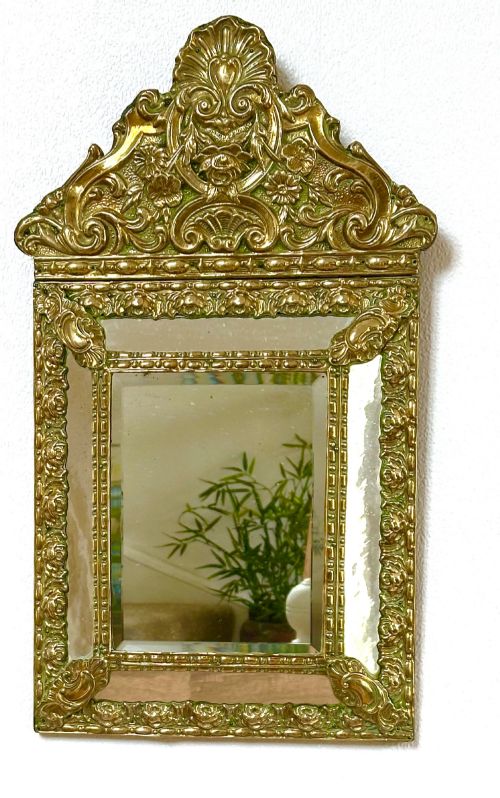
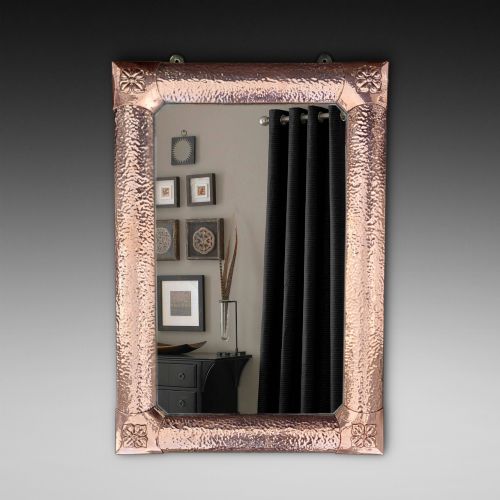


Embossed Repousse Wall Mirror
An embossed repousse wall mirror brings tactile metalwork and reflective depth to a room, catching the light through hammered brass and copper.
Embossed Repousse Wall Mirror
The pieces on this page span the nineteenth century through the early twentieth century, drawing on Victorian, Edwardian, and Regency periods. Makers utilise distinct regional idioms, encompassing Arts and Crafts designs, Flemish Renaissance Revival styles, and French cushion frames.
Materials combine glass and mirror glass with substantial wooden supports and metal surrounds in brass, copper, and pressed brass. Common configurations include cushion-shaped profiles, marginal mirror borders, and oval formats adorned with stylised trees, peacocks, or floral motifs.
How they were made
Artisans hammered sheet brass and copper from the reverse side, a technique known as repousse, pushing the metal forward to form three-dimensional reliefs. This beaten metalwork was then mounted around wooden backboards to support the weight of the glass.
Frames frequently take a cushion form or incorporate pressed brass elements soldered and pinned into secure assemblies. Patination was often applied to the metal surfaces to highlight the intricate depths of the hand-embossed patterns.
Peacocks flank the brass border on one notable Glasgow School mirror, watching over anyone checking their reflection.
What varies in quality
The depth and clarity of the hand-beaten metal relief define the artistic merit of the piece, distinguishing crisp artisanal work from simpler pressed production. Glasgow Style and Arts and Crafts examples often display more purposeful design choices in their motifs.
The integrity of the original mirror glass and the stability of the wooden framing structure determine the preservation state. Substantial metal gauges and well-executed joinery separate standard domestic pieces from finer decorative works.
Liberty and Company
The Embossed Repousse Wall Mirror Glossary
- Repousse
- Metalworking technique where the design is hammered into relief from the reverse side. This process creates tactile surface decoration.
- Cushion frame
- A convex, rounded frame profile that swells outward toward the outer edge. It creates a pronounced three-dimensional border around the mirror glass.
- Arts and Crafts
- Design movement spanning the late nineteenth and early twentieth centuries emphasising handcraftsmanship and natural motifs. It produced many notable copper and brass mirrors.
- Marginal mirror
- A mirror design featuring a central glass plate surrounded by smaller bevelled mirror segments. These edge sections are often held by decorative metal clips.
Embossed Repousse Wall Mirror: Frequently Asked Questions
Where should I hang a brass mirror?
These mirrors suit hallways, reception rooms, and living spaces where reflected light can brighten darker corners. Their metallic frames complement both traditional and contemporary interior colour schemes.
Ensure the wall fixings can support the combined weight of the metal frame and wooden backing board. Placing them opposite a window maximises natural illumination.
How do I clean repousse metal?
Dust gently with a soft, dry cloth to prevent accumulation in the recesses of the beaten relief work. Avoid harsh chemical polishes that strip original patination and age.
Keep moisture away from the edges of the mirror glass to protect the silvering underneath. Gentle care preserves the historical surface finish of the brass or copper.
What defines Arts and Crafts metalwork?
Arts and Crafts metalwork highlights visible hand manipulation, including hammer marks and stylised natural forms like trees or birds. Pieces often use copper or brass to achieve a warm, honest material presence.
This aesthetic rejected mass production in favour of individual workshop character. Glasgow School examples from this era frequently showcase distinctive regional iconography.
How do I date a brass mirror?
Examine the construction of the wooden backboard, the fixings, and the style of the metal embossing. Victorian and Edwardian pieces often display specific cushion profiles or revivalist Flemish motifs.
Original mirror glass may show subtle foxing or imperfections indicative of older manufacturing methods. Comparing stylistic cues helps place pieces within the nineteenth or early twentieth century.