




French Brass Wall Mirror
A french brass wall mirror brings instant depth and reflective warmth to a room, ranging from simple bistro frames to ornate chateau sconces.
French Brass Wall Mirror
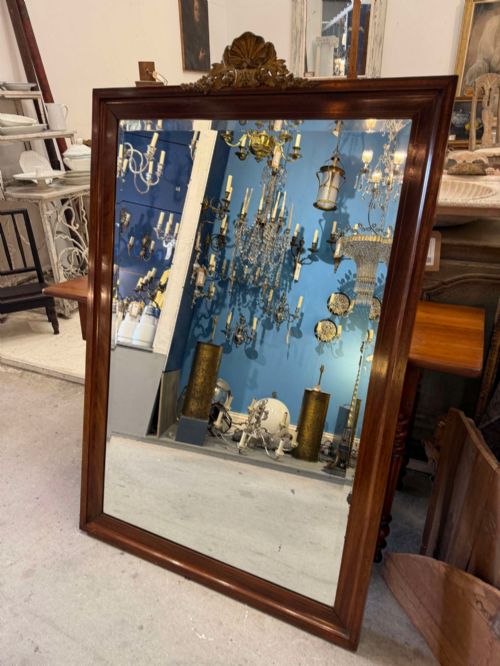
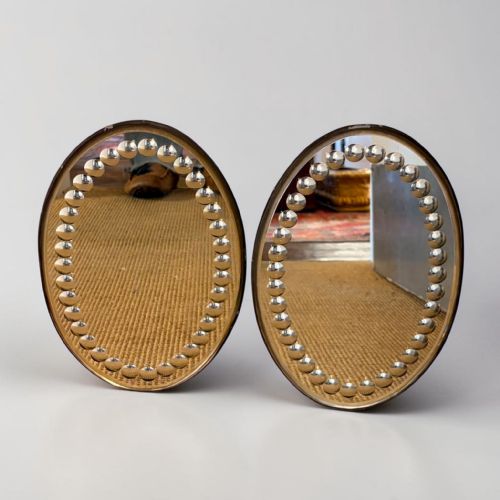
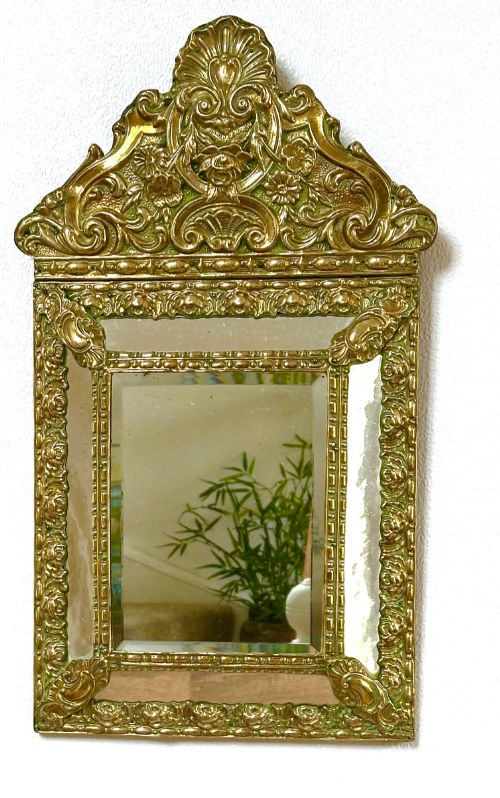
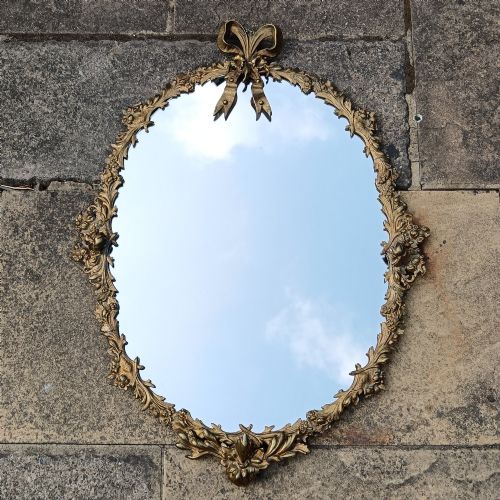
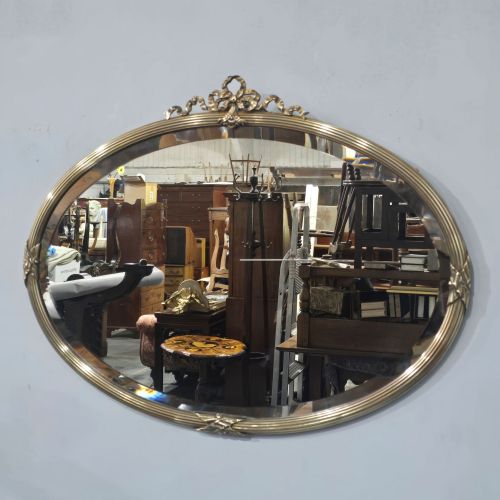
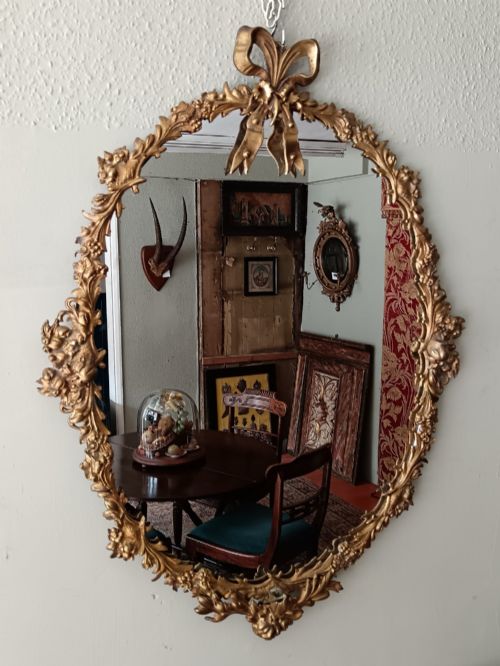
When searching for a french brass wall mirror, a buyer encounters a diverse mix of forms that span from the nineteenth century into the art deco period. The selection frequently includes oval hanging mirrors, cushion frames, and sturdy brass bistro pieces designed for everyday commercial interiors.
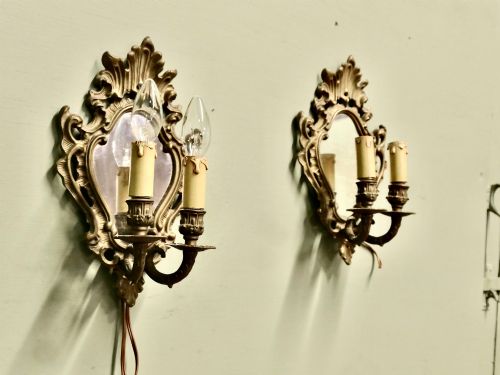
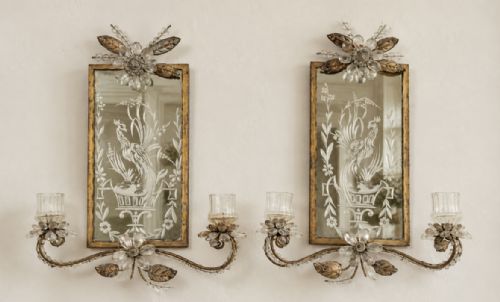
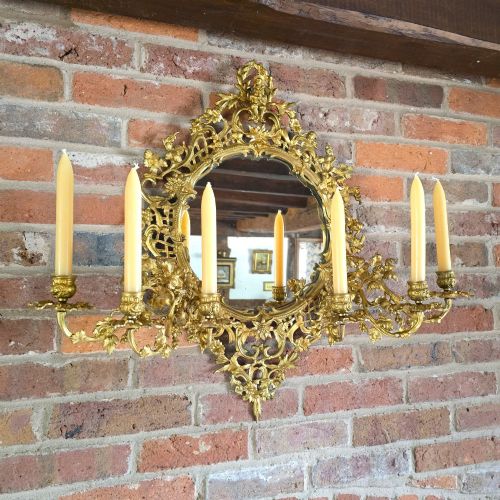
Many examples incorporate lighting elements such as twin-arm girandoles, wall lights, and mirrored sconces with candle branches. Stylistic influences draw heavily from Louis XVI revival, Napoleon III, French Empire, and Rococo designs, often featuring decorative cast motifs like rams' heads, cherubs, and birds.
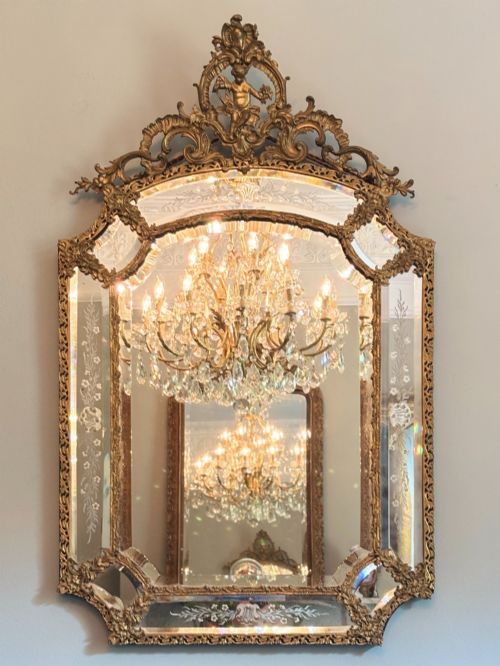
The materials span beyond simple brass to encompass gilt bronze, ormolu, gilt metal, and pressed brass frames mounted on wood or oak backings. These pieces function equally well as standalone wall hangings or paired sets flanking architectural doorways and mantlepieces.
How they were made
Makers constructed these frames using cast or pressed brass, gilt bronze, and ormolu mounted onto wooden carcases such as oak, mahogany, or ebonised timber. Metal components were often hand-chased and gilded to achieve a rich metallic lustre.
Mirror plates were set into the frames manually, with many retaining original bevelled or distressed glass that shows age through oxidation and foxing. Structural elements like metal mounts, hinges, and candle branches were screwed or pinned directly into the wooden backing frames.
French Brass Wall Mirror Retail Price Guide 2026
Typical asking prices for french brass wall mirror among the pieces listed under this phrase on Sellingantiques today, from the lower quarter to the upper quarter. They describe what is for sale here now, not the wider market.
The listings show materials spanning brass, gilt bronze, ebonised wood, and original bevelled glass across the nineteenth and twentieth centuries.
What varies in quality
The distinction between standard production and exceptional work lies in the crispness of the metal casting and the depth of hand-chasing on decorative motifs. Finer pieces display sharply rendered details on figures like rams' heads, cherubs, and foliage, whereas simpler bistro frames rely on plain, heavy functionality.
The preservation of the original mirror plate and the quality of the gilding also define the upper tier of the range. Retaining authentic mercury or early silvered glass alongside intact fire-gilt or ormolu surfaces elevates the piece considerably.
The French Brass Wall Mirror Glossary
- Ormolu
- A technique of applying finely ground high-carat gold to a bronze object using a mercury amalgamation method. This process creates a rich, durable golden finish found on high-end nineteenth-century frames.
- Girandole
- A decorative wall mirror that incorporates attached candle branches or lighting arms. The reflective glass serves to amplify the candlelight within a room.
- Cushion mirror
- A frame style characterised by a convex or bulging profile that slopes inward toward the glass plate. This shape creates multiple angles for reflecting light across the interior space.
- Portmanteau
- A combined wall-mounted mirror and rack system often featuring hooks or trays. These utility pieces were common in nineteenth-century hallways for hanging coats and hats.
- Foxing
- The natural ageing process in antique mirror glass resulting in small spots and cloudy patches. Collectors often value original plates showing this characteristic patina over modern replacements.
French Brass Wall Mirror: Frequently Asked Questions
How do I date a brass mirror?
Dating relies on examining the construction methods of the frame, the backing wood, and the characteristics of the glass plate. Nineteenth-century examples often feature hand-bevelled glass, heavy brass castings, and pegged wooden backs.
Stylistic cues such as Napoleon III ebonising or Louis XVI revival motifs help narrow the decade. Examining screw types, backboards, and mounting hardware provides further clues to the manufacturing era.
Were these mirrors meant for candles?
Many surviving pieces, particularly girandoles and wall sconces, were specifically designed to hold candles or oil lamps. The reflective brass and mirror glass served to amplify the ambient light in dim period rooms.
Later adaptations sometimes converted these candle branches to electricity. When buying a piece with arms, check whether the fittings are original or altered for modern wiring.
What is a bistro mirror?
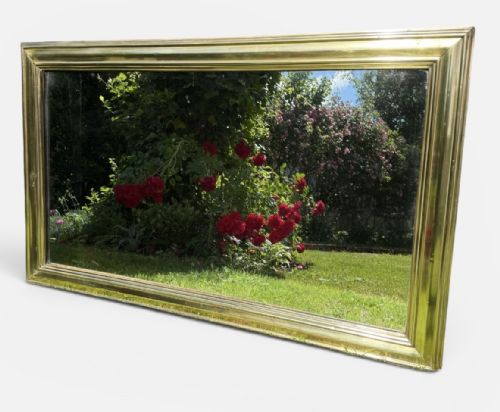
Bistro mirrors are robust, utilitarian looking pieces originally made for French cafes and commercial dining spaces. They typically feature thick brass or metal frames designed to withstand busy environments.
These mirrors often show heavier patination and original distressed glass plates. Their simple, sturdy construction makes them popular for modern kitchens and living spaces.