

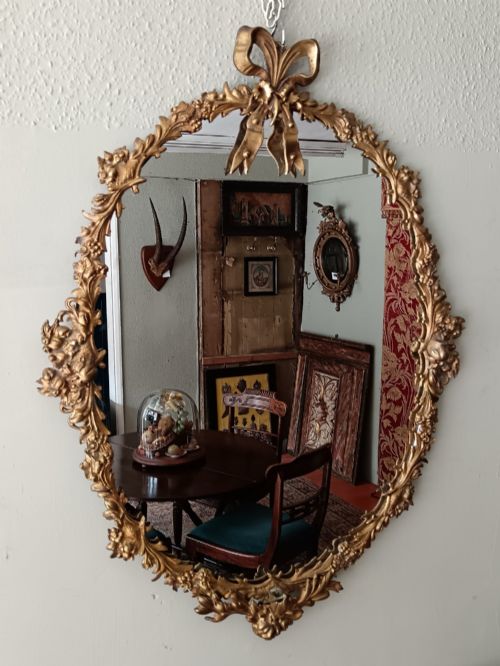


Gilt Bronze Wall Mirror
These gilt bronze wall mirrors bring warmth and reflective depth to a room, caught in the heavy, decorative styles of the nineteenth century.
Gilt Bronze Wall Mirror
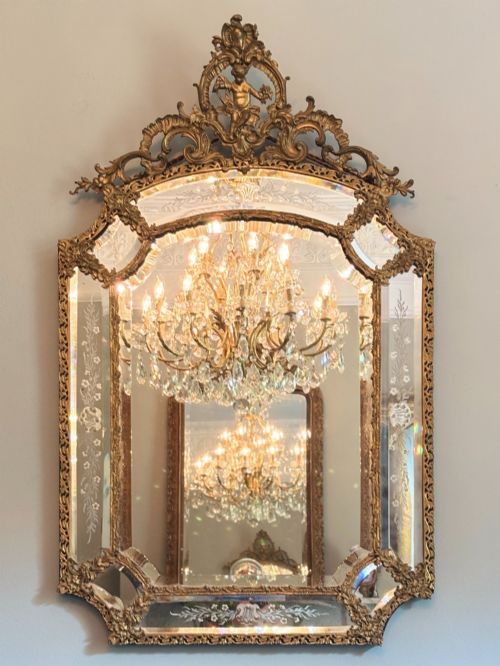
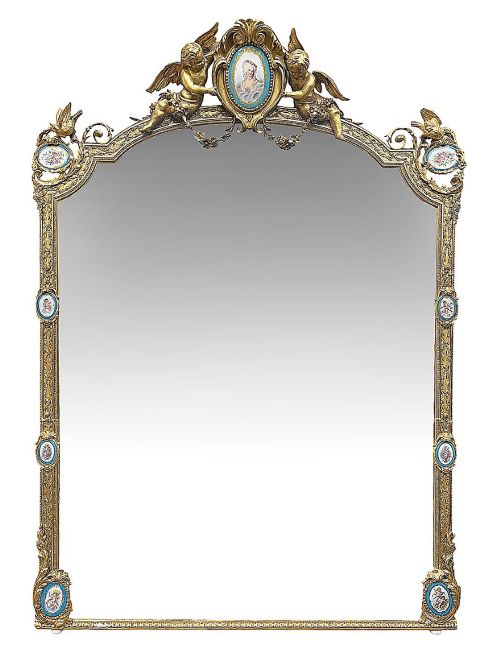
A gilt bronze wall mirror brings together cast metalwork and reflective glass, designed to hang securely and catch the light in a formal room. When searching for a gilt bronze wall mirror, a buyer usually encounters French pieces dating from the nineteenth century, particularly from around eighteen sixty up to nineteen hundred. These pieces lean heavily on historical revivals, most notably Rococo and Louis XVI styles.
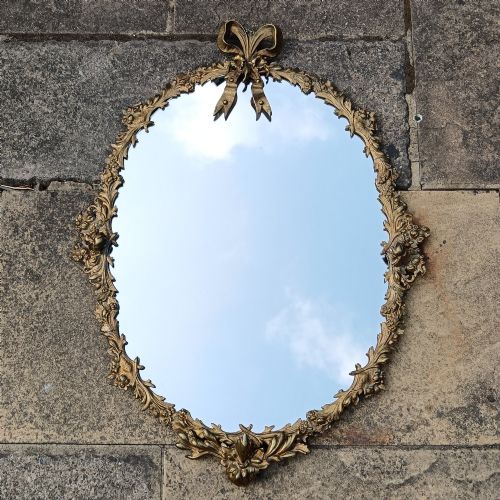
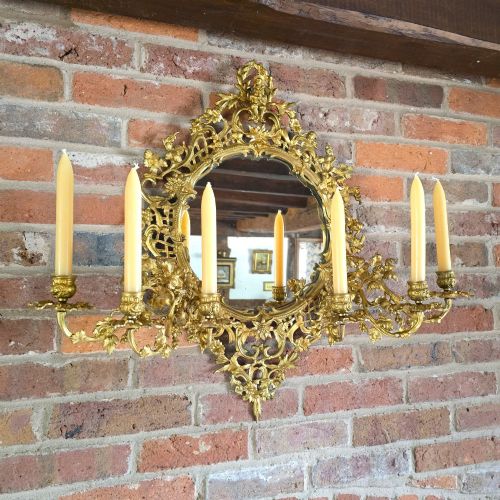
The forms vary from simple oval wall mirrors to elaborate girandoles fitted with multiple branches for candles. Surviving examples often come in matched pairs, especially those originating from the French Grand Tour or later nineteenth-century workshops. The frames take organic, flowing shapes with asymmetrical curves, or adhere to the more symmetrical, restrained geometry of Neoclassical design.
How They Were Made
Makers cast the heavy frames in bronze, brass, or ormolu, utilising detailed moulds to create intricate scrollwork, mythological masks, and floral motifs. The metal surfaces received a rich layer of gilding to achieve a bright, durable metallic finish that complements the central glass plate.
Mirrors of this period feature heavy plates held within the cast metal housings, often accompanied by matching multi-branch candelabra arms securely integrated into the frame structure.
Gilt Bronze Wall Mirror Retail Price Guide 2026
Typical asking prices for gilt bronze wall mirror among the pieces listed under this phrase on Sellingantiques today, from the lower quarter to the upper quarter. They describe what is for sale here now, not the wider market.
Some nineteenth-century mirrors feature stern mythological masks glaring out from the gilt bronze scrollwork, keeping an unblinking eye on the parlor.
What Varies in Quality
The distinction between ordinary and exceptional pieces lies entirely in the crispness of the metal chasing and the depth of the casting. Finer mirrors display sharply defined relief work on the bronze or ormolu, where every leaf, scroll, and mask retains its individual detail rather than appearing soft or smoothed over.
Heavier casting and integrated, multi-branch fittings indicate a more ambitious commission. The quality of the gilding and the weight of the bronze frame determine the presence and authority of the piece on the wall.
The Gilt Bronze Wall Mirror Glossary
- Gilt bronze
- Metal cast and finished with a gold-coloured surface treatment. This material provides the structural strength and decorative surface for the frames.
- Ormolu
- Finely ground high-carat gold applied to a bronze base through a mercury amalgamation process or modern electroplating. It gives the metal a distinctive warm lustre.
- Girandole
- A decorative wall mirror fitted with attached candle branches or sconces. These arms allow the glass to reflect candlelight directly into the room.
- Rococo Revival
- A nineteenth-century design movement mimicking the asymmetrical curves, C-scrolls, and naturalistic motifs of the eighteenth century. It dominates many mirror frames of this era.
- Neoclassical
- A style drawing on classical Greek and Roman symmetry and architectural motifs. It appears in the straighter lines and formal ornaments of Louis XVI revival pieces.
Gilt Bronze Wall Mirror: Frequently Asked Questions
What is the difference between a mirror and a girandole?
A standard wall mirror serves strictly for reflection and decoration. A girandole incorporates integrated branch arms designed to hold candles.
These candle branches extend outward from the frame to multiply the ambient light in a room.
How do I clean gilt bronze frames?
Dust the metal gently with a soft, dry brush to prevent dirt build-up in the recessed chasing. Avoid commercial metal polishes, which can strip away the original gilding.
Water and chemical cleaners should be kept entirely away from both the metal surface and the antique glass edges.
Are these mirrors French in origin?
The majority of nineteenth-century gilt bronze and ormolu mirrors originate from France. They reflect popular domestic design movements such as Rococo and Louis XVI revivals.
Many were produced during the later nineteenth century for export or as souvenirs of the Grand Tour.