

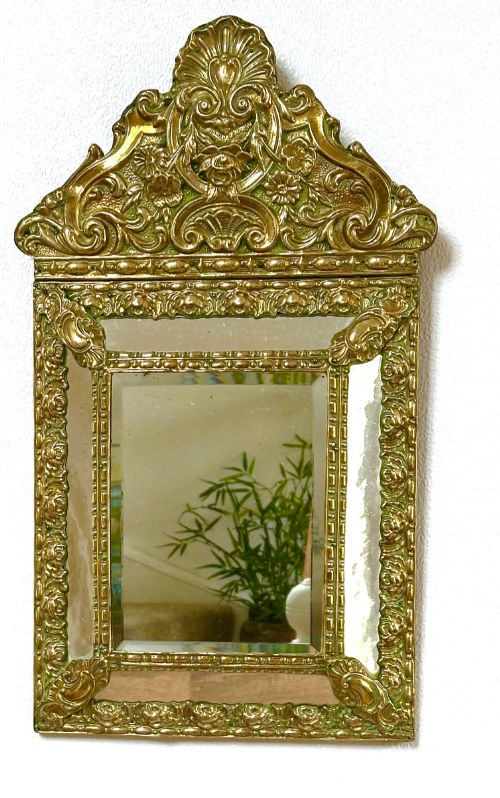
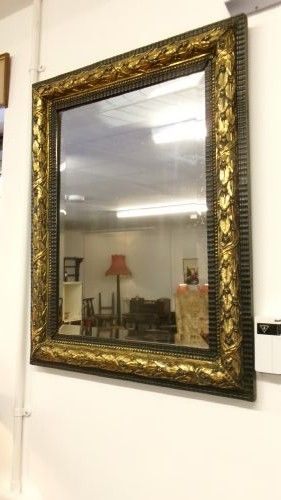


Embossed Brass Wall Mirror
These embossed brass wall mirrors bring warmth and reflective depth to a room, spanning periods from the Regency era through to Art Deco.
Embossed Brass Wall Mirror
An embossed brass wall mirror brings metallic texture and reflection to a room, drawing on styles ranging from the Victorian era to Art Deco. When searching for an embossed brass wall mirror, a buyer encounters everything from small circular frames to large Scottish and French wall-hanging pieces.
The selection on this page leans heavily toward Victorian, Edwardian, and nineteenth-century examples alongside Dutch and Flemish revival designs. These pieces often feature cushion frames or decorative repousse work designed to catch the light in a hallway or reception space.
How they were made
Maker workshops utilised sheet brass, pressed brass, and hand-embossed metal mounted over wooden structures or backing boards. Glass inserts include mirror glass and bevel-edged plates held securely within metal or leather surrounds.
Techniques range from cast brass mounts to intricate repousse hammer work, occasionally incorporating enamel details or patinated finishes. Frames are constructed to support wall hanging, utilising wooden supports and secure metal fixings behind the decorative brass front.
Embossed Brass Wall Mirror Retail Price Guide 2026
Typical asking prices for embossed brass wall mirror among the pieces listed under this phrase on Sellingantiques today, from the lower quarter to the upper quarter. They describe what is for sale here now, not the wider market.
Glasgow School pieces occasionally feature sculptural brass peacocks flanking the glass, ensuring the mirror watches you right back.
What varies in quality
The distinction between standard production and finer workshop pieces lies in the depth and crispness of the metal embossing. Hand-worked repousse details and crisp motifs show superior artisan involvement compared to simpler pressed metal.
Quality also shows in the structural integrity of the wooden backing and the clarity of the original mirror glass. Heavier gauge brass and well-preserved patination elevate the visual weight of the piece on the wall.
The Embossed Brass Wall Mirror Glossary
- Repousse
- Metalworking technique where the metal is hammered from the reverse side to form a raised design on the front. This method gives embossed brass frames their characteristic three-dimensional depth.
- Cushion frame
- A rounded, convex frame profile that swells outward toward the outer edge. This style reflects light across multiple angles.
- Bevel-edged
- Glass with an angled, polished edge tapering toward the perimeter. It adds a subtle decorative refraction to the mirror plate.
- Patination
- The natural surface sheen and discoloration developed on metal over time. Collectors value undisturbed patination for the visual history it provides.
Embossed Brass Wall Mirror: Frequently Asked Questions
How should I clean embossed brass?
Dust the embossed surface gently with a soft, dry brush to prevent dirt accumulation in the recessed areas. Avoid harsh chemical polishes that strip away historical patination.
Use a microfibre cloth for the mirror glass itself, taking care not to let liquid seep behind the frame edges.
Are these mirrors original to their periods?
Most pieces reflect the stylistic revivals of the nineteenth and early twentieth centuries, such as Flemish Baroque and Arts and Crafts designs. Dating relies on construction methods, the type of mirror glass, and backing materials.
Examining the fixings and the wear on the brass helps confirm the age of the frame.
What rooms suit a brass wall mirror?
These pieces function well in hallways, reception rooms, and living spaces where reflective metal surfaces can brighten darker corners. Their decorative frames act as focal points on plain or wallpapered walls.
Smaller circular or oval versions suit intimate spaces, while large cushion-framed pieces anchor larger walls.