

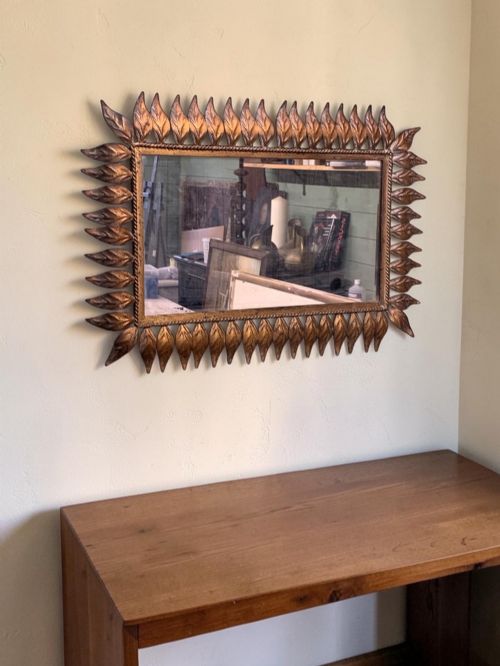
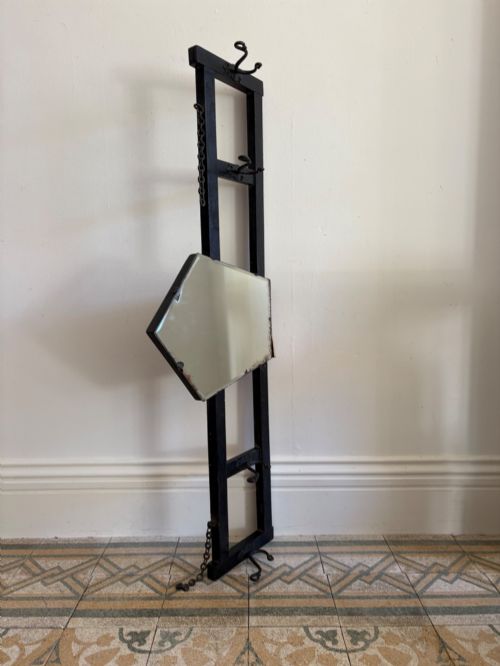
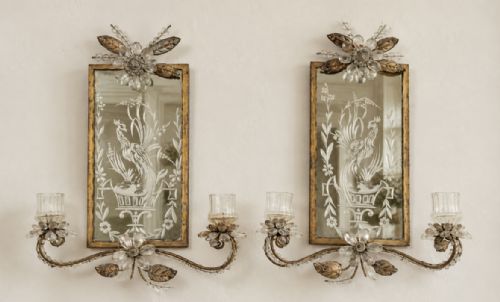
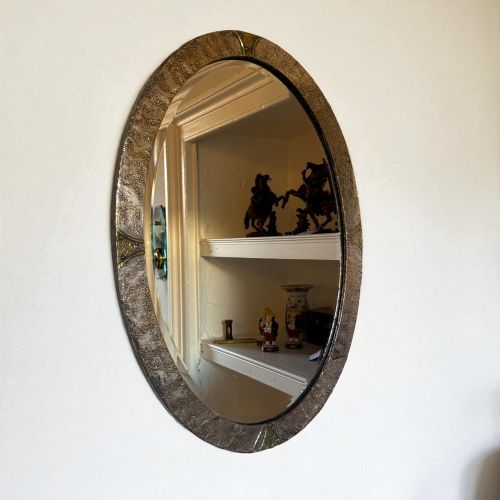



Antique Metal Wall Mirror
An antique metal wall mirror brings depth and industrial or decorative weight to a room, shifting light across hammered copper, cast iron, and polished brass.
Antique Metal Wall Mirror
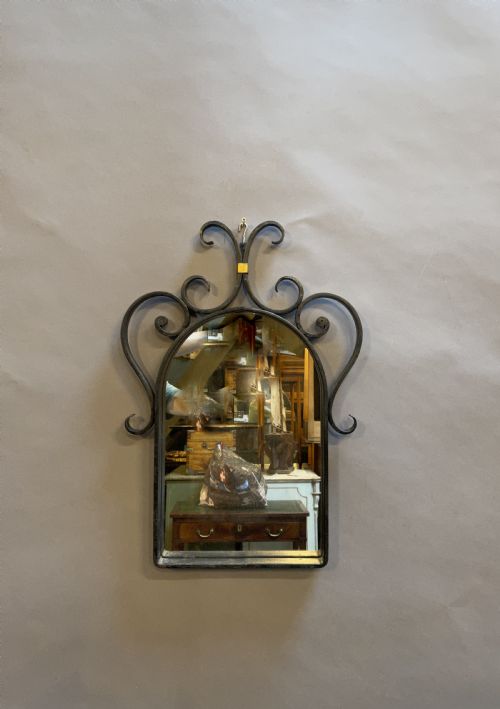
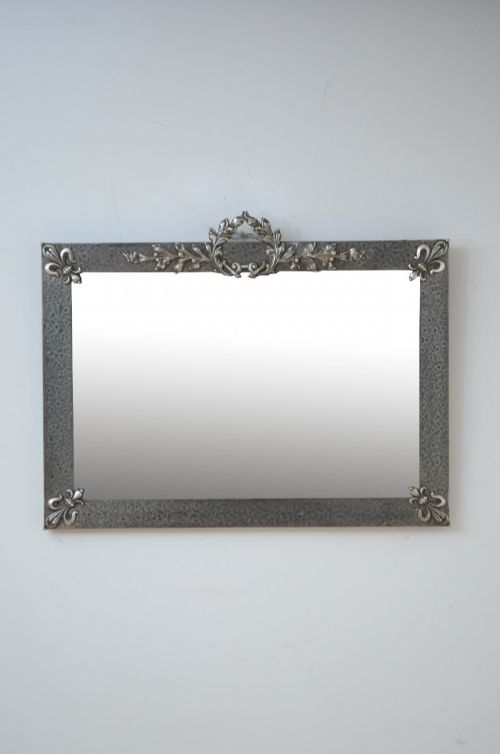
An antique metal wall mirror spans sturdy Victorian cast brass and decorative Edwardian or 1930s iron frames, hanging securely to reflect light in hallways and principal rooms. Buyers seeking this phrase encounter everything from heavy cast iron panels to smaller cushion-framed brass looking glasses.
The selection includes specialised forms such as wall sconces, girandoles with twin arms, and hall stands combining metal frames with hooks and shelves. These functional pieces served utilitarian purposes in period homes while offering decorative metalwork.
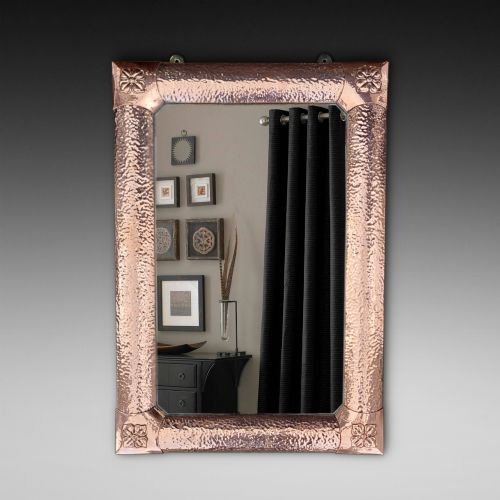
Arts and Crafts examples dominate the available styles, often rendered in beaten or repoussé copper with distinct motifs, alongside French scrollwork, Rococo Revival gilt metal, and stark Art Deco industrial designs.
How they were made
Craftsmen utilised various metals, casting iron and brass into moulds to create heavy decorative crests and frames, or hammering sheet copper by hand to build Arts and Crafts pieces. Repoussé and beaten techniques raised patterns from the reverse of the metal sheet, creating textured surfaces that caught the light.
Gilt metal and gilded finishes were applied to brass and other base metals to mimic solid gold or bright brass, while wooden backboards and mirror glass were fitted securely into the metal rebates.
Antique Metal Wall Mirror Retail Price Guide 2026
Typical asking prices for metal wall mirror among the pieces listed under this phrase on Sellingantiques today, from the lower quarter to the upper quarter. They describe what is for sale here now, not the wider market.
Some wall mirrors doubled as vending machine fronts, dispensing small goods while reflecting the passing crowd.
What varies in quality
Quality rests in the crispness of the casting and the depth of the hand-beaten work on the metal surface. Fine examples display sharp detail in cast brass masks, scrollwork, and stylised tree designs without softening of the edges.
The integrity of the original mirror glass and the stability of the metal frame determine the piece's standing. Superior specimens retain their original bevelled or plain mirror plates and robust structural fixings without excessive replacement parts.
Liberty and Company·Coalbrookdale·Ruskin
The Antique Metal Wall Mirror Glossary
- Repoussé
- A metalworking technique where the artisan hammers metal from the reverse side to form a raised design on the front. This method defines many Arts and Crafts frames.
- Girandole
- A decorative wall mirror fitted with one or more candle branches or arms attached to the frame. These reflected candle flames to increase illumination in dark rooms.
- Cushion Frame
- A frame profile that curves outward like a cushioned pillow before meeting the wall. This style appears frequently on Victorian brass mirrors.
- Cabochon
- A polished, convex gem or stone set without facets into a metal mount. Ruskin pottery cabochons frequently accent Arts and Crafts copper frames.
- Aesthetic Period
- A late 19th-century design movement that emphasised art for art's sake, yielding eclectic metalwork inspired by diverse global cultures.
Antique Metal Wall Mirror: Frequently Asked Questions
How do I hang a heavy cast iron or brass mirror?
Heavy metal mirrors require secure fixings screwed directly into wall studs or masonry using appropriate wall anchors. The substantial weight of cast iron and brass demands robust support rather than standard picture hooks.
Ensure the hanging wire or integrated mounting brackets on the back of the frame are checked for strength before installation.
Where should I place a metal wall mirror?
These mirrors suit hallways, above console tables, and in living spaces where their reflective glass maximises natural light. Smaller sconces and vanity mirrors work well in bedrooms or narrow corridors.
Positioning them opposite a window or light source helps brighten darker corners of a room.
How do I clean antique brass and copper frames?
Dust metal frames gently with a soft, dry cloth to prevent the accumulation of dirt in recessed areas. Avoid harsh chemical polishes that strip away the aged patina built up over decades.
Preserving the natural oxidation ensures the piece maintains its historical character and depth of colour.
How can I tell Victorian metal mirrors from later pieces?
Victorian examples often feature heavy cast brass, elaborate mask crests, and cushion frames with traditional mounting techniques. Later 20th-century pieces frequently adopt cleaner Art Deco lines or specific Arts and Crafts hand-beaten copper motifs.
Examining the construction of the backboards and the fixings helps distinguish 19th-century manufacture from 1930s reproductions.