

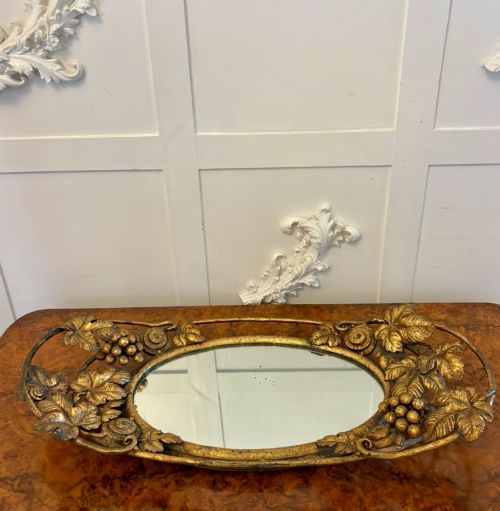

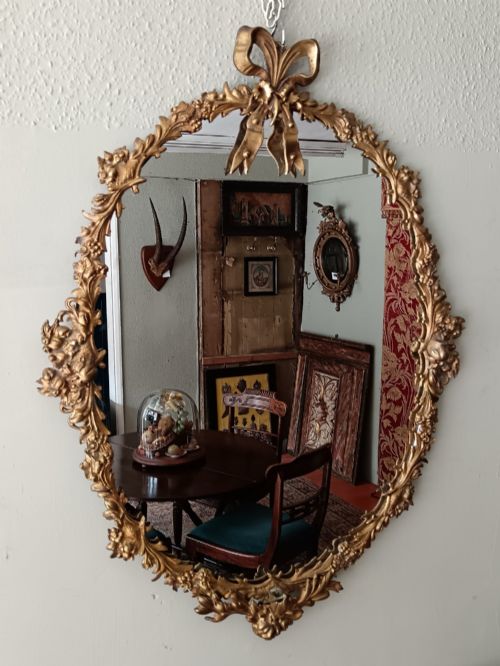


Ornate Brass Mirror
An ornate brass mirror brings heavy cast detail, polished plate and historical character to a hallway or boudoir.
Ornate Brass Mirror
An ornate brass mirror unites structural metalwork with reflective glass, appearing across Victorian, Edwardian and nineteenth-century periods. These objects serve practical and decorative functions in domestic interiors, capturing light and adding decorative weight to a room.
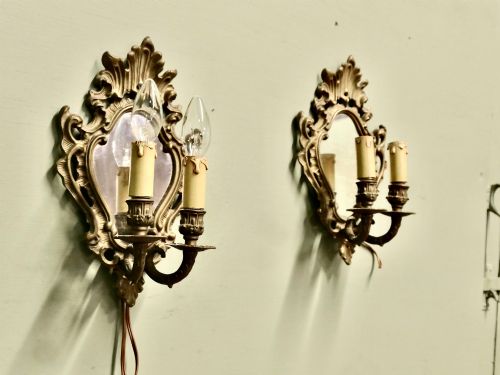
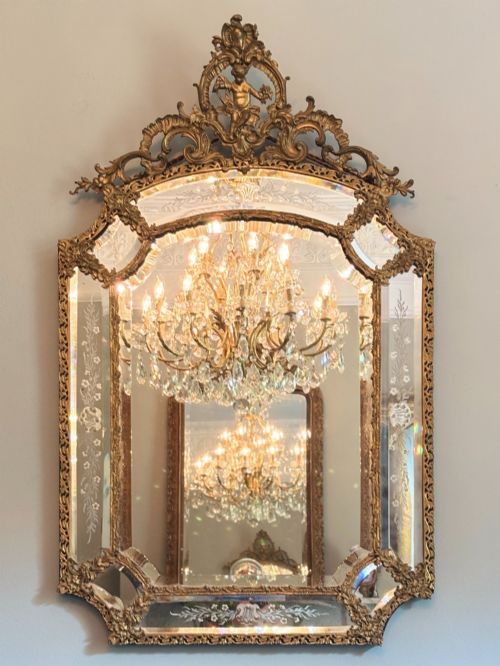
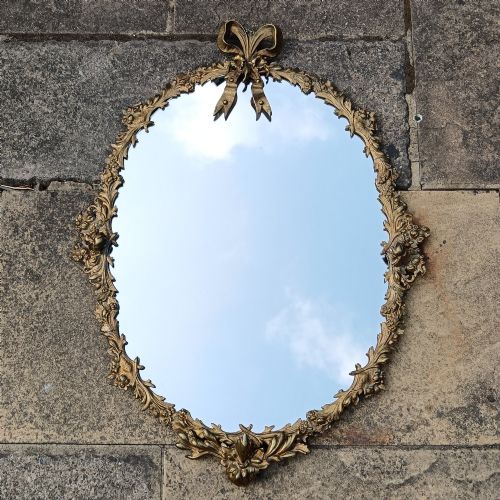
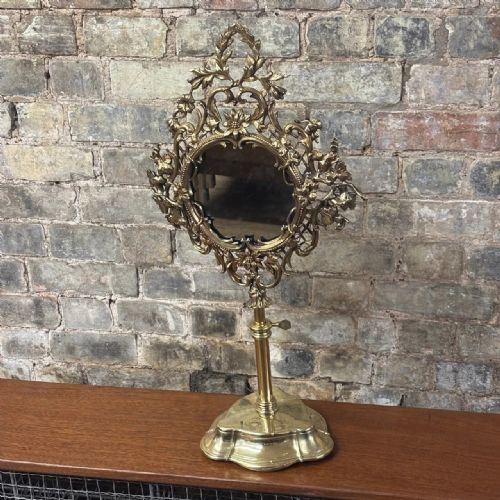
The pieces on this page span wall mirrors, table mirrors, vanity mirrors and wall sconces. French Rococo revival, Louis XVI revival and Dutch styles dominate the selection, bringing cast scrollwork, cherubs and floral motifs into domestic spaces.
Buyers encounter cushion-framed wall mirrors, oval table-top dressing mirrors and cast brass wall pieces featuring mask crests or repousse work. Most examples originate from nineteenth-century France or Britain, reflecting the period preference for elaborate metal framing.
Materials and Techniques
Maker workshops utilised brass, bronze, gilt metal and ormolu, shaping the metal through casting, pressing and repousse techniques. Frames often combine solid brass or cast bronze with timber backings and mirror glass.
Surface ornamentation relies on hand-chasing, champleve enamel details and applied gilt finishes to create texture and depth. Bevelled mirror plates sit securely within heavy metal mounts, sometimes supported by easel backs or fixed with original hanging loops.
Ornate Brass Mirror Retail Price Guide 2026
Typical asking prices for ornate brass mirror among the pieces listed under this phrase on Sellingantiques today, from the lower quarter to the upper quarter. They describe what is for sale here now, not the wider market.
Cherubs, ram heads and fierce mask crests peer out from the brass work, watching over anyone checking their reflection.
Distinctions in Quality
The integrity of the mirror plate matters greatly, with bevelled edges and original glass carrying more historical weight than modern replacements. Superior items display careful hand-finishing on the reverse and secure structural joints that maintain rigidity across large cushion frames.
Thiebaut Freres
The Ornate Brass Mirror Glossary
- Repousse
- Metalwork hammered into relief from the reverse side. This technique allows intricate floral and figural designs to project from the frame surface.
- Ormolu
- Gilded bronze or brass applied to decorative hardware and mirror mounts. The process gives a rich gold-coloured finish that resists tarnishing.
- Girandole
- A branched wall mirror designed to hold candles. The reflective brass surface multiplies the light cast by the flames.
- Champleve
- An enamelling technique where troughs are dug into the metal surface and filled with vitreous paste before firing. It adds colourful decoration to nineteenth-century frames.
- Bevelled
- Glass with an angled edge cut and polished around the perimeter. This treatment catches the light and adds visual depth to the reflection.
Ornate Brass Mirror: Frequently Asked Questions
How do I hang a heavy brass wall mirror safely?
Heavy cast brass pieces require sturdy wall fixings screwed directly into masonry or wooden wall studs. Utilise the original hanging loops or secure brackets rather than relying on decorative crests.
Ensure the weight is distributed evenly across the frame structure to prevent strain on the antique metal joints and mirror plate.
Are mirror plates on these pieces original?
Many nineteenth-century examples retain their original bevelled glass, which often exhibits light foxing and minor atmospheric spotting. These natural age marks confirm the period authenticity of the plate.
Replacement glass appears in some pieces where the original plate suffered breakage over decades of domestic use.
How should I clean an antique brass frame?
Dust the metal gently with a soft, dry cloth to remove surface particles. Avoid harsh chemical polishes that strip away the aged patina accumulated over the centuries.
Preserving the darker recesses of the cast ornamentation maintains the visual depth intended by the original maker.