

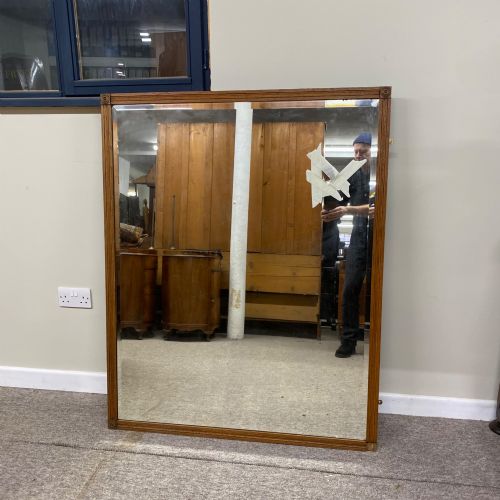
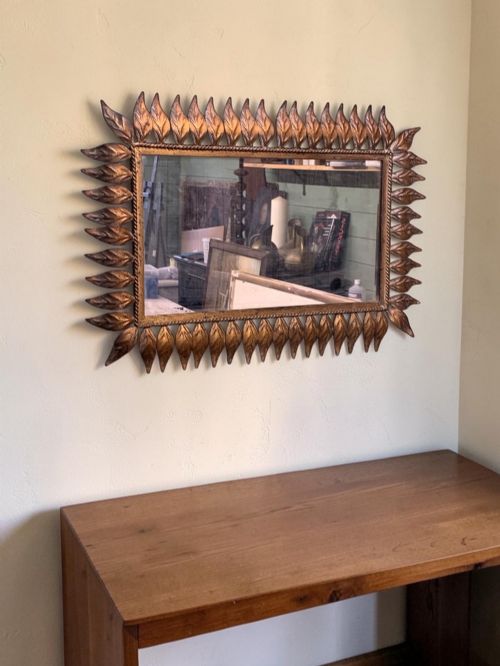
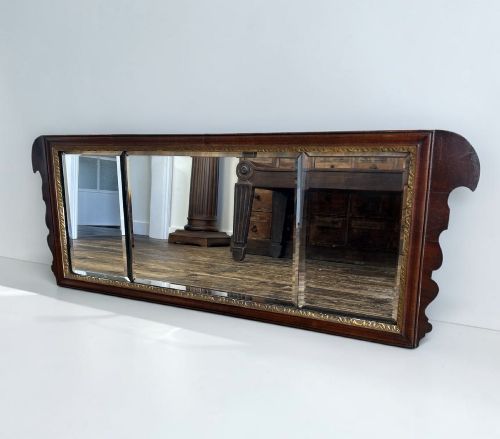
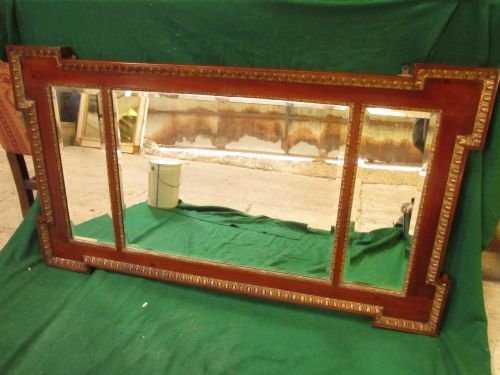
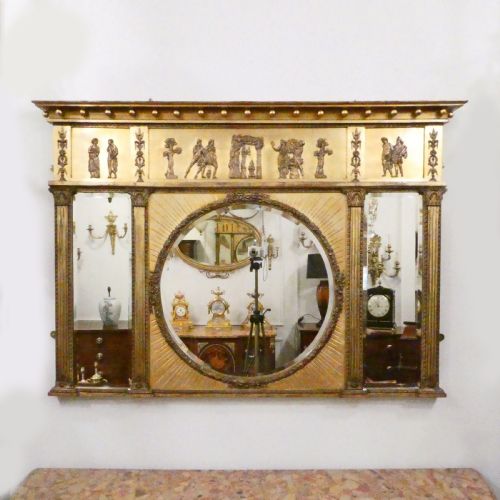
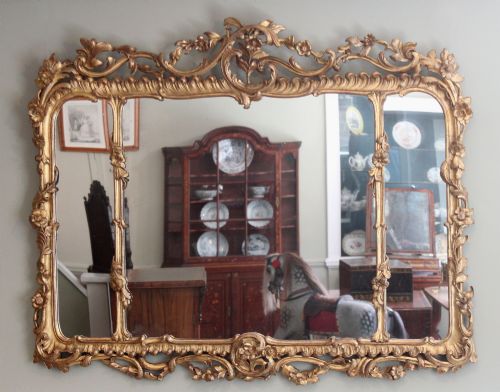

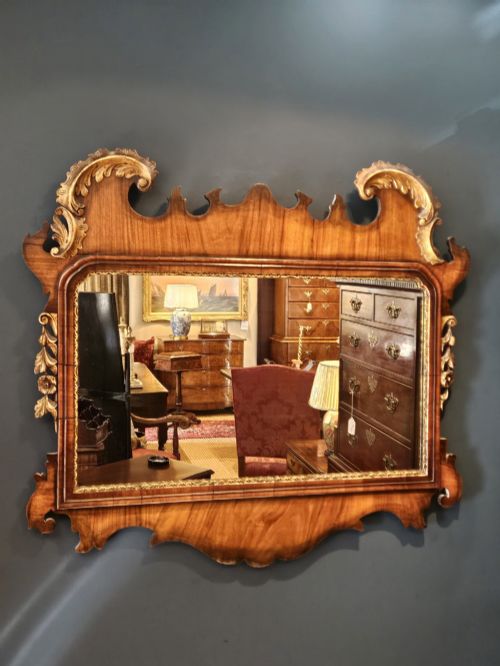
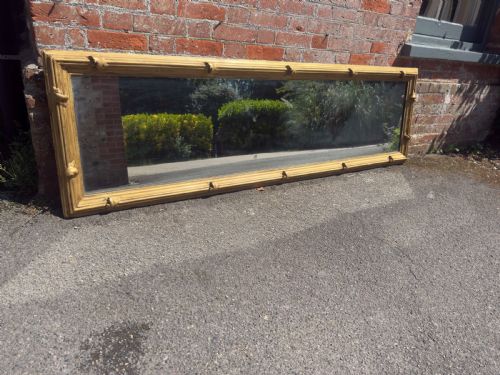
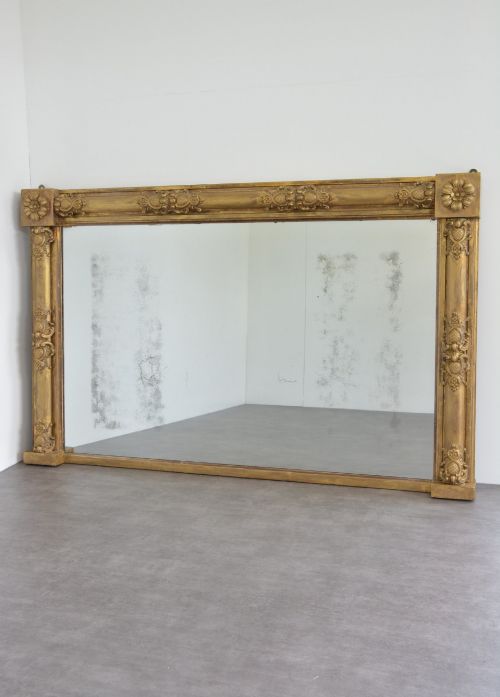
Landscape Wall Mirror
A landscape wall mirror brings width and light to a room, offering horizontal proportions suited for hanging above a fireplace or sideboard.
Landscape Wall Mirror
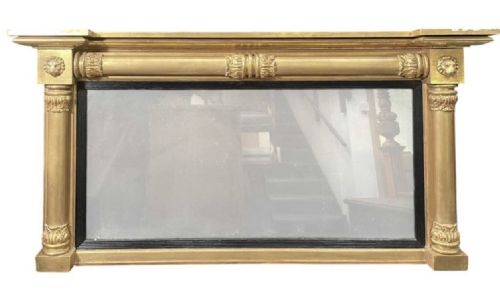
A landscape wall mirror encompasses horizontal formats designed to command the width of a chimney breast or principal wall. You will most frequently encounter Regency, Georgian, and Victorian examples shaped as overmantels or extended pier glasses.
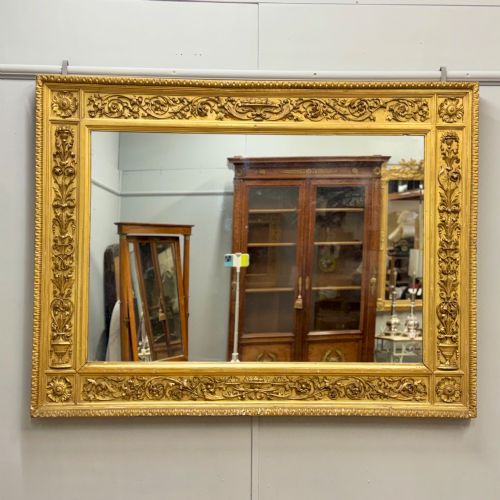
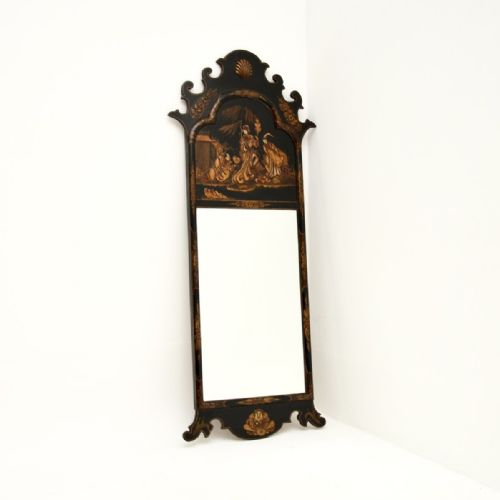
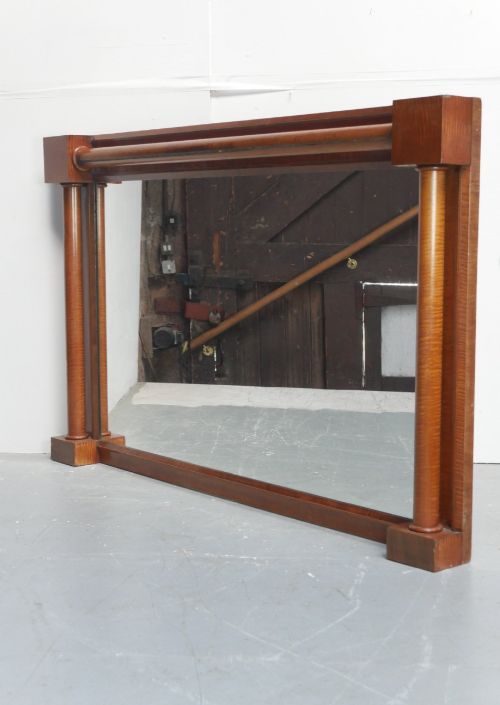
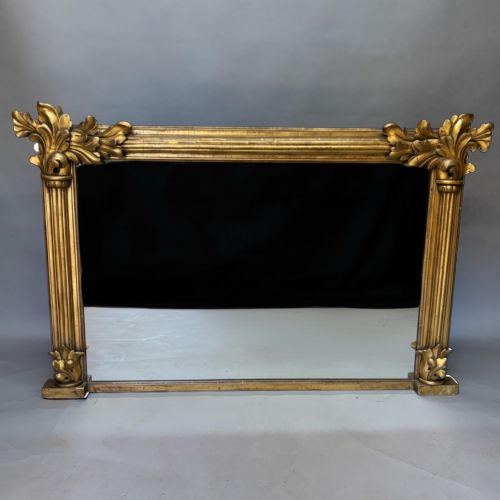
The selection ranges from architectural giltwood frames with triple plates to painted Chinoiserie panels and sectional mahogany designs. These pieces span the eighteenth to the early twentieth century, reflecting shifting domestic tastes for broad reflective surfaces.
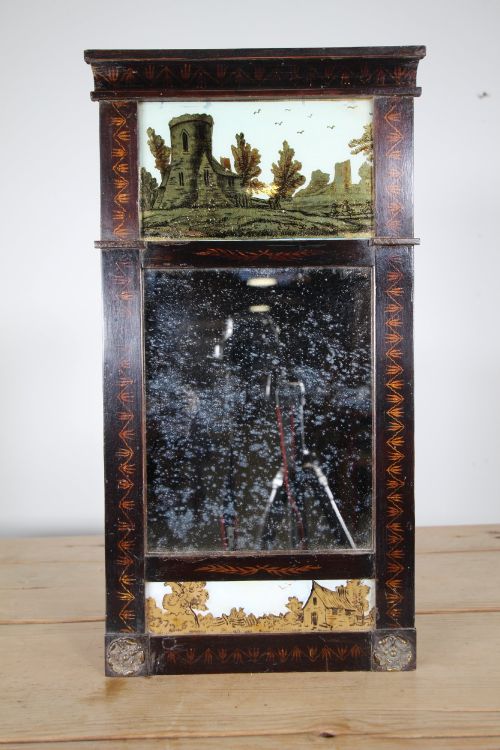
Many variants integrate landscape orientations with specific decorative schema, such as églomisé panels, classical friezes, or carved fretwork. The horizontal format prioritises spacious room reflection over vertical height.
Materials and construction
Makers constructed the primary frames using solid timbers such as mahogany, walnut, and pine, frequently applying carved gesso and gold leaf to create gilded surfaces. Carved wood details, including applied mouldings and fretwork, give these mirrors their architectural depth.
Mirror glass of the period was cast or blown before being silvered, often resulting in natural ageing patterns such as light foxing. Triple plate configurations required segmented framing to hold adjacent panes securely within a single unified structure.
Landscape Wall Mirror Retail Price Guide 2026
Typical asking prices for landscape wall mirror among the pieces listed under this phrase on Sellingantiques today, from the lower quarter to the upper quarter. They describe what is for sale here now, not the wider market.
Keep an eye out for carved wooden squirrels and exotic birds perched atop nineteenth-century frames.
Quality and craftsmanship
The calibre of a landscape wall mirror rests in the crispness of its hand-carved gesso ornamentation and the depth of the original gilding. Finer pieces display sharply defined motifs like laurel wreaths, ho ho birds, or neoclassical friezes rather than soft, moulded resin substitutes.
Structural integrity of the original wood frame and the preservation of early or original mirror glass elevate a piece. Superior examples retain their original backing boards and undisturbed gilding without heavy modern intervention.
Ciceri and Co
The Landscape Wall Mirror Glossary
- Overmantel mirror
- A wide mirror specifically designed to hang above a mantelpiece. These horizontal formats frequently incorporate multiple plates.
- Giltwood
- Timber coated with gold leaf applied over a prepared gesso ground. This technique creates a luminous metallic finish characteristic of formal period frames.
- Églomisé
- Gilding or painting applied to the reverse side of glass to produce a mirrored, metallic sheen. It appears frequently in decorative panels on Regency pier mirrors.
- Trumeau
- A decorative wall mirror incorporating a painted or carved panel above the glass. These originate from French interior design traditions.
- Foxing
- Small dark spots or patination appearing within the silvering of antique mirror glass. This chemical ageing process confirms genuine age.
Landscape Wall Mirror: Frequently Asked Questions
Where should I hang a landscape wall mirror?
These mirrors suit wide expanses, most traditionally positioned above a fireplace mantelpiece where their horizontal proportions balance the hearth below.
They also function effectively above low sideboards, sofas, or console tables to draw light across a room.
How do I date a landscape wall mirror?
Dating relies on combining frame construction details, wood types, and the characteristics of the mirror glass itself. Georgian and Regency pieces show distinct neoclassical motifs and hand-carved gesso work.
Later Victorian and Edwardian examples often employ heavier moulding profiles and machine-prepared components.
Should I replace foxed mirror glass?
Original glass showing light foxing or natural ageing is generally preferred by collectors as evidence of authenticity. Replacing the glass removes part of the object's history and alters its visual character.
Only severe damage that obscures the reflection entirely justifies intervention.