


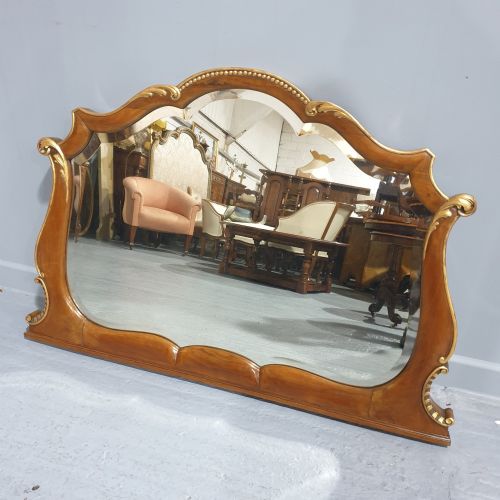

Antique Walnut Mantel Mirror
An antique walnut mantel mirror brings rich grain and deep colour to a room, offering both traditional scale and practical reflection.
Antique Walnut Mantel Mirror
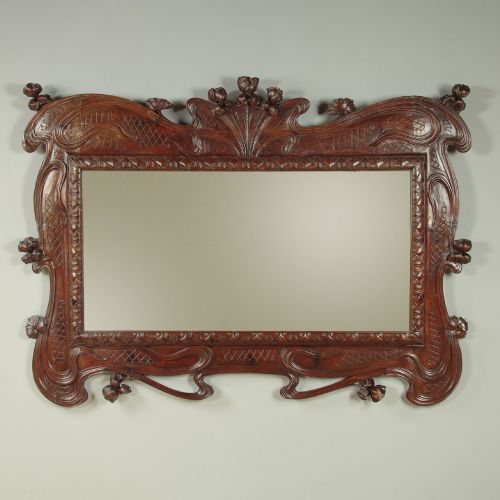
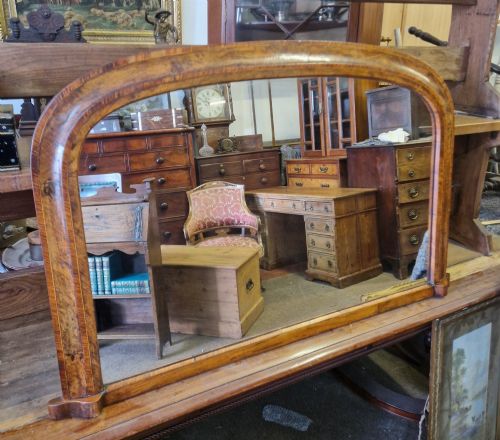
When you search for an antique walnut mantel mirror, you are looking at large overmantel mirrors and wall mirrors designed to sit above a fireplace. The examples you are most likely to meet on this page date from the nineteenth century into the early twentieth century, spanning Victorian, Edwardian, and continental periods.
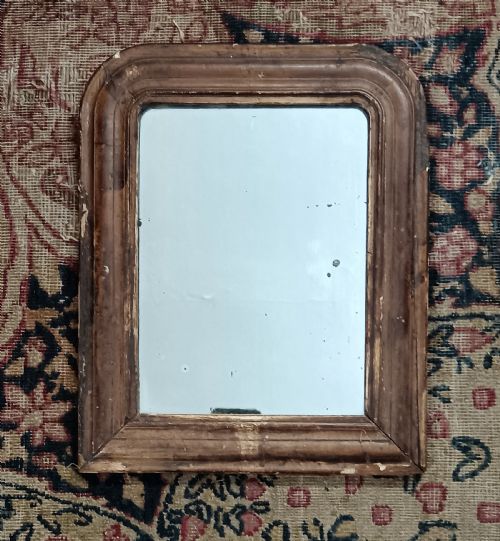
The physical forms include grand arched overmantels, petite French Louis Philippe frames, and rectangular wall mirrors. English pieces often show classic Victorian proportions, whilst French examples introduce arched tops, parcel gilt accents, and classical motifs.
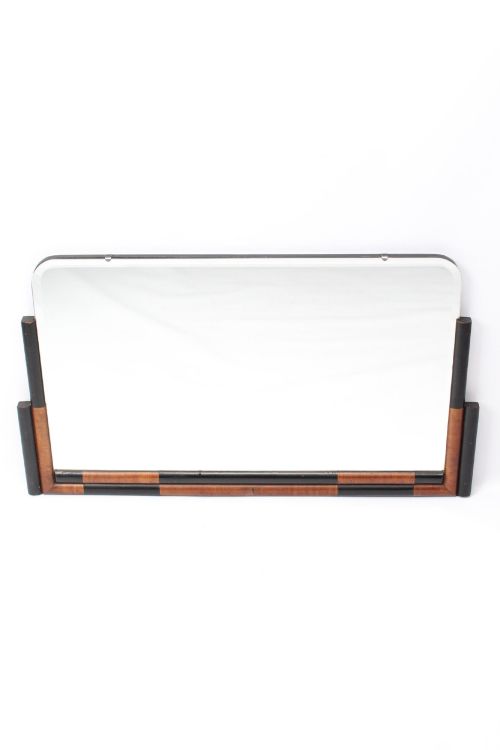
Makers and designers from these eras utilised walnut and burr walnut alongside giltwood, ebonised elements, and occasional brass detailing. The resulting objects range from simple, clean-lined frames to ornately carved chateau mirrors.
Materials and construction methods
Makers constructed these frames using solid walnut, carved wood, and walnut veneer applied over secondary timbers to display rich grain patterns. Burr walnut sections were frequently selected for their swirling figures, adding visual depth to the framing.
Carved wooden ornaments and classical motifs were applied by hand, sometimes paired with parcel gilt details or contrasting brass elements. Mirror glass was set into these heavy frames, occasionally accompanied by ebonised finishes or French polish.
Materials recorded across these mirrors include solid walnut, burr walnut veneer, giltwood, carved wood, and ebonised finishes.
Distinguishing quality in construction and materials
The standard of a mantel mirror rests upon the selection of the timber and the depth of the carving. Finely figured burr walnut and deep, crisp hand-carving elevate a piece far above simpler veneered constructions.
Proportion and the integrity of the original mirror glass also dictate the standing of the frame. Well-balanced arches, precise joinery, and minimal distortion in the glass indicate careful workshop production.
The Antique Walnut Mantel Mirror Glossary
- Overmantel mirror
- A large mirror specifically designed to be hung or placed on the mantelpiece above a fireplace. These pieces often feature wide proportions to match the width of the hearth.
- Burr walnut
- A highly prized timber figure obtained from the growth warts of walnut trees, yielding intricate swirling patterns. It is typically sliced into veneers for decorative framing.
- Parcel gilt
- A decorative technique where specific carved details or mouldings are partially gilded with gold leaf, contrasting against the dark walnut grain. This finish highlights classical motifs.
- Louis Philippe
- A nineteenth-century French style characterised by understated elegance, simple curved arches, and gentle scrolling frames. These mirrors dispense with heavy ornamentation in favour of clean lines.
- Aesthetic Movement
- A late nineteenth-century design style focusing on artistic refinement, often incorporating ebonised woods and contrasting metallic details. Pieces from this movement reject heavy Victorian revivalism.
Antique Walnut Mantel Mirror: Frequently Asked Questions
Where should I hang an overmantel mirror?
These mirrors were traditionally designed to sit directly on a mantelpiece or to be securely wall-mounted just above a fireplace opening. Their wide proportions are intended to anchor the visual weight of the hearth below.
Outside of the living room, they work effectively above sideboards or low console tables in hallways where their large reflective surface can bounce light across the space.
How do I identify a Victorian walnut mirror?
Victorian examples often feature robust proportions, dark walnut timber, and decorative carving that reflects classical or architectural revivals. Look for substantial wooden frames that incorporate burr walnut veneers or brass detailing.
Many of these pieces will also show traditional joinery methods and heavier backing boards typical of nineteenth-century British cabinetmaking.
What is the difference between French and English styles?
French mantel mirrors from the nineteenth century, particularly those in the Louis Philippe style, frequently feature soft arched tops and parcel gilt accents. They often present a lighter, more refined decorative scheme.
English variants tend to be heavier in scale, with pronounced architectural moulding, darker walnut tones, and more overt nineteenth-century revival motifs.
Are these mirrors heavy to hang?
Due to the dense walnut timber, carved wooden frames, and large glass plates, these mirrors carry considerable weight. Proper wall fixings into structural studs or masonry are essential for secure placement.
When resting a mirror directly on a mantelpiece, safety brackets are recommended to prevent accidental tipping.