
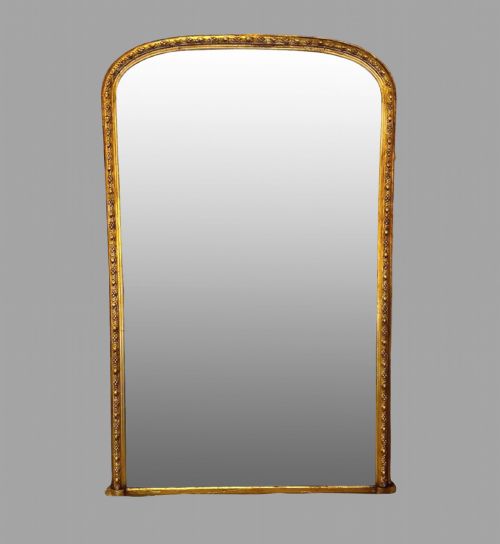
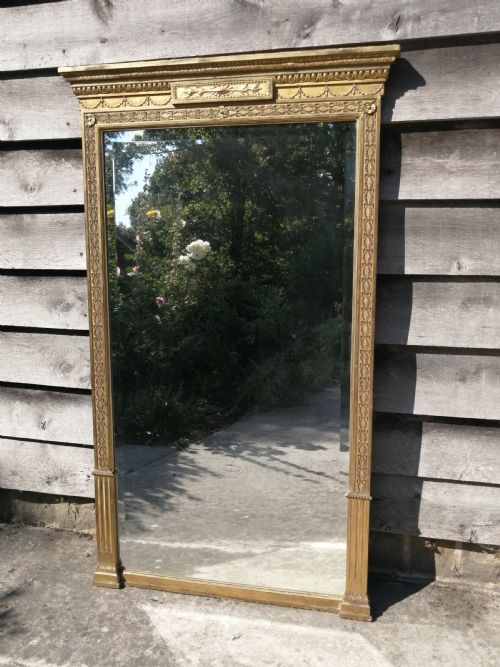
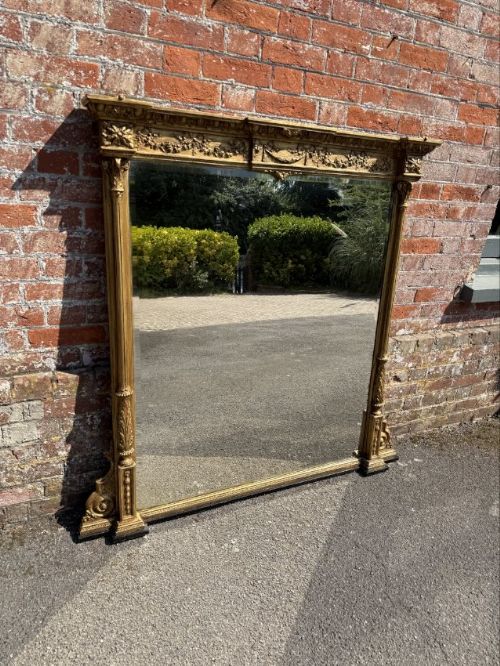
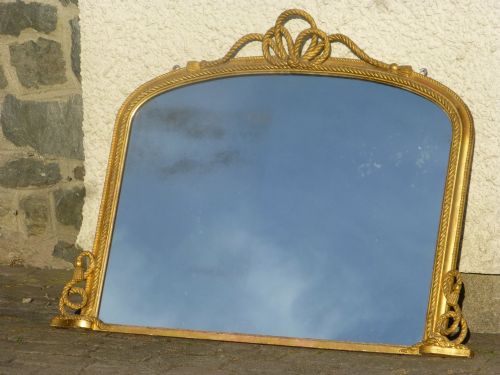

Regency Gilt Overmantel Mirror
A regency gilt overmantel mirror brings architectural presence to a room, framed in gold leaf to sit above a mantelpiece.
Regency Gilt Overmantel Mirror
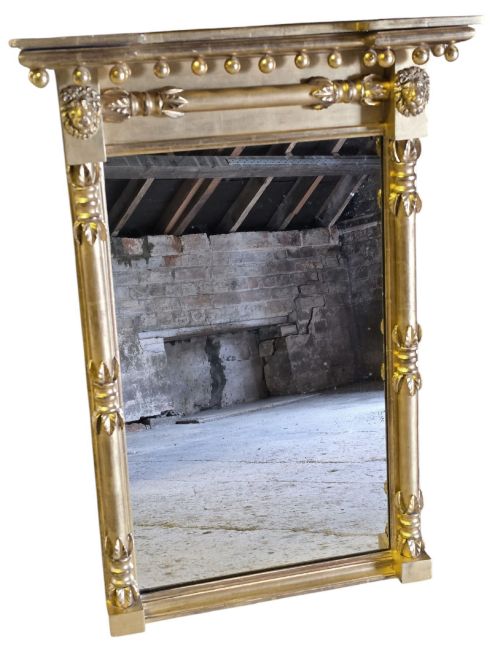
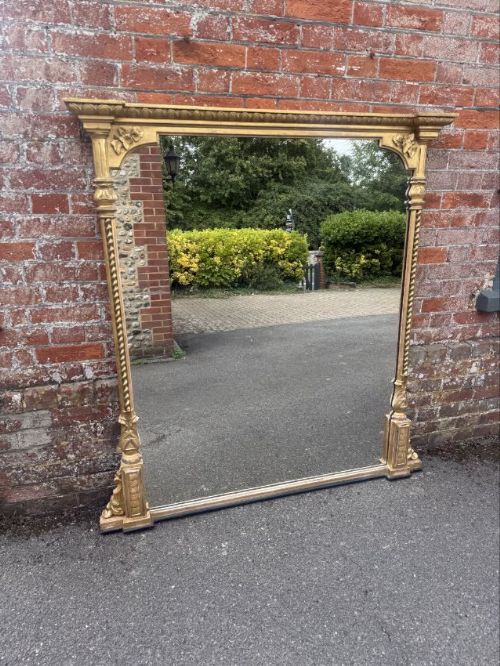
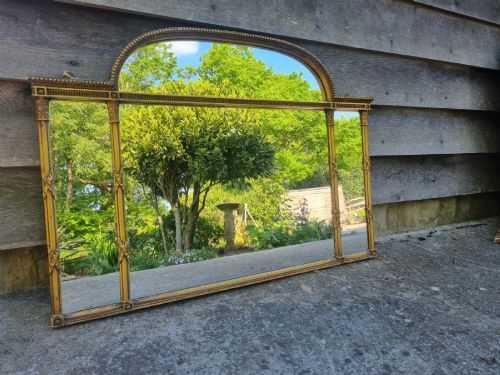
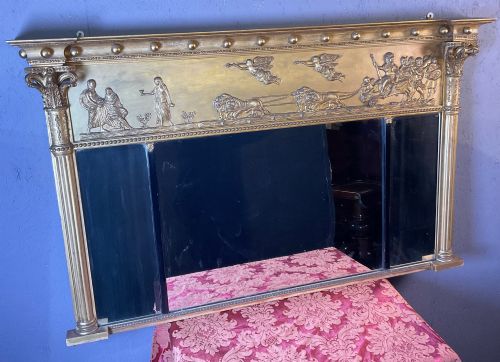
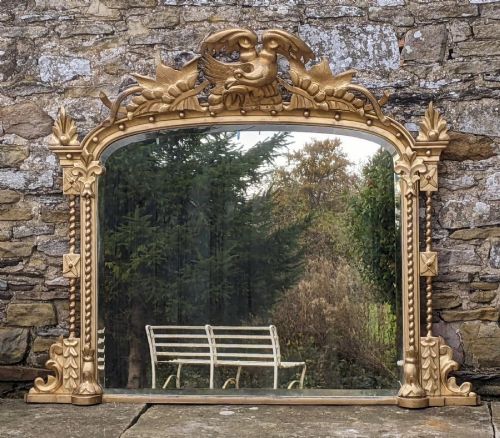
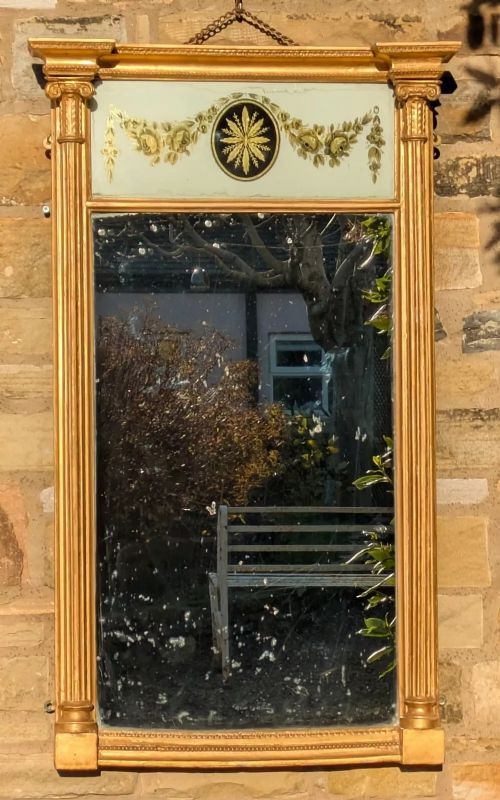
A regency gilt overmantel mirror is a horizontal wall-hanging glass designed specifically to mount above a fireplace. The examples seen here span from the early nineteenth century through to Victorian interpretations, encompassing the neoclassical and William IV styles.
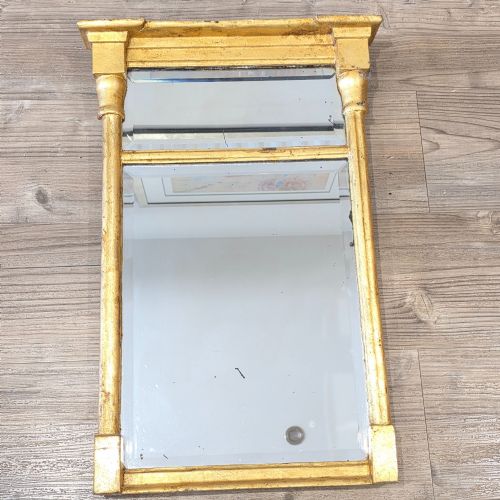
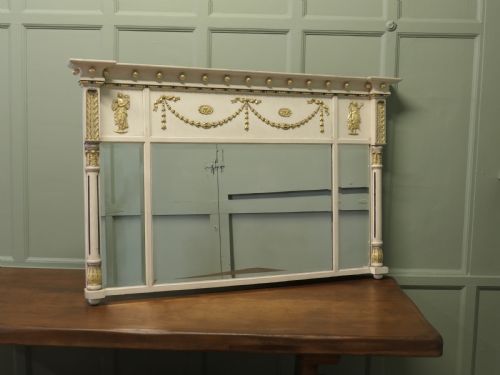
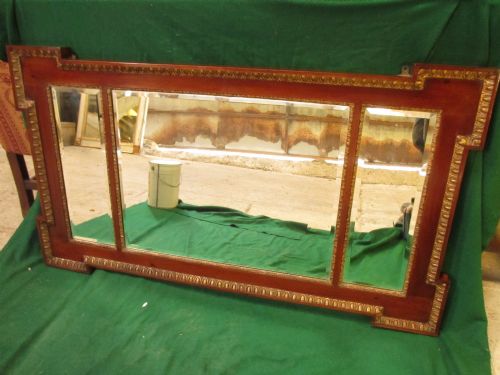
Most pieces meet the form of a landscape or triptych format, frequently housing triple plates divided by columns or pilasters. Proportions range from neat domestic scales to large country house formats.
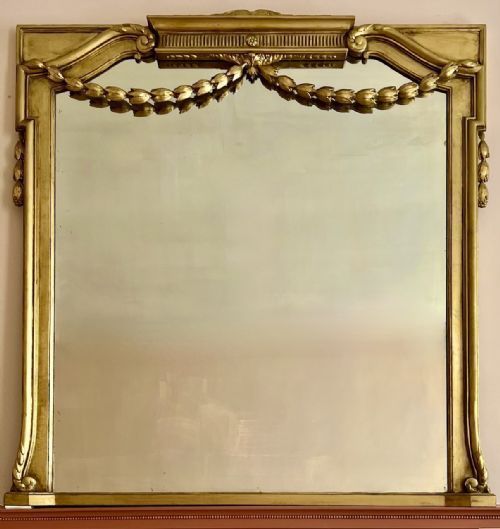
The aesthetic draws heavily on neoclassical vocabulary, displaying laurel wreaths, griffin friezes, and carved wooden detailing. While true period pieces date from the early nineteenth century, later nineteenth-century revivals also appear.
Materials and construction
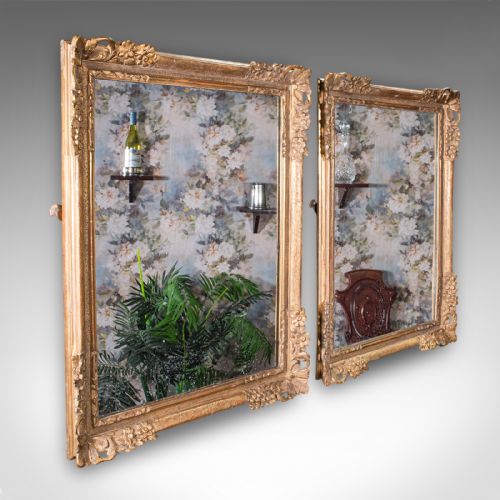
Construction relies upon a wooden frame fashioned from carved wood, giltwood, or gilt wood. Composition ornament and gesso are applied to build up crisp architectural motifs and surface relief before gilding takes place.
Surfaces receive gold leaf or a gilded finish, sometimes paired with ebonised sections or rosewood elements. Glass plates are set into the frame, occasionally incorporating bevelled edges or multiple divided plates in landscape formats.
Retail Price Guide 2026
Typical UK retail prices for regency gilt overmantel mirror, calculated from the Sellingantiques database of over a million retail prices indexed since 2003. This retail price guide relies exclusively on Sellingantiques data; no external sources or auction records are used, so the figures do not describe the wider market.
Several mirrors include discreet nautical touches or griffin friezes to watch over the mantelpiece.
Judging quality
Quality rests upon the crispness of the carved woodwork and the depth of the gesso mouldings that define the neoclassical friezes. Finer examples display sharp definition in details like laurel wreaths and griffins, whereas lesser work softens these reliefs.
The application of gold leaf determines the richness of the surface light, distinguishing genuine giltwood from later paint or simpler finishes. Original glass plates, whether single or triple, retain characteristic silvering and depth that modern replacements lack.
The Regency Gilt Overmantel Mirror Glossary
- Overmantel mirror
- A large horizontal mirror built to hang on the wall directly above a fireplace mantelpiece. These pieces often reflect light deep into a room.
- Giltwood
- Timber that has been coated with thin sheets of gold leaf over a prepared base layer. This material provides the bright reflective surface seen on traditional frames.
- Gesso
- A plaster-like mixture applied to wood frames and carved into decorative motifs before gilding. It allows for intricate relief work.
- Triptych
- A mirror divided vertically into three distinct glass panels within a single frame. This layout is common in large landscape overmantels.
- Neoclassical
- A decorative style inspired by classical Greece and Rome that influenced Regency design. It brings symmetry, columns, and motifs such as wreaths and friezes.
Frequently Asked Questions
Where should I hang an overmantel mirror?
These mirrors are proportioned to sit centrally on the wall directly above a fireplace mantelpiece. Their horizontal landscape format balances the width of the hearth below.
They also function effectively on large expanse walls in principal reception rooms where a wide focal point is required.
How do I distinguish Regency from Victorian mirrors?
Regency pieces typically date from the early nineteenth century and lean heavily on strict neoclassical motifs like laurel wreaths and classical friezes. They frequently employ carved giltwood of refined proportions.
Victorian and later revival pieces from the late nineteenth century often scale up the dimensions and simplify the crispness of the gesso mouldings.
Are these mirrors heavy to hang?
Carved wood and gesso frames holding thick glass plates possess substantial physical weight. Proper wall anchors and professional fixing into structural studs or masonry are essential for secure installation.
The weight varies depending on whether the frame uses single glass or heavier multi-plate triptych configurations.