



Ball Moulded Mirror
A ball moulded mirror brings immediate depth and light to a room through its curved glass and decorated frame.
Understanding the ball moulded mirror
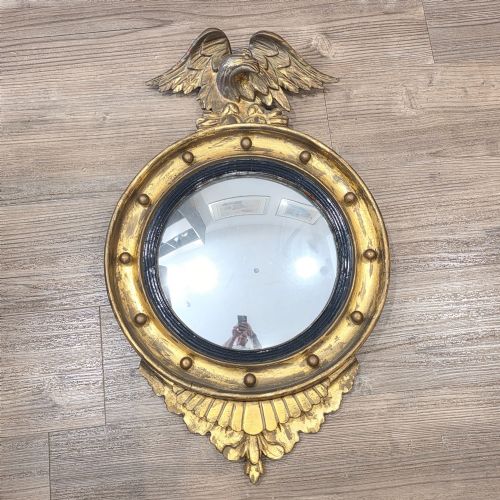
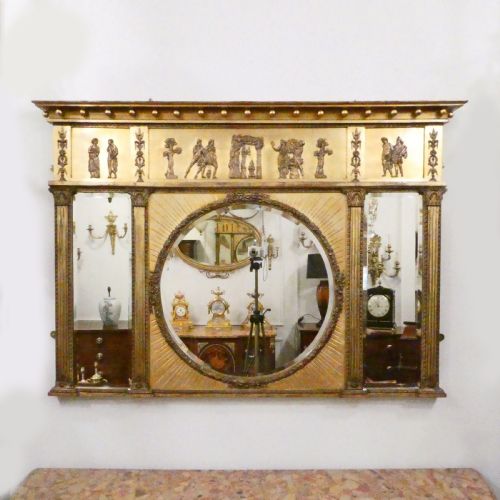
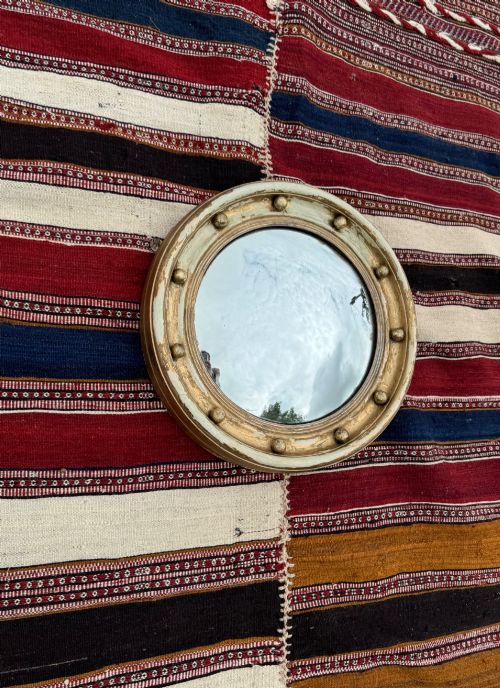
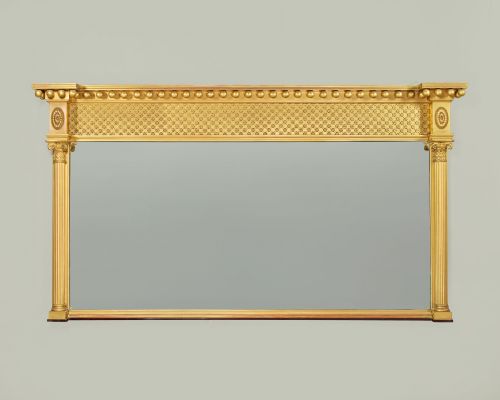
A ball moulded mirror takes the form of a convex wall mirror or a larger overmantel mirror designed to hang in a principal reception room. These pieces originate from the Regency period and the wider nineteenth century, offering distinct curved surfaces that reflect the entire interior in miniature. Buyers searching for a ball moulded mirror encounter circular convex glasses set within deep frames punctuated by spherical ornaments.
The selections span the Regency and Grand Regency styles alongside general nineteenth-century examples. Wall mirrors and overmantel mirrors dominate the forms, reflecting how these objects functioned historically to bounce daylight across dark corners. The frames utilise characteristic giltwood, gesso, and ebonised wood to frame the central mirrored glass securely.
Most pieces date to the nineteenth century, capturing the Regency aesthetic defined by circular proportions and projecting spheres. The presence of brass elements occasionally appears alongside traditional gilt surfaces, providing structural contrast within the design. Each ball moulded mirror demonstrates how period makers combined reflective optics with bold architectural framing.
Materials and construction methods
Makers constructed the primary structure of a ball moulded mirror using timber carved and shaped to hold the heavy convex glass. Artisans applied gesso over the wood substrate to build up decorative relief details before finishing the surface. Giltwood and ebonised wood dominate the visible finishes across the recorded listings.
The signature balls ornamenting the frames receive individual attention, fitted securely into recessed channels or turned directly from the wood. Mirrored glass of the period is set deep within the frame, often surrounded by reeded ebonised slips or brass bezels. These combined materials create the heavy, substantial weight characteristic of nineteenth-century convex looking glasses.
Retail Price Guide 2026
Typical UK retail prices for ball moulded mirror, calculated from the Sellingantiques database of over a million retail prices indexed since 2003. This retail price guide relies exclusively on Sellingantiques data; no external sources or auction records are used, so the figures do not describe the wider market.
Listings for this phrase exclusively feature nineteenth-century and Regency pieces, utilising giltwood, ebonised wood, and gesso.
Distinctions in quality and execution
Quality in a ball moulded mirror rests upon the crispness of the gesso carving and the integrity of the giltwood or ebonised finish. Superior examples display precisely turned spherical ornaments that maintain uniform spacing and secure attachment around the entire perimeter of the frame. Lesser execution shows uneven surface preparation or clumsy joins where the circular frame segments meet.
The depth and clarity of the mirrored glass itself define the upper tier of these pieces, alongside the original state of the gilding. Greater finesse appears in Regency pieces that integrate brass details harmoniously without disrupting the rhythm of the ball moulding. A well-preserved nineteenth-century surface retains its original tonal warmth rather than appearing flat or overly scrubbed.
The Ball Moulded Mirror Glossary
- Convex glass
- Curved glass that bends outwards to produce a wide-angled, circular reflection of the surrounding room. This optical property distinguishes these mirrors from standard flat-glass looking glasses.
- Giltwood
- Timber coated with fine gold leaf applied over a prepared gesso ground. This finish provides the characteristic metallic brilliance seen on Regency frames.
- Gesso
- A plaster-like mixture of chalk and binder applied to wood frames to create a smooth surface for gilding and moulding. It allows artisans to carve intricate decorative details.
- Ebonised wood
- Timber treated with a dark stain or finish to imitate ebony. This contrasting dark element frequently frames the reflective glass within gilt surrounds.
- Overmantel mirror
- A large mirror specifically proportioned to hang above a fireplace mantelpiece. These pieces often share decorative vocabulary with smaller wall-hanging convex mirrors.
Frequently Asked Questions
What is a ball moulded mirror?
A ball moulded mirror is a nineteenth-century circular or architectural looking glass featuring a distinctive border of spherical ornaments. These pieces typically incorporate convex glass to reflect a panoramic view of the interior.
Originating primarily during the Regency period, these mirrors served both decorative and practical functions in principal rooms. The combination of giltwood frames and projecting balls creates a strong sculptural presence on the wall.
How do I hang a heavy convex mirror?
Hanging a heavy nineteenth-century mirror requires fixing directly into structural wall timbers or using heavy-duty cavity anchors rated for substantial loads. The weight of the timber, gesso, and thick glass demands secure wall attachment.
Professional installation ensures the mirror hangs level and distributes its weight safely across the fixing points. Given the protruding shape of ball moulded frames, positioning them at eye level maximises their optical reflective qualities.
Are these mirrors from the Regency period?
The evidence shows examples dating specifically to the Regency era as well as the broader nineteenth century. Grand Regency and standard Regency styles appear frequently among the recorded pieces.
Distinguishing exact periods relies on stylistic markers such as the proportion of the frame, the application of ebonised slips, and the nature of the gilding. Nineteenth-century pieces continue these Regency design traditions closely.
What materials make up the frame?
Frames are constructed from timber built up with gesso and finished in giltwood or ebonised wood. Brass elements and mirrored glass complete the standard construction.
These traditional materials contribute to the significant weight of the objects. The combination of carved wood and applied gesso allowed makers to achieve crisp, uniform spherical ornaments.