

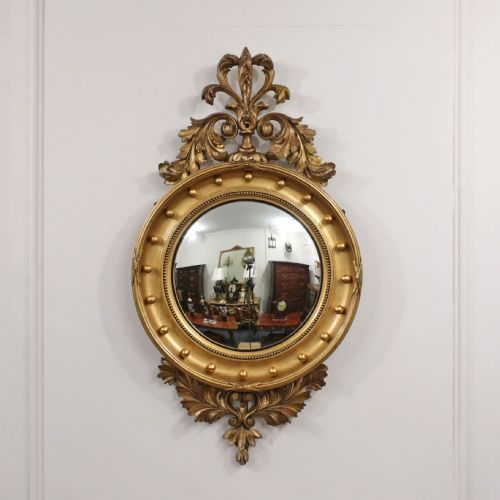
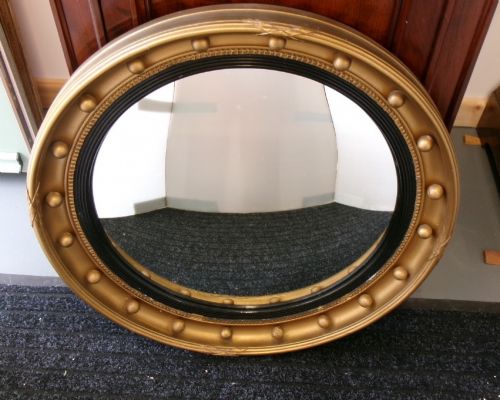



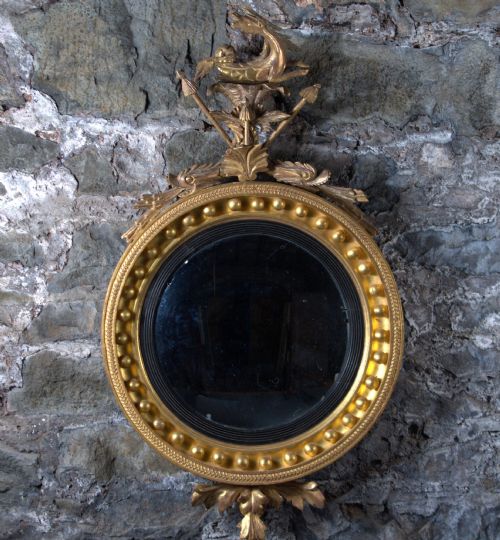

Regency Round Wall Mirror
A regency round wall mirror brings deep curvature and bright reflection into a room, drawing the eye instantly.
Regency Round Wall Mirror
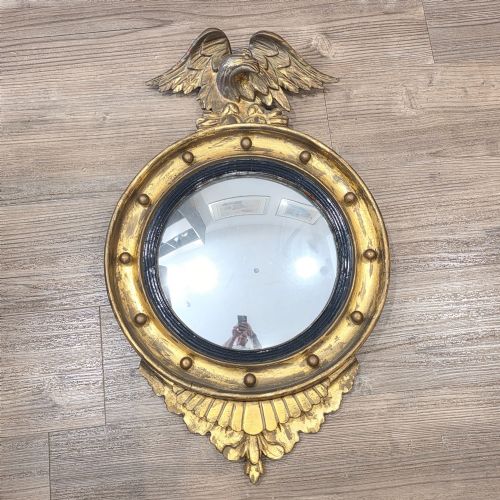
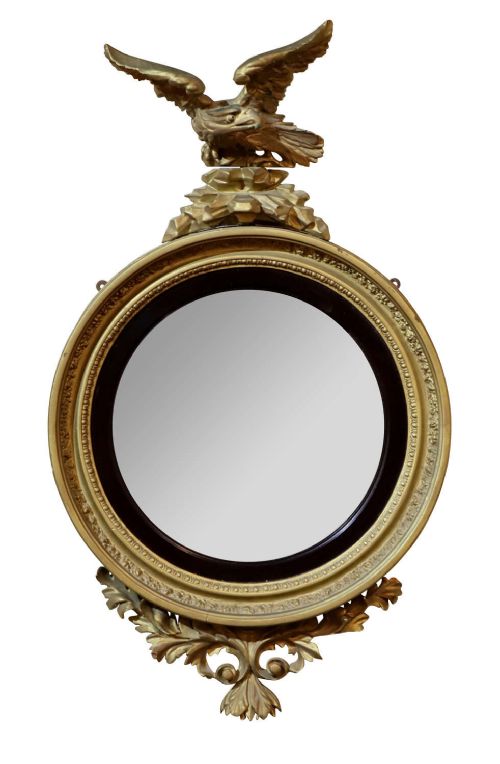
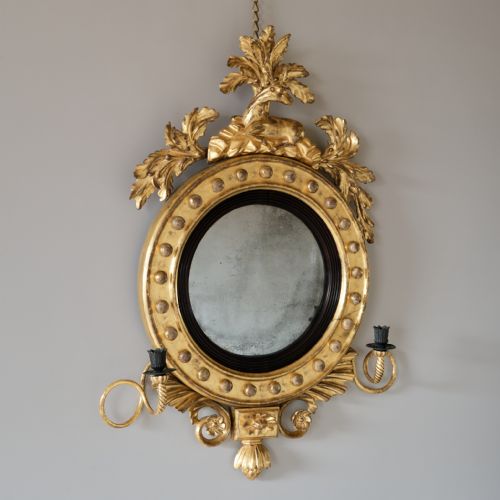
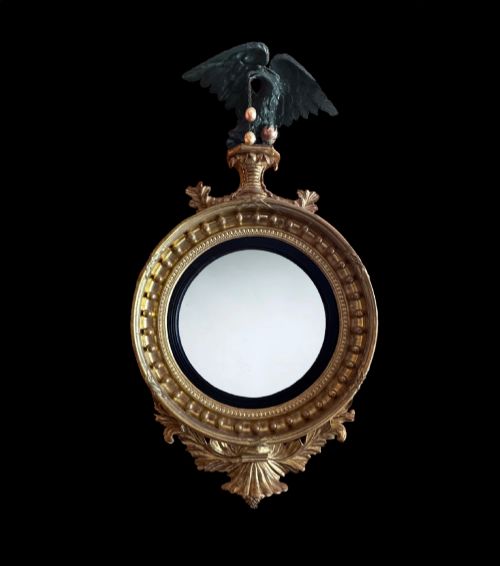
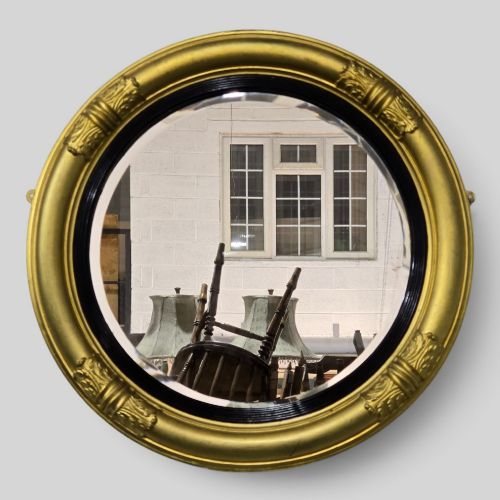
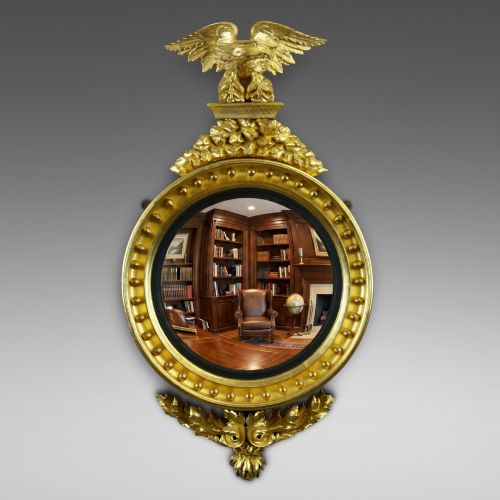
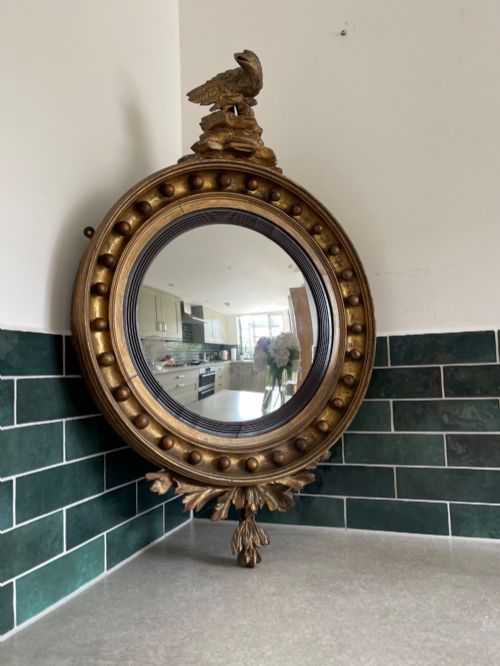
A regency round wall mirror takes many forms, most frequently appearing as a convex glass plate set within a circular wooden frame. These pieces originate predominantly from the Regency and Victorian eras, alongside later revivals from the nineteenth and twentieth centuries.
Makers shaped these circular looking glasses to alter perspective, capturing a wide sweep of the interior within a compact frame. The design often incorporates decorative crests or simple moulded bands.
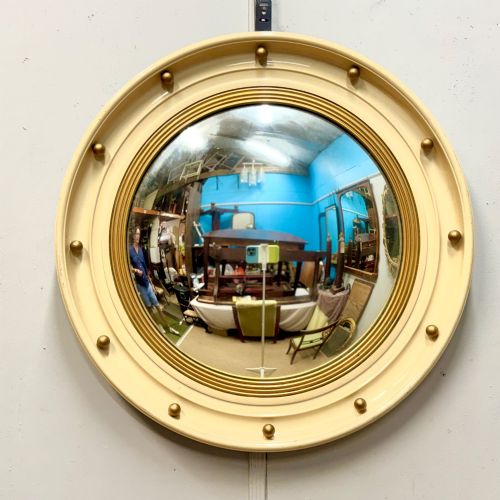
Convex plates dominate the selection, functioning historically to monitor activity across large rooms. Buyers encounter everything from modest domestic examples to grand scale wall mirrors spanning several feet.
Materials and construction
Wood serves as the foundational core, shaped into heavy circular rings before receiving layers of gesso to build up crisp decorative detail. Artisans then applied gold leaf or paint to the prepared surface.
Mirror glass required specialised blowing and silvering techniques to achieve the curved plate necessary for a convex reflection. Ebonised slips and brass details frequently provide contrast against the gilt exterior.
Listings feature periods spanning from Georgian and Regency through Victorian up to the nineteen-twenties, constructed in giltwood, ebonised wood, and brass.
Judging quality and craft
The crispness of the carved ornamentation, particularly on eagle mounts and floral motifs, distinguishes superior examples from simpler productions. Deeply undercut gesso holds its definition far better than shallow, worn moulding.
The clarity and distortion level of the convex mirror glass reveal much about the original manufacture and subsequent care. Frames constructed from solid timber demonstrate greater stability over centuries than lighter composite builds.
The Regency Round Wall Mirror Glossary
- Convex glass
- A curved mirror plate that bulges outward to reflect a wide, distorted field of vision. This optical property defines the traditional butler's or sorcerer's looking glass.
- Giltwood
- Timber coated in a thin layer of gold leaf over a prepared gesso ground. It provides a brilliant metallic sheen characteristic of formal period frames.
- Ebonised slip
- A dark, blackened inner moulding placed between the frame and the glass. It creates a visual border that draws the eye toward the centre of the mirror.
- Gesso
- A plaster mixture applied to wood frames to create a smooth surface for carving and gilding. Skilled hands shaped this paste while pliable to form intricate reliefs.
Regency Round Wall Mirror: Frequently Asked Questions
How do I hang a heavy convex mirror?
These frames carry substantial weight due to the dense timber and thick glass construction. Secure fixing directly into wall studs using heavy-duty brackets ensures safe support.
Positioning the glass at eye level maximises the optical effect, allowing the curved reflection to capture the opposite side of the room effectively.
What is the difference between a butler's mirror and a regency mirror?
Butler's mirrors typically feature a simple round frame intended for practical oversight of dining spaces. Regency examples often incorporate elaborate crests like eagles or dragons.
Both styles utilise convex glass, but the regency designation points to specific neoclassical design motifs and period proportions.
How do I clean antique mirror glass?
Gentle dusting with a dry microfibre cloth removes surface particles without disturbing fragile silvering. Moisture must remain away from the edges where the backing has aged.
Harsh chemical sprays strip historic finishes and damage the vulnerable gesso layers beneath the gilding.
Are these mirrors original to the Regency period?
Many pieces date to the Regency era, while others reflect Victorian revivals and later twentieth-century interpretations. Examining the construction methods and wood ageing helps clarify the exact period.
Revival pieces often replicate earlier Georgian and Regency proportions with distinct manufacturing traits.