





Oriental Lacquered Mirror
An oriental lacquered mirror brings depth and refined decoration to a room, catching the light across polished surfaces and painted scenes.
Oriental Lacquered Mirror
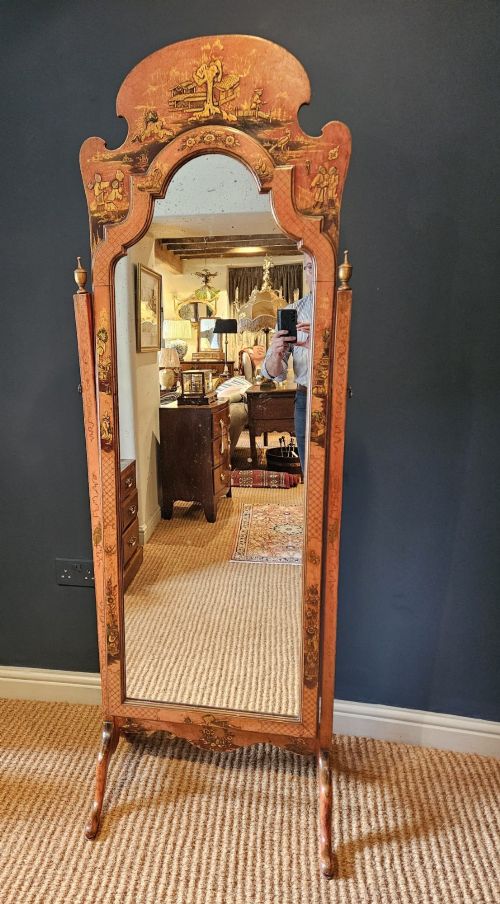
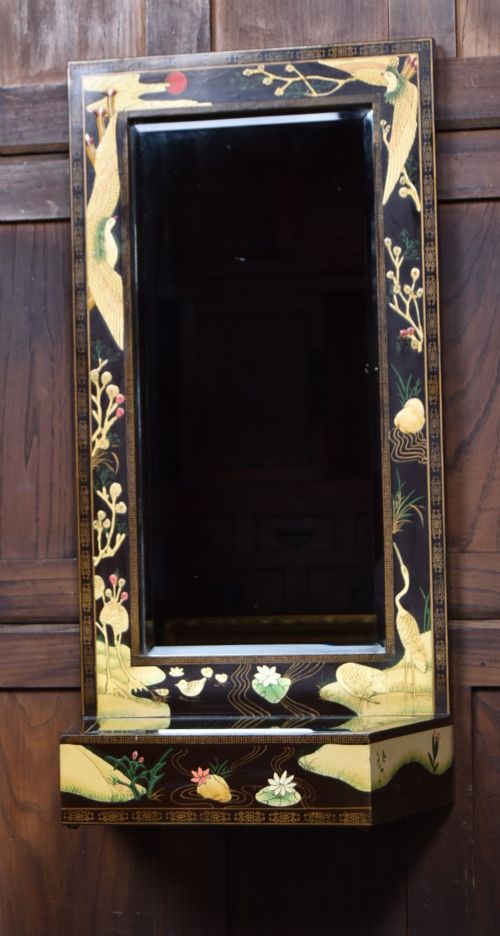
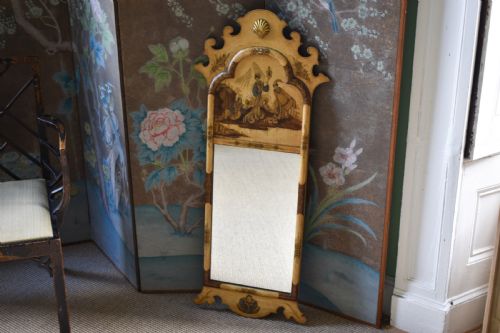
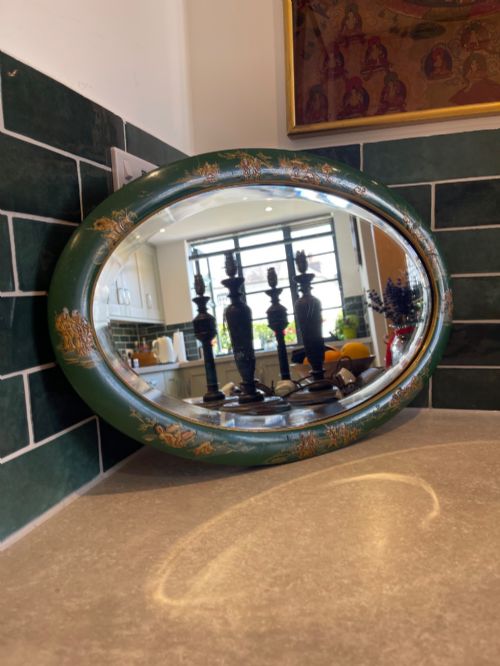
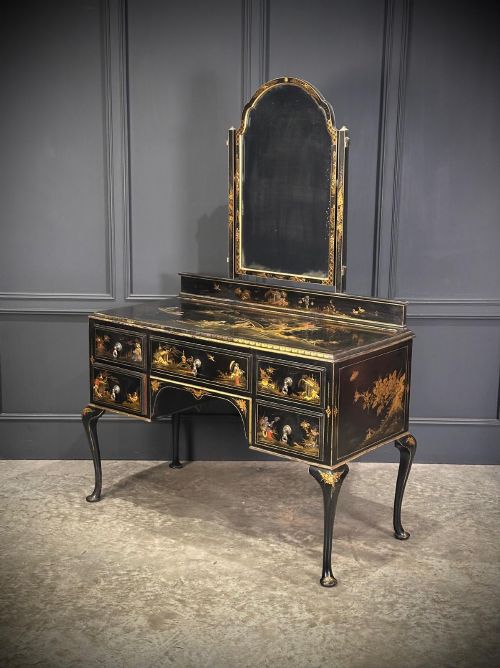
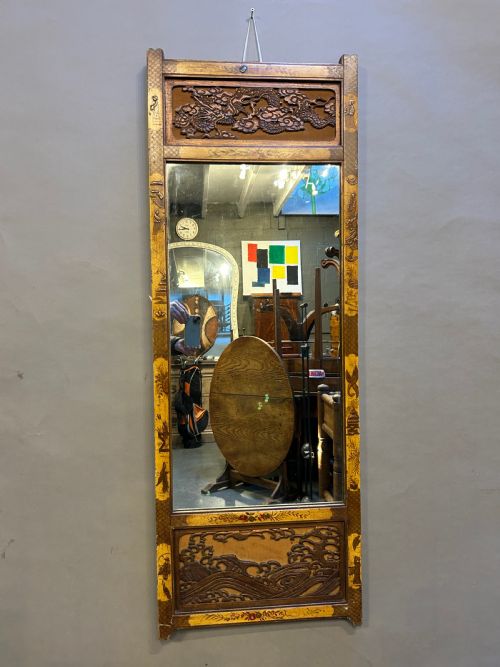
When you search for an oriental lacquered mirror, you encounter wall mirrors, cheval mirrors, and dressing mirrors finished with distinctive painted and built-up surfaces. These pieces draw heavily on traditional Asian aesthetics, European interpretations of Chinese design, and export work.
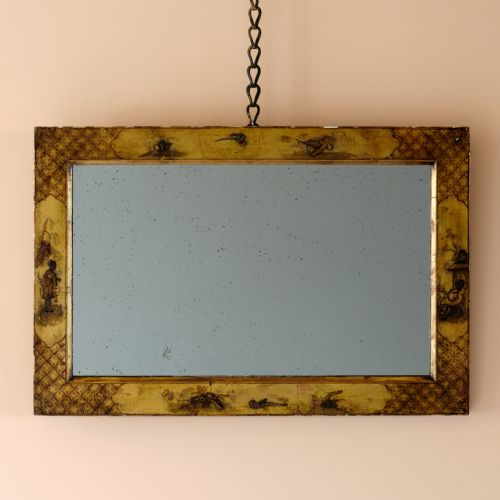
The versions most likely to meet you on this page span the eighteenth, nineteenth, and early twentieth centuries. You will find wall mirrors in oval and rectangular formats alongside larger cheval glasses and table-top dressing mirrors.
The styles range from Georgian and Queen Anne revivals to Edwardian Chinoiserie and twentieth-century interpretations. Many pieces utilise black, red, or cream grounds embellished with figurative and landscape motifs.
Materials and Construction
These pieces rely on wood frames built to take layered finishes of lacquer and paint. Artisans applied successive coats of varnish and pigment to create smooth, durable grounds before adding decorative details.
Gilt and gold leaf frequently highlight the raised motifs, figures, and architectural elements set against the dark or coloured backgrounds. Mirror glass is fitted into these elaborate frames, often accompanied by brass fixings and hardware.
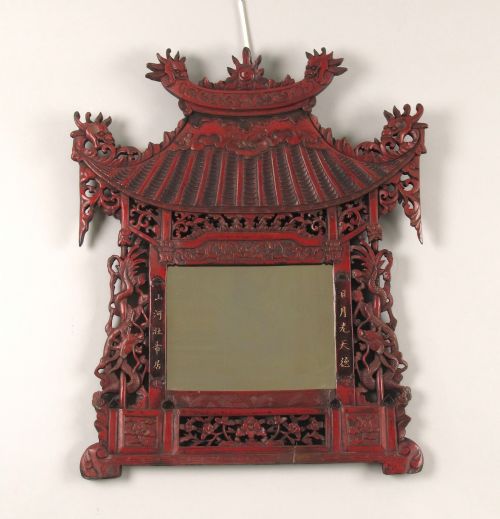
A pagoda wall mirror brings a permanent holiday to your hallway.
Assessing Quality and Execution
The depth of the lacquer finish and the intricacy of the painted or gilt decoration set the standard across these pieces. Finer examples display meticulous detailing in the figures and landscapes, while simpler items rely on broader, less complex ornamentation.
The structural integrity of the wooden frames and the clarity of the original or period mirror glass also influence the overall character. Preservation of the surface layers without excessive modern intervention maintains the integrity of the object.
The Oriental Lacquered Mirror Glossary
- Cheval mirror
- A full-length mirror hung in a freestanding frame that allows the glass to swing. These large pieces often incorporate elaborate lacquered woodwork.
- Japanning
- European imitation of East Asian lacquerwork using hard varnishes and raised metallic details. The technique was widely applied to mirrors and cabinet furniture in the eighteenth and early twentieth centuries.
- Export mirror
- Pieces made in China specifically for the Western market, combining local craftsmanship with European forms. They frequently utilise traditional lacquer techniques on forms requested by foreign buyers.
- Pier wall mirror
- A tall mirror designed to hang on the narrow wall space between windows. These pieces often feature decorative frames matching console tables or interior panelling.
Oriental Lacquered Mirror: Frequently Asked Questions
How do I hang a heavy wall mirror safely?
Heavy wall mirrors require secure fixings anchored directly into the wall studs or masonry rather than relying solely on plasterboard. Using rated brackets and professional hanging hardware ensures the weight of the wooden frame and glass is properly supported.
Position the mirror at eye level to balance the room and reflect light effectively across the space.
Where should I place a cheval mirror?
Cheval mirrors work best in bedrooms or dressing areas where their pivoting frames allow full-length reflection. Place them near a natural light source to brighten the corner and enhance the visual depth of the room.
Ensure there is adequate clearance around the base for the legs to tilt safely without obstruction.
How do I care for antique lacquer?
Dust lacquered surfaces gently with a soft, dry cloth to prevent scratching the delicate finish. Avoid using chemical cleaners, polishes, or excess water, which can damage the aged varnish and paint layers.
Keep the mirror away from direct sunlight and radiators to prevent the wood from warping and the lacquer from cracking.
How do I tell Edwardian Chinoiserie from older pieces?
Edwardian Chinoiserie pieces often exhibit machine-sawn timber framing, standardised brass fittings, and brighter, more uniform paint applications compared to earlier centuries. Eighteenth and nineteenth-century examples tend to show greater hand-tooling on the woodwork and more varied, aged patination in the lacquer.
Examining the construction methods at the back of the frame helps clarify the period of manufacture.