




Gold Chinoiserie Mirror
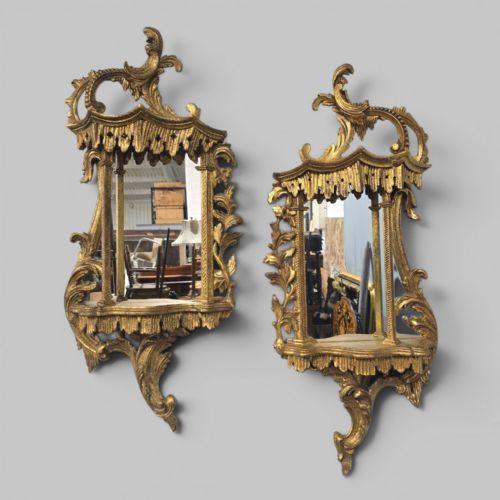
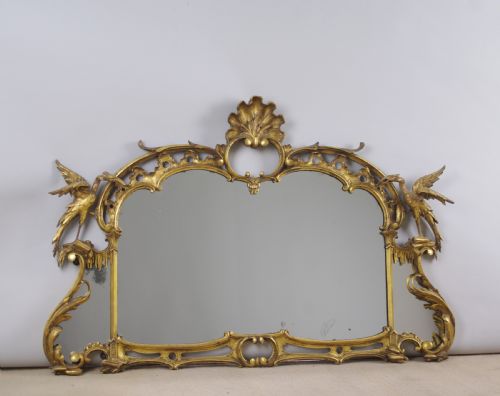
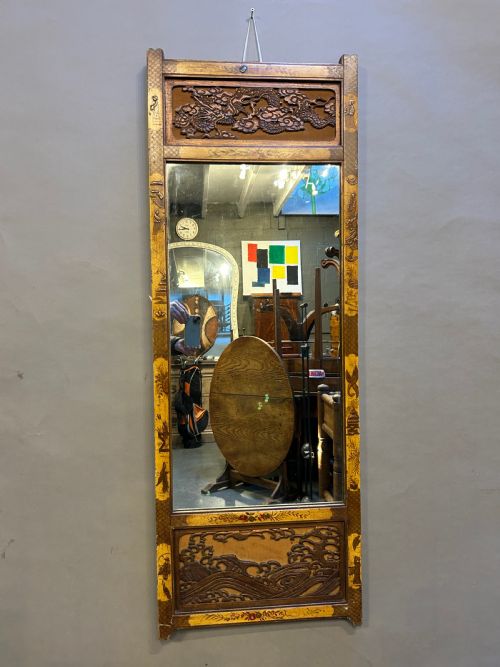
These gold chinoiserie mirrors bring oriental motifs and gilded frames together to transform a room.
Gold Chinoiserie Mirror
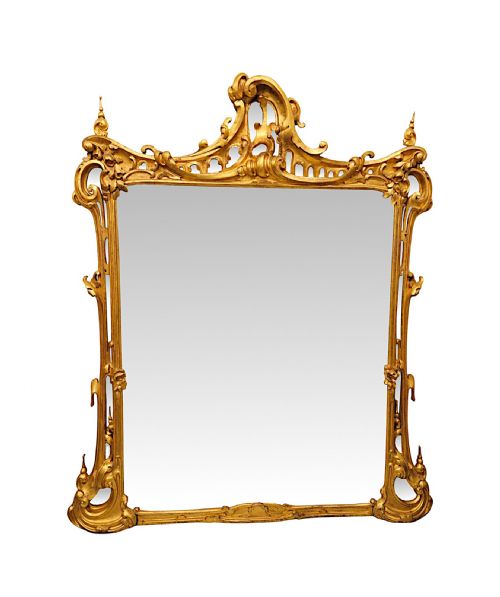
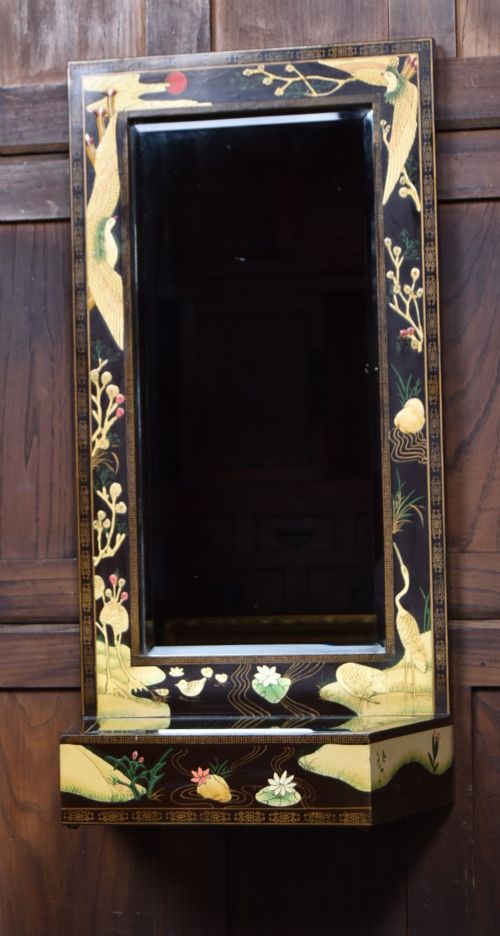
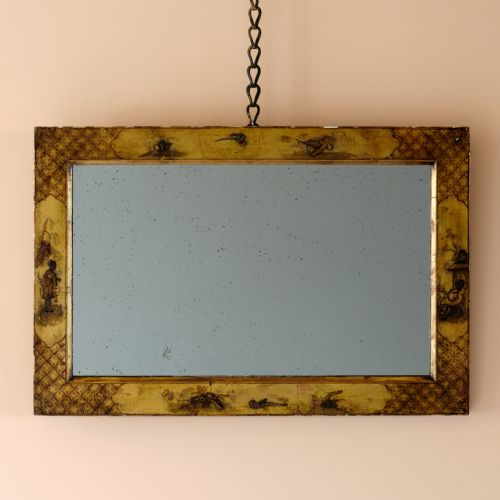
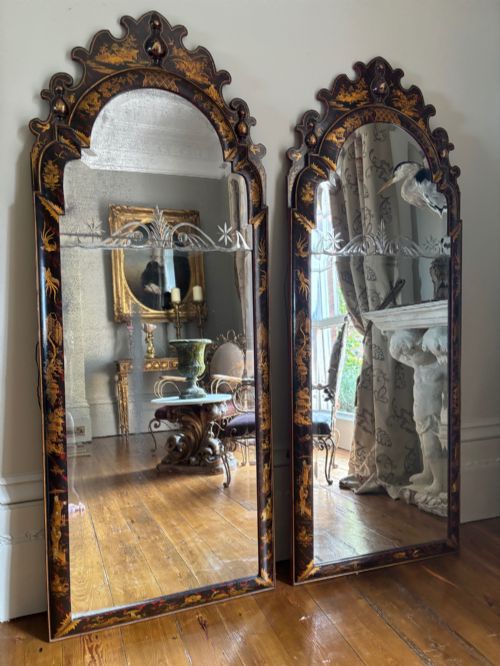
A gold chinoiserie mirror draws upon eighteenth-century decorative traditions, bringing painted or carved oriental scenes into domestic interiors. These pieces appear in wall, overmantel, and dressing table formats across this selection.
The selection ranges from nineteenth-century giltwood Chinese Chippendale examples to later twentieth-century interpretations. Buyers encounter rectangular wall formats, large overmantels, and oval mirrors framed in black or red lacquer alongside gilt surfaces.
Georgian, Victorian, and Edwardian periods contribute distinct stylistic traits, from rococo scrolls and Ho-ho birds to simpler oval frames. Each piece relies on European craftsmanship interpreting Asian aesthetic themes.
Materials and construction
Craftsmen built frames using carved wood and applied gesso before finishing them with gold leaf, gilt, or lacquer. These surfaces provide the reflective contrast essential to chinoiserie decoration.
Glass plates, sometimes reverse-painted, set within these carved or lacquered structures complete the construction. The joinery and framing reflect the period standards of Georgian, Victorian, and Edwardian workshops.
Listings span the eighteenth, nineteenth, and twentieth centuries, featuring materials such as giltwood, lacquer, and carved wood across wall and overmantel formats.
Judging quality in frames and surfaces
Quality rests in the crispness of the wood carving and the application of the gold leaf or lacquer. Finer examples display deeply undercut foliage, birds, and architectural motifs rather than flat, moulded ornament.
The depth and clarity of the glass plate, alongside the integrity of the underlying wood and gesso, distinguish the more accomplished works from simpler decorative pieces.
The Gold Chinoiserie Mirror Glossary
- Chinoiserie
- European decorative style inspired by Chinese and East Asian artistic traditions. It manifests in furniture and mirrors through motifs of figures, landscapes, and exotic birds.
- Giltwood
- Timber coated with gold leaf or metal powder over a prepared gesso ground. This technique creates the brilliant metallic surfaces seen on many period frames.
- Chinese Chippendale
- Eighteenth-century revival style incorporating rococo scrolls, fretwork, and asymmetrical pagoda elements. It heavily influences the carved frames of this category.
- Overmantel mirror
- Large horizontal looking glass designed specifically for placement above a fireplace mantelpiece. These pieces often anchor the decorative scheme of a principal room.
- Japanned
- European imitation of East Asian lacquerwork involving layered varnishes and often raised decoration. It appears on black and red frames within these listings.
Gold Chinoiserie Mirror: Frequently Asked Questions
Where should I hang a chinoiserie mirror?
These mirrors suit placement above a mantelpiece, console table, or in an entrance hall where light can reflect off the glass. Their decorative frames function as focal points in a room.
Ensure the wall structure supports the weight of carved giltwood or framed wood pieces before installation.
How do I identify a Victorian piece?
Victorian examples often combine revival styles with darker finishes like ebonised wood or heavier gesso ornamentation. They reflect the nineteenth-century enthusiasm for historical stylistic interpretations.
Examining the construction of the wooden backing and the type of glass helps confirm the period.
What is Chinese Chippendale style?
Chinese Chippendale refers to furniture and mirror designs featuring fretwork, asymmetrical scrolls, and oriental figures. It derives from the pattern books published in eighteenth-century Britain.
Mirrors in this style display intricate carved woodwork finished in gilt or gold leaf.
How do I care for giltwood frames?
Dust the carved surfaces gently with a dry, soft brush to protect the delicate gold leaf layer. Avoid liquid cleaners and moisture, which can damage the gesso beneath.
Keep the mirrors away from direct sunlight and damp environments to preserve the finish.