

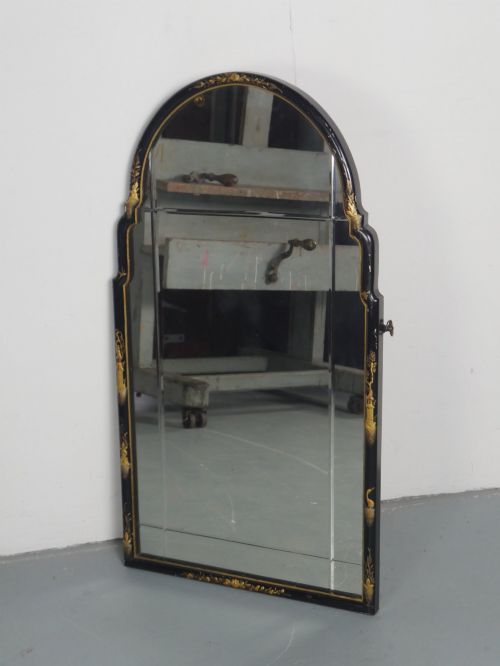
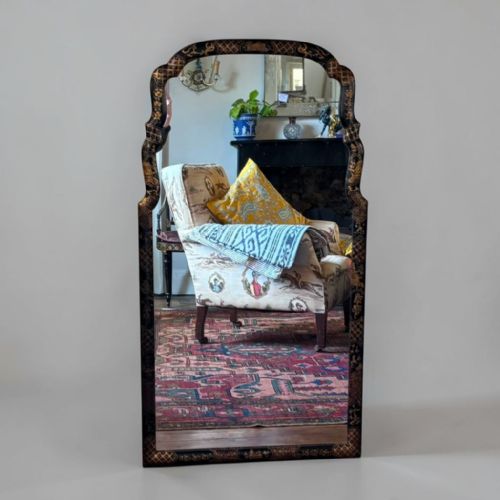


Black Chinoiserie Wall Mirror
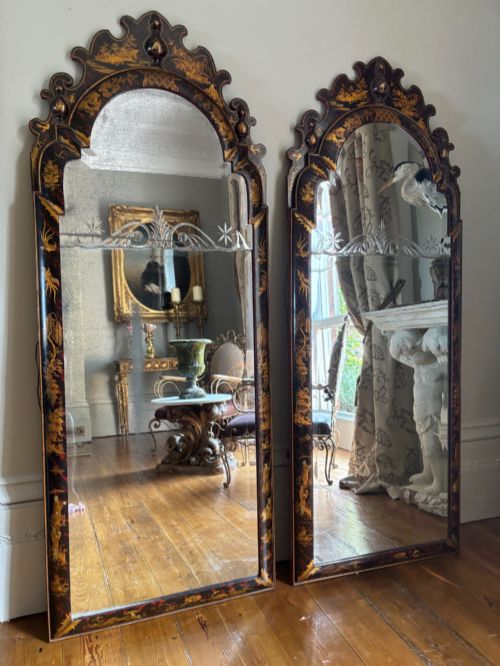
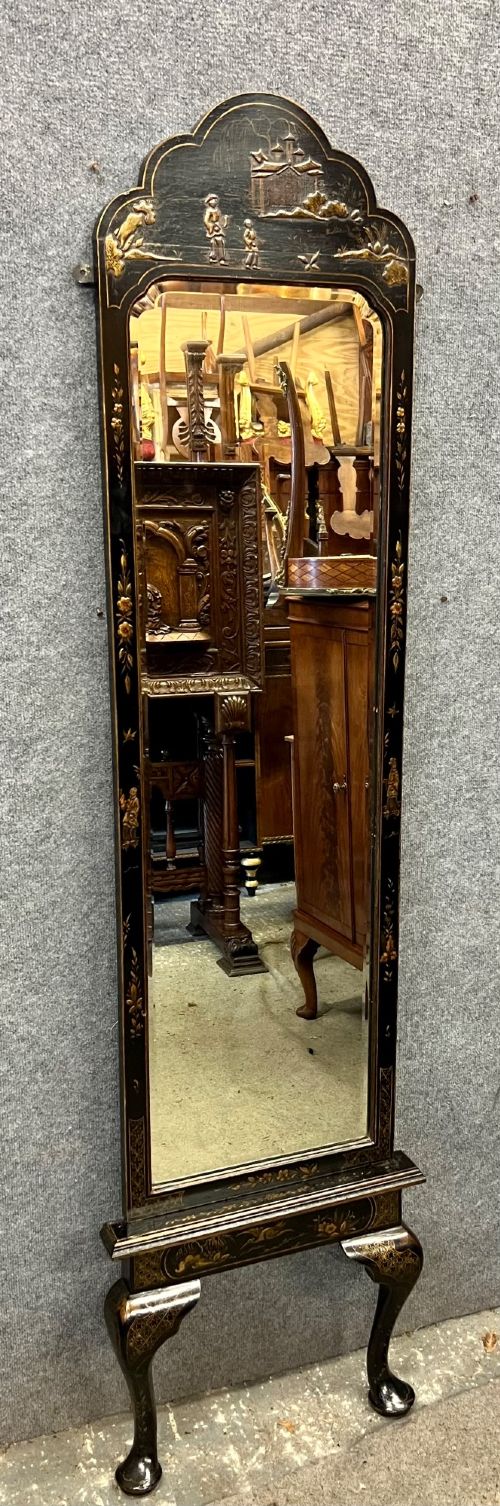
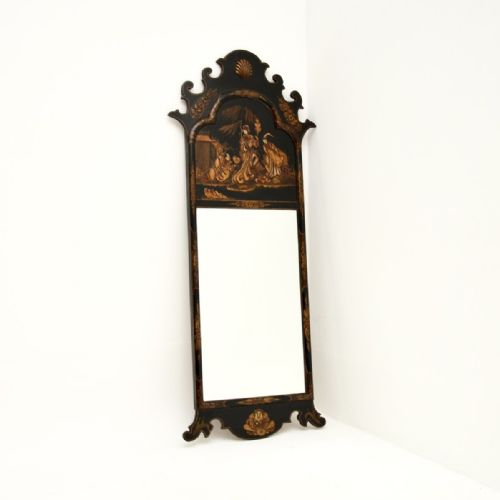
These black chinoiserie wall mirrors bring painted narrative scenes and dark lacquered surfaces into a room.
Black Chinoiserie Wall Mirror
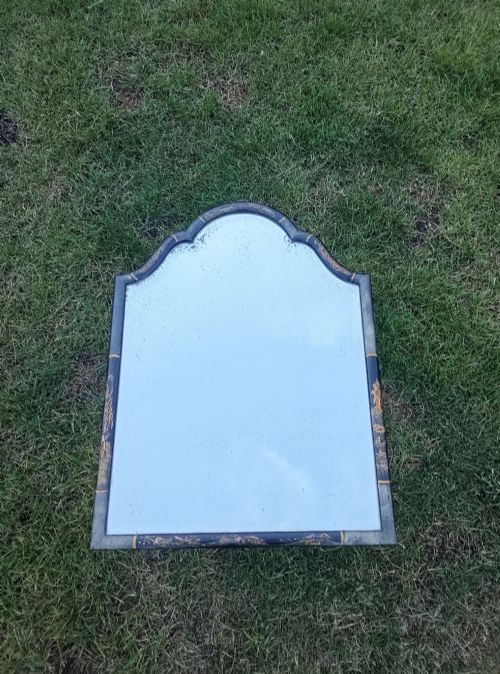
A black chinoiserie wall mirror combines dark lacquer with decorative gilt motifs drawn from traditional East Asian designs. These pieces appear in forms ranging from oval wall mirrors to rectangular frames and paired sets.
The selections on this page span the Georgian period, the nineteenth century, and the Edwardian era, alongside Queen Anne revival pieces and Chinese export works. Oval shapes and framed wall mirrors dominate the forms currently seen.
Buyers also encounter related console tables paired with mirrors from the nineteenth century. Each item reflects stylistic revivals that interpret eighteenth-century aesthetics through later craftsmanship.
How they were made
Wood serves as the primary substrate for these pieces, shaped into frames and wall mirrors before receiving layers of lacquer. Artisans apply paint and gold leaf to build up the intricate decorative scenes characteristic of the style.
Black Chinoiserie Wall Mirror Retail Price Guide 2026
Typical asking prices for black chinoiserie wall mirror among the pieces listed under this phrase on Sellingantiques today, from the lower quarter to the upper quarter. They describe what is for sale here now, not the wider market.
Listings feature woods, lacquer, and gold leaf, alongside reverse painted glass and faux bamboo carvings.
What varies in quality
The refinement of the hand-painted details and the depth of the gilt work dictate the visual success of the piece. Crisp lines in the decorative scenes and skilled application of gold leaf distinguish finer examples.
The quality of the lacquer finish and the preservation of the carved wooden frames shape the character of each mirror over time. Subtleties in the fret-cut woodwork and the integrity of the glass determine the overall execution.
The Black Chinoiserie Wall Mirror Glossary
- Chinoiserie
- European decorative style that imitates Chinese and East Asian artistic traditions. It relies on motifs of figures, landscapes, and pavilions rendered in paint and lacquer.
- Lacquer
- A durable finish applied in multiple layers to wood and polished to a smooth sheen. It forms the dark background typical of these mirrors.
- Gilt Wood
- Timber coated with a thin layer of gold leaf or metallic powder. This technique highlights carved details within the frame.
- Fret Cut
- Wood pierced with intricate geometric or organic patterns using a saw. This technique creates lightweight, ornamental openwork on mirror frames.
- Reverse Painted Glass
- An artistic method where imagery is painted directly onto the back of the glass panel. The design is viewed through the polished front surface.
Black Chinoiserie Wall Mirror: Frequently Asked Questions
How do I style a black chinoiserie wall mirror?
Hang the mirror against a plain or neutrally painted wall to let the dark lacquer and gilt details stand out in the room.
Position it above a sideboard, mantelpiece, or console table to create a balanced focal point that reflects natural light.
What periods do these mirrors come from?
The listings include pieces from the Georgian era, the nineteenth century, and the Edwardian period, alongside later twentieth-century revivals.
Queen Anne revival styles and Chinese export pieces also appear, reflecting design tastes across multiple centuries.
How do I clean a lacquered frame?
Dust the surface gently with a soft, dry cloth to remove particles without scratching the delicate lacquer and gilt work.
Avoid using harsh chemical cleaners or excessive moisture, which can damage the painted scenes and historical finishes.
Are these mirrors heavy?
Weight varies depending on the size of the wooden frame and whether the piece incorporates carved gilt wood or console table elements.
Larger Edwardian oval frames and solid wood structures require secure wall fixings to support their weight safely.