



Oval Black Mirror
An oval black mirror brings deep tone and a distinct silhouette to a room, drawing the eye with dark ebonised or lacquered surfaces.
Oval Black Mirror
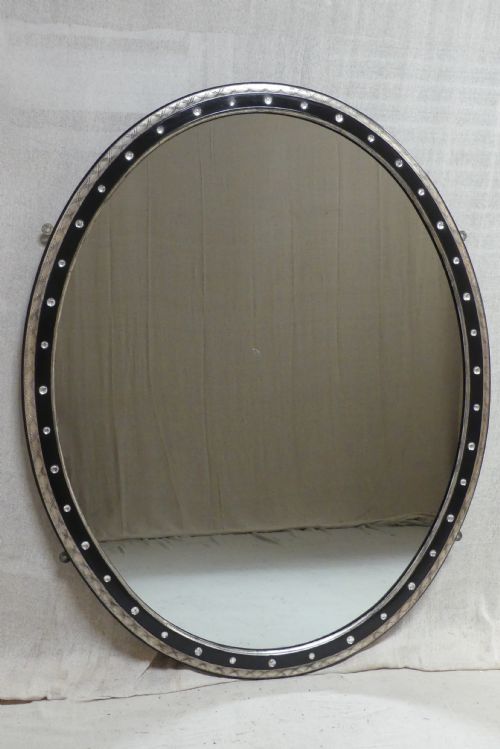
When you search for an oval black mirror, you enter a selection spanning the late nineteenth century through to the interwar decades. The forms available range from substantial overmantel mirrors and wall hanging pieces down to smaller table mirrors.
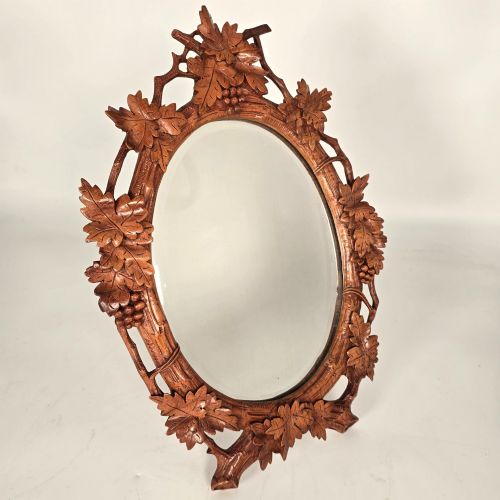
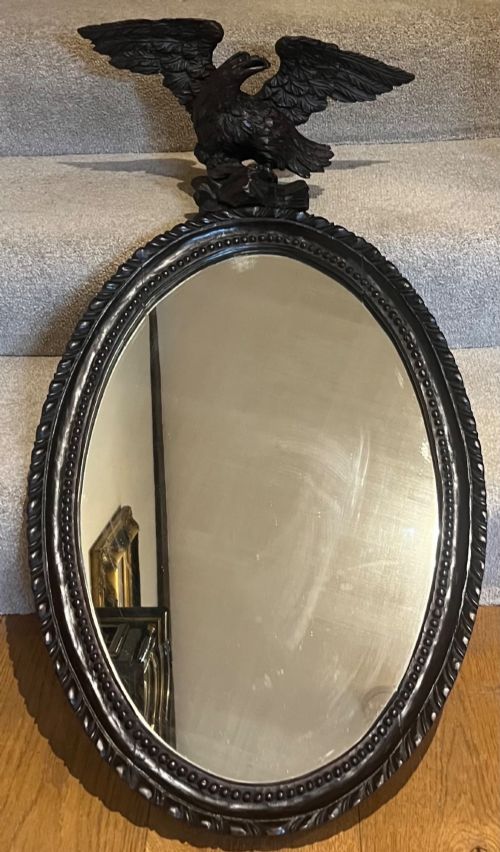
You are most likely to meet examples finished in ebonised wood or black lacquer, frequently highlighted with parcel-gilt or gold leaf details. Styles stretch from Victorian neoclassical revival and grand regency to Edwardian chinoiserie and Black Forest carvings.
How they were made
Frames rely on carved wood, cast iron, and lime wood shaped into sturdy supports before receiving their dark finishes. Artisans applied black lacquer or ebonised treatments to achieve a deep tone, often incorporating gold leaf and parcel-gilt highlights.
Glass plates are set within these frames, occasionally featuring reverse painting techniques or bevelled edges. The construction combines traditional joinery and carving methods appropriate to the Victorian, Edwardian, and later periods.
Materials across these listings include ebonised wood, lacquered wood, lime wood, cast iron, and mirror glass.
What varies in quality
The standard of carving and surface finish defines the upper tier of these pieces. Crisp detail in lime wood or detailed hand-applied lacquer work marks out superior examples.
The preservation of original gilding and the clarity of the mirror glass also determine the standing of an individual piece. Better proportions and robust frame construction separate finer items from standard productions.
The Oval Black Mirror Glossary
- Ebonised wood
- Timber treated to resemble ebony by staining or painting it black. This finish is typical of many Victorian and later pieces.
- Parcel-gilt
- Partially gilded woodwork where gold leaf accents specific carved details against a contrasting background. It creates a subtle play of light.
- Chinoiserie
- European interpretation of Chinese decorative arts, featuring hand-painted motifs on lacquered surfaces. This style appears frequently on Edwardian frames.
- Black Forest
- Carved wood pieces originating from the wooded mountain region in Germany, often depicting naturalistic forms. These works date widely to the nineteenth and early twentieth centuries.
- Overmantel mirror
- A large glass designed to hang above a fireplace mantel. These pieces anchor room interiors and provide substantial wall presence.
Oval Black Mirror: Frequently Asked Questions
Where should I hang an oval black mirror?
These pieces suit living rooms, hallways, and bedrooms, often placed above mantelpieces or console tables.
The dark frame provides a strong focal point against lighter wall colours, anchoring the surrounding decor.
How do I clean an antique black mirror?
Use a soft, dry cloth to dust the carved or lacquered frame without disturbing the finish.
Clean the glass plate sparingly with a mild glass cleaner applied to a cloth rather than sprayed directly onto the surface.
What periods do these mirrors come from?
The available pieces span the nineteenth and early twentieth centuries, including Victorian, Edwardian, and interwar eras.
Design characteristics and materials help indicate the specific decade of manufacture.