

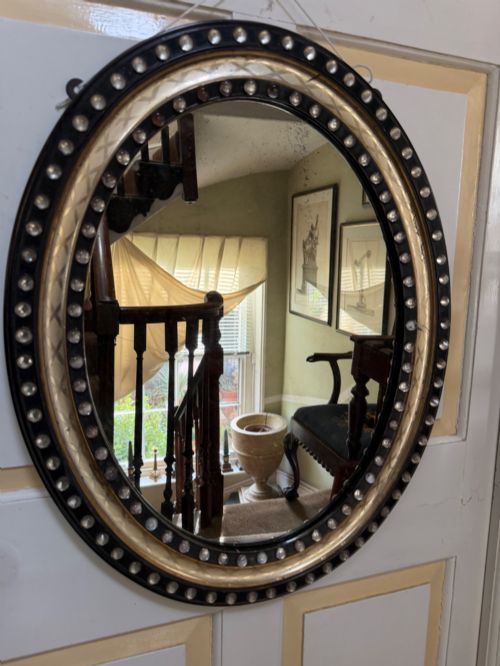

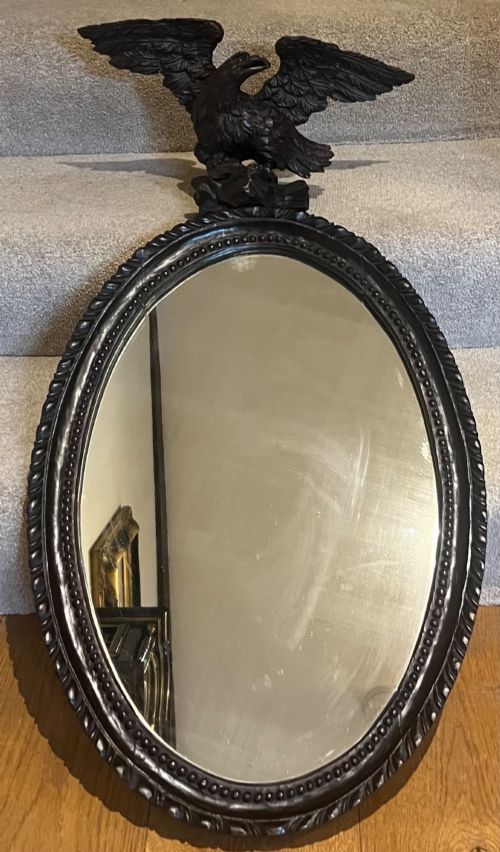
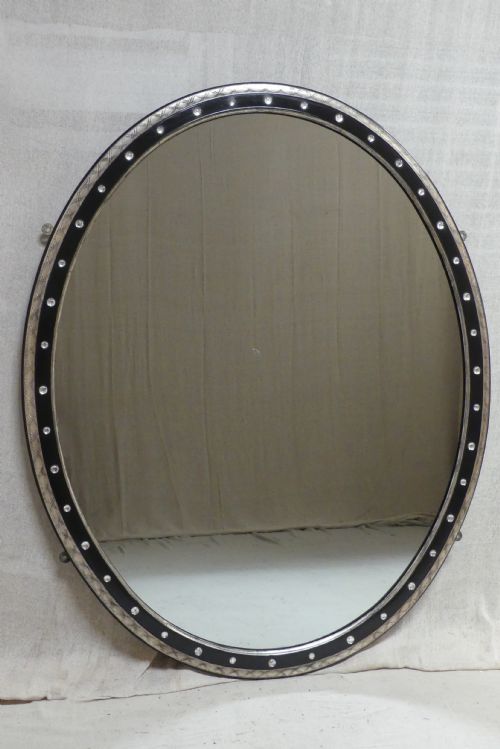


Oval Black Wall Mirror
An oval black wall mirror brings dark polish and curved reflection to a room, offering a distinct alternative to standard rectangular frames.
Oval Black Wall Mirror
When you search for an oval black wall mirror, you are looking at dark-finished frames designed to hang on domestic walls, ranging from compact boudoir pieces to large overmantel proportions. The examples seen here span from the late eighteenth century through the Edwardian era and into the early twentieth century, taking forms such as wall mirrors and substantial overmantels.
The most common versions met on this page rely on ebonised wood or black lacquer, frequently enriched with parcel-gilt details or chinoiserie decoration. Stylistic influences draw heavily from the Regency, Victorian neoclassical revival, and Chinese export traditions, bringing figures, landscapes, or classical motifs to the dark surfaces.
How they were made
Makers shaped these frames primarily from wood, employing carved wood, ebonised timber, and lacquered finishes to achieve a deep, light-absorbing dark ground. Applied details often include gold leaf, parcel-gilt highlights, or reverse-painted glass panels executed in the Chinese export manner.
Mirrors from this selection utilise traditional mirror glass set within heavy timber or cast iron structures, sometimes featuring bevelled edges or hand-painted pictorial scenes applied directly to the glass surface.
Oval Black Wall Mirror Retail Price Guide 2026
Typical asking prices for oval black wall mirror among the pieces listed under this phrase on Sellingantiques today, from the lower quarter to the upper quarter. They describe what is for sale here now, not the wider market.
Materials recorded across these mirrors include ebonised wood, lacquered wood, cast iron, carved wood, and gold leaf.
What varies in quality
The distinction between standard domestic framing and superior examples rests upon the depth of the finish and the execution of the decoration. Hand-painted chinoiserie details with fine detail and genuine gold leaf separation demonstrate a higher tier of workshop output than simpler applied finishes.
Structural substance also dictates the grade of the piece, where deeply carved wooden frames, substantial cast iron overmantels, or complex reverse glass painting indicate greater artisan investment than plain moulded surrounds.
The Oval Black Wall Mirror Glossary
- Ebonised
- Wood stained or painted to imitate expensive ebony. This finish is typical of nineteenth-century revival styles seeking a dark, formal surface.
- Chinoiserie
- European interpretations of Chinese artistic motifs. These designs typically feature figures, pagodas, and landscapes rendered in gold or colours on a black ground.
- Parcel-gilt
- Partially gilded woodwork where gold leaf is applied only to raised carvings or specific details to contrast with a dark base.
- Overmantel mirror
- A large mirror designed to hang specifically above a fireplace mantelpiece. These pieces often anchor the proportions of a principal reception room.
- Reverse painted
- A technique where an image is painted directly onto the back of a glass panel so that it is viewed correctly from the front.
Oval Black Wall Mirror: Frequently Asked Questions
Where should I hang an oval black wall mirror?
These mirrors suit spaces where a curved dark frame breaks up linear architectural elements, such as above a mantelpiece, a hallway console, or a bedroom dressing table. Their vertical or horizontal oval proportions fit narrow wall spaces where rectangular frames might appear too heavy.
Ensure the wall fixings match the substantial weight of older wooden or cast iron frames, particularly when hanging larger overmantel versions.
How do I date a black lacquered mirror?
Dating relies on examining the construction of the wooden frame, the composition of the mirror glass, and the style of the decoration. Pieces from the nineteenth century often feature heavy ebonised mouldings or classical revival motifs, while early twentieth-century examples frequently display chinoiserie or black lacquer work.
Backboards, fixings, and the oxidation patterns within the mirror glass provide further physical clues to the age of the piece.
Are chinoiserie mirrors fragile?
The decorated surfaces require careful handling to preserve the painted details and gold leaf work. Dusting with a soft, dry cloth prevents abrasion to the lacquered or painted finishes over time.
Keep them away from direct sunlight and damp environments to protect both the wooden substrate and any reverse-painted glass panels.
What is the difference between ebonised wood and black lacquer?
Ebonised wood is timber treated with stain or paint to achieve the dark appearance of ebony, allowing the natural grain of the wood to remain faintly visible beneath the surface. Black lacquer involves the application of multiple resin or varnish layers to create a smooth, glossy, highly polished finish.
Both techniques were used across different periods to achieve a formal dark aesthetic, often paired with gold highlights.