
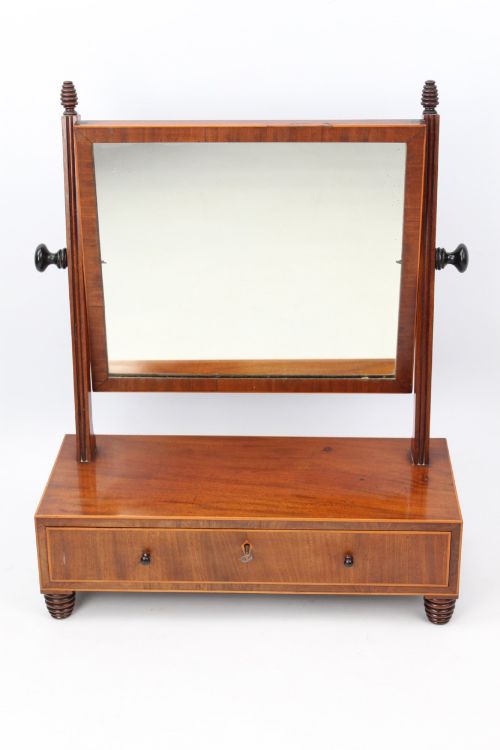
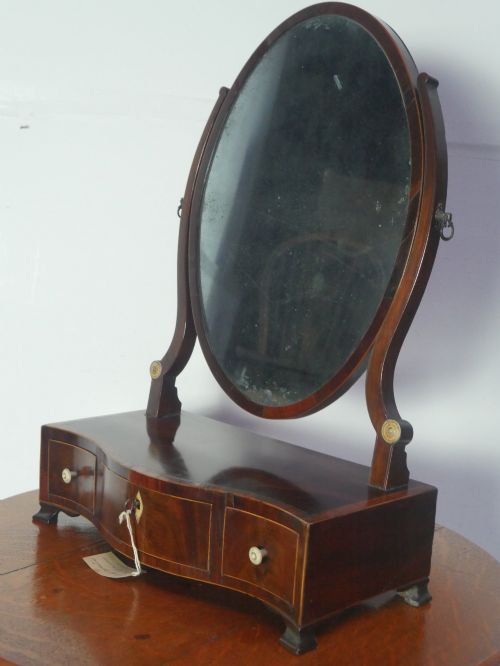
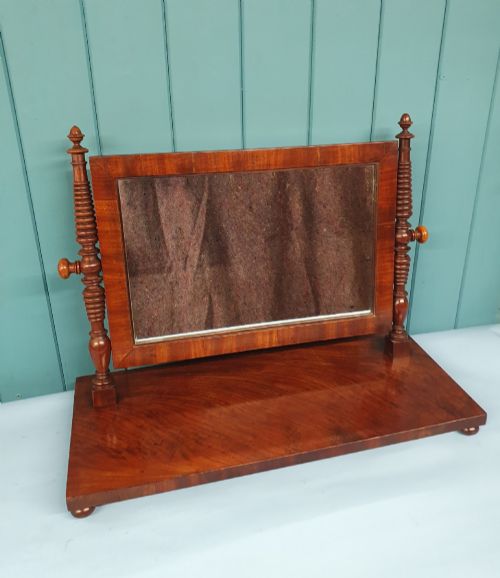


Regency Mahogany Toilet Glass
A regency mahogany toilet glass sits upon a dressing table to catch the morning light, offering a clear reflection framed in rich timber.
Regency Mahogany Toilet Glass
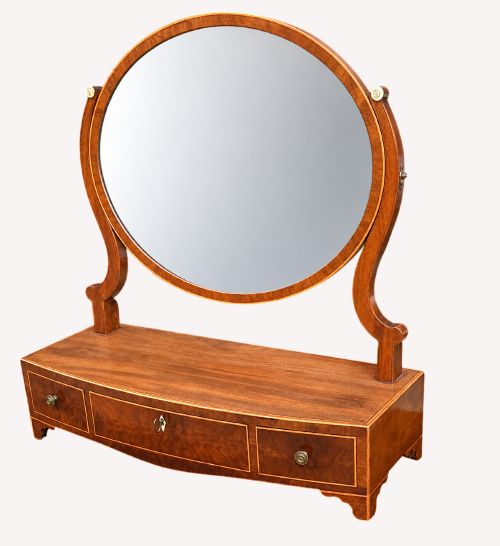
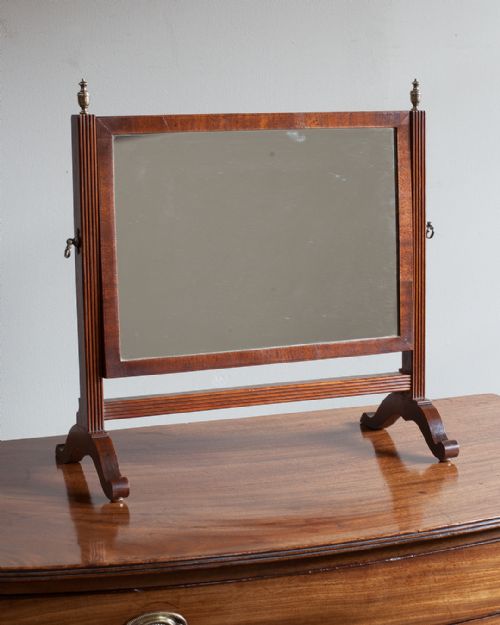
A regency mahogany toilet glass is a tabletop dressing mirror designed to tilt upon upright supports above a small base or box. You will most frequently encounter swing mirrors and dressing table mirrors dating from the Georgian, Regency, and Victorian periods.
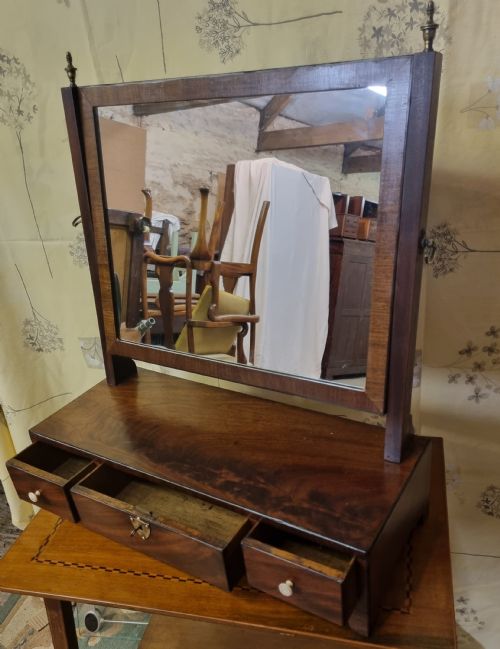
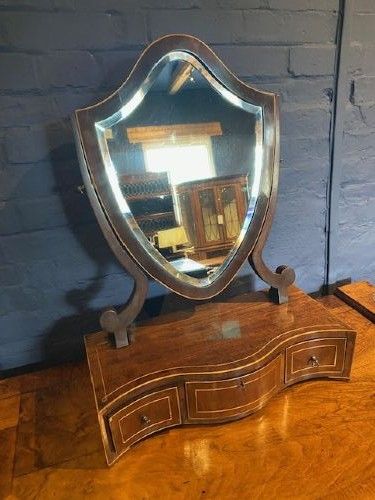
These pieces range from compact tabletop versions to larger cheval mirrors and bow-fronted designs equipped with small drawers. The form developed to assist with grooming and personal care before full-length wardrobe mirrors became common in every bedchamber.
How They Were Made
Cabinet makers constructed these mirrors primarily from solid mahogany and mahogany veneers, often incorporating secondary timbers such as satinwood and boxwood for decorative inlay. Brass mounts, swing screw brackets, and occasional candle holders added both structural function and refined detail.
The glass plate itself sits within a pivoting frame supported by upright arms, which connect securely to a stepped plinth or a drawer-fitted base. Master craftsmen utilised tight dovetail joints for the small storage boxes beneath the glass to ensure durability during daily use.
Some miniature drawer boxes conceal tiny secret compartments once hidden from prying eyes to guard precious rings and letters.
What Varies in Quality
The standard of timber selection largely dictates the quality of a piece, with deeply figured mahogany and crisp boxwood inlay marking out superior examples. Plain secondary woods and heavier, less refined framing point toward simpler vernacular production.
The sophistication of the brass hardware and the smoothness of the pivoting mechanism also separate standard items from finer workshop output. Well-proportioned ogee bracket feet and clean secondary drawer construction indicate greater care in the original making.
Gillows
The Regency Mahogany Toilet Glass Glossary
- Cheval mirror
- A full-length freestanding dressing mirror supported by four legs in a standing frame. These allow the user to tilt the entire glass angle freely.
- Swivel mirror
- A mirror plate hung on pivot screws between two upright posts. This permits the glass to tilt forward or backward to suit the user.
- Bow front
- A convex curved cabinet front popular in furniture design. It softens the profile of the base drawers beneath the mirror frame.
- Inlay
- Contrasting pieces of wood or bone set into the surface of a primary timber to form decorative patterns. Boxwood and ebony feature frequently in these designs.
Regency Mahogany Toilet Glass: Frequently Asked Questions
What is a toilet glass?
A toilet glass is a historical term for a table mirror used during personal grooming. These mirrors sit upon a chest of drawers or dressing table.
Most examples feature a pivoting mirror plate mounted above a small storage box fitted with miniature drawers for trinkets.
How do I date a mirror?
Dating relies upon examining the cabinet timber, construction methods, and secondary woods used within the base. Stylistic details such as bracket feet and inlay offer further clues.
Earlier pieces often display Georgian proportions and fine boxwood stringing, while later Victorian versions tend to be heavier in build.
Where should I place it?
These mirrors suit placement on top of a low chest of drawers, a sideboard, or a dedicated dressing table. They require a stable surface to support the weight of the pivoting frame.
Positioning them near a window allows the glass to capture natural light effectively for daily use.
Are the mirror plates original?
Mirror glass frequently underwent replacement over the centuries due to damage or foxing of the original silvering. Older plates often show subtle imperfections and wavy distortions.
Finding a piece with its original glass remains a bonus, though replacement plates are common and accepted in antique mirrors.