


Welsh Oak Lowboy
A welsh oak lowboy is a compact country table with drawers, offering practical surface space and centuries of regional character.

Welsh Oak Lowboy
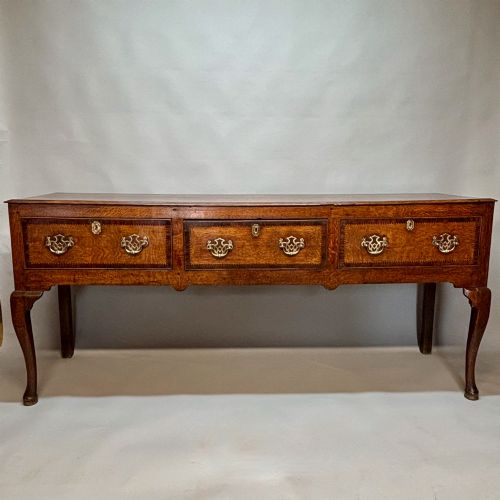
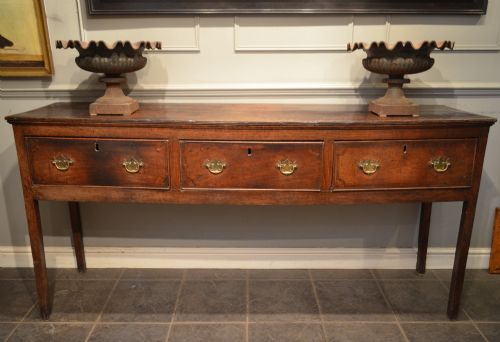
When you search for a welsh oak lowboy, you are looking at sturdy regional tables built mostly during the eighteenth century and the Georgian period. These pieces frequently appear alongside dresser bases and side tables, sharing similar proportions and drawer configurations.
The listings show these lowboys appearing in country and vernacular styles, often fitted with multiple drawers beneath a planked top. They serve equally well as side tables, dressing tables, or occasional lamp tables in traditional interiors.
Most examples originate from Welsh workshops and carry the distinct utilitarian aesthetic of the period. Their modest height and compact footprint make them adaptable pieces of furniture for modern homes.
What varies in quality
The standard of a welsh oak lowboy depends heavily on the integrity of its timber and the depth of its original surface patination. Untouched boards with rich grain and honest wear command greater interest than heavily restored examples.
Proportion and regional detailing also separate standard country pieces from exceptional ones, particularly where inlay work or cabriole leg shaping is involved. Subtle differences in drawer arrangement and timber selection reveal the skill of the original vernacular maker.
The listings show materials spanning solid oak, brass hardware, and contrasting fruitwood inlay across eighteenth-century and Georgian forms.
The Welsh Oak Lowboy Glossary
- Lowboy
- A small oak table fitted with one or more drawers, traditionally used for dressing or as a side table in the seventeenth and eighteenth centuries.
- Dresser base
- The lower section of a kitchen or dining dresser, featuring cupboards or drawers beneath a heavy timber surface.
- Vernacular style
- Furniture designed by local craftsmen for everyday regional use rather than high urban fashion, prioritising utility and local materials.
- Cabriole leg
- A furniture leg that curves outward at the knee and inward at the ankle, often ending in a pad or hoof foot.
- Fruitwood inlay
- Decorative contrasting wood sections inserted into the primary oak surface to create linear or geometric patterns.
Welsh Oak Lowboy: Frequently Asked Questions
What is a lowboy used for?
These small tables were originally utilised for personal grooming, holding washing basins or dressing accessories in private chambers. Today they function well as side tables, hall tables, or compact desk surfaces in living spaces.
Their shallow depth allows them to fit easily into narrow hallways and alcoves where larger furniture would obstruct movement.
How do I tell an 18th century lowboy from a later copy?
Examine the construction methods inside the drawers and beneath the top plank, looking for hand-cut joints and timber shrinkage consistent with age. Eighteenth-century pieces display genuine tool marks and dry, patinated oak surfaces built up over generations.
Later reproductions often use machine-sawn timber and lack the natural wear patterns found around drawer pulls and leg bases.
Where were lowboys placed in a historic home?
They sat primarily in bedrooms and dressing rooms as functional tables for daily personal routines. Over time their utility spread to parlours and hallways for holding small lamps and decorative objects.
Their portable size meant they could move between rooms depending on household requirements.
How do I clean and maintain antique oak?
Maintain the surface with occasional applications of traditional beeswax, buffing gently with a soft cloth to preserve the natural lustre. Avoid chemical polishes and keep the timber away from direct heat sources and strong sunlight.
Regular dusting prevents dirt accumulation in the grain and protects the historic patination of the oak.