


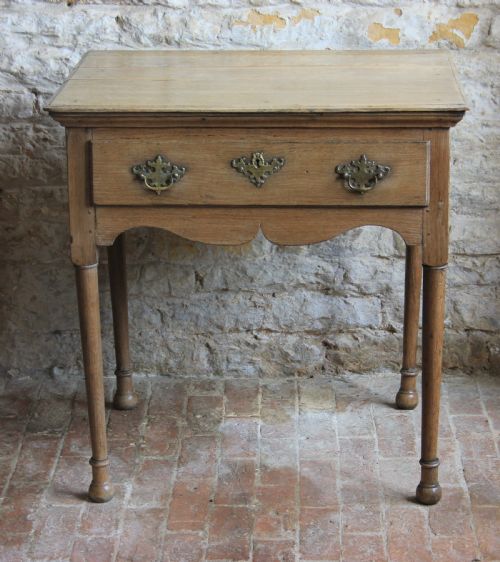


Early Oak Console Table
An early oak console table brings sturdy timber and centuries of regional character straight into a hallway or living room.

Early Oak Console Table
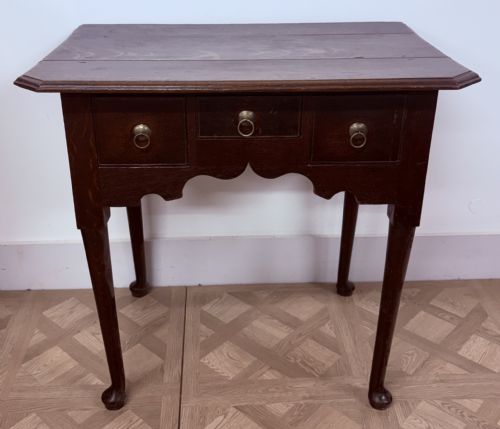
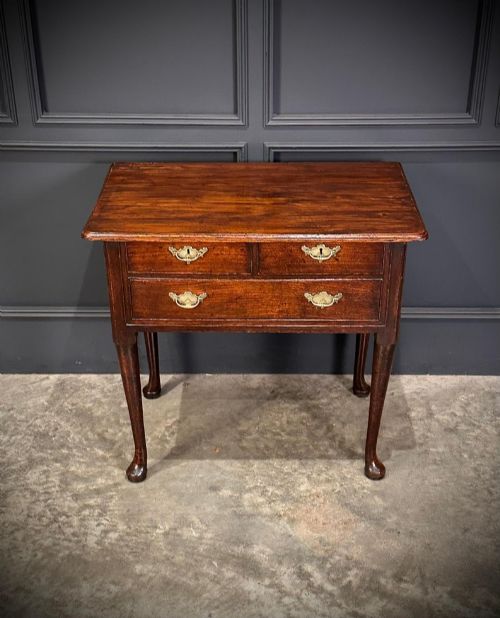
When you search for an early oak console table, you enter a category dominated by side tables, lowboys, and hall tables spanning from the late seventeenth century through the Georgian era and into later revivals. The versions most commonly met on this page date from the eighteenth century, often displaying a single drawer or standing on cabriole legs.
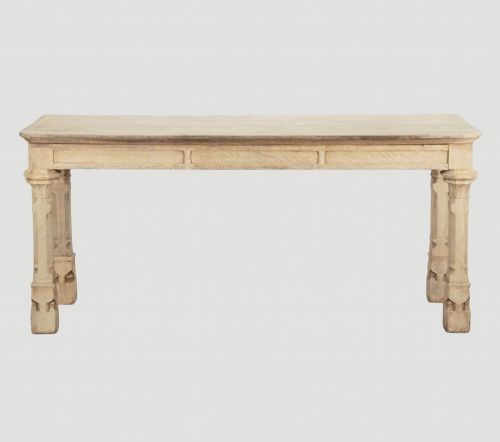
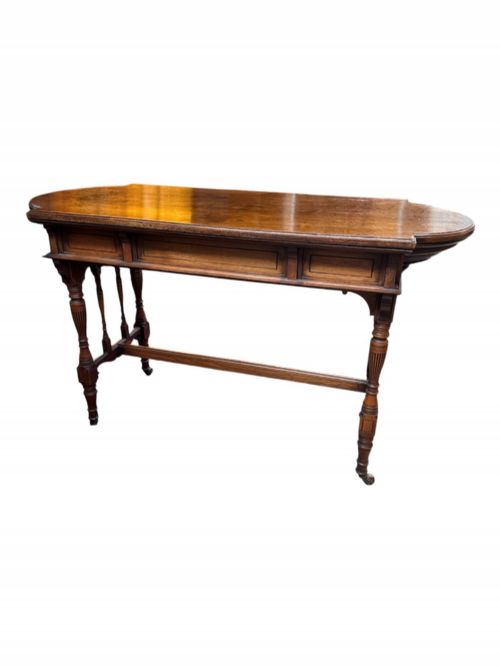
Makers working in regions such as Wales and England constructed these pieces to serve practical domestic functions, resulting in forms that double as writing desks, dressing tables, and serving surfaces. Alongside genuine eighteenth-century examples, the selection includes pieces from the nineteenth and early twentieth centuries built in Jacobean and Gothic revival styles.
The materials span from solid timber to bleached and golden surfaces, sometimes incorporating walnut, pine, iron, and brass details. Whether formed as a demi-lune table or a tall hall table, each piece demonstrates the enduring utility of early oak furniture in modern interiors.
Assessing Quality and Character
The distinction between standard examples and superior pieces rests on the integrity of the timber and the refinement of the proportions. Tables featuring crisp carving, original brass hardware, and well-balanced cabriole legs command greater attention from collectors.
Regional execution also plays a part, as provincial Welsh vernacular pieces display distinct joinery and timber choices that set them apart from standard metropolitan workshop output. The depth of the patina and the harmony of the underframe define the visual presence of the table.
Materials recorded across the inventory include solid oak, bleached oak, walnut, pine, iron, and brass.
The Early Oak Console Table Glossary
- Lowboy
- A small oak table with one or more drawers, standing on relatively tall legs, commonly used as a dressing or side table during the eighteenth century.
- Cabriole leg
- A furniture leg that curves out and then in, resembling the shape of an animal's leg, frequently seen on George I and Queen Anne pieces.
- Jacobean Revival
- A nineteenth or twentieth-century style that mimics the heavy, dark, and ornately carved furniture of the early seventeenth century.
- Demi-lune
- A half-moon shape applied to the top and frame of console tables designed to sit flush against a wall.
- Dresser base
- A substantial low table base with drawers and open lower framing, often repurposed as a serving or console table.
Early Oak Console Table: Frequently Asked Questions
How do I style an early oak console table?
Place the table in a hallway or against a living room wall to anchor the space with historical timber texture. Keep the surface uncluttered to let the grain and original form remain the focal point.
Pair the piece with simple mirrors or lamps that complement the period without competing with the woodwork. The sturdy construction allows for practical everyday placement near entryways.
What is the difference between a lowboy and a console table?
A lowboy is essentially a small table featuring drawers and relatively slender legs, originally intended for personal grooming or writing. Console tables are typically longer and designed primarily to stand against a wall for display or serving.
Over time, the terms frequently overlap in antique listings as lowboys are adapted for use as narrow hall tables.
How can I tell an eighteenth-century table from a revival piece?
Examine the construction methods, tool marks, and the natural wear visible on the timber. Eighteenth-century pieces show hand-cut joinery and aged patination acquired through generations of domestic use.
Revival pieces from the Victorian or Edwardian periods often display machine-assisted precision or cleaner timber surfaces beneath stylistic imitations of earlier eras.
Were these tables used as desks?
Many early side tables and lowboys functioned flexibly as writing desks or dressing tables depending on the room they occupied. The inclusion of a single drawer provided storage for writing materials or small personal items.
Their modest depth made them suitable for compact spaces where a full-sized desk would prove too cumbersome.