
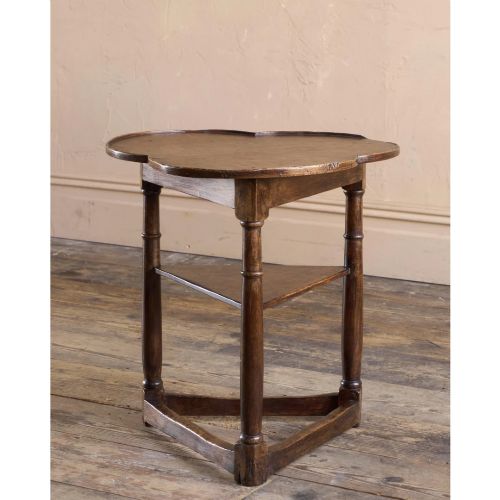


Welsh Vernacular Oak Table
A welsh vernacular oak table brings honest rural character into a room through honest timber and simple country proportions.

Welsh Vernacular Oak Table
A welsh vernacular oak table represents the practical domestic furniture made in rural Wales across the eighteenth and nineteenth centuries. These pieces encompass side tables, occasional tables, low centre tables, dresser bases, and cricket tables built for everyday farmhouse use.
The versions most commonly met on this page belong to the Georgian and nineteenth-century periods, taking regional forms from areas like Monmouthshire and Snowdonia. They often display rustic country styles with three-legged tripod constructions or straightforward four-legged frames.
Buyers seek these objects for their unpretentious utility and the warm patina that aged timber acquires over centuries of domestic life. Each piece reflects the local traditions of Welsh rural cabinet making without the elaborate ornament of metropolitan workshops.
How they were made
Makers built these tables primarily from solid oak, sometimes combining secondary woods like pine for internal or lower components. Surfaces occasionally received coats of paint, reflecting historical domestic preferences for decorated finishes.
Objects span side tables, occasional tables, dresser bases, and cricket tables originating from the eighteenth and nineteenth centuries.
What varies in quality
Quality in these rural tables rests upon the integrity of the timber selection and the retention of original surface patination. Pieces that retain their early pegged joints and unthinned boards command greater appreciation from collectors.
Proportion and regional idiosyncrasy also define the upper tier of these objects. Unusual forms, such as trefoil tops or specific geographic origins like Snowdonia and Monmouthshire, elevate a piece beyond standard utilitarian output.
The Welsh Vernacular Oak Table Glossary
- Cricket table
- A small three-legged round table typically featuring a triangular underframe for stability on uneven floors. This form is common in Welsh vernacular furniture.
- Dresser base
- A low rectangular cabinet fitted with drawers and occasionally cupboards below, designed for domestic storage and food preparation. These pieces form a substantial part of rural Welsh seating and serving furniture.
- Vernacular
- Furniture made by local regional craftsmen using traditional methods and local materials, free from metropolitan high-style design dictates. This style prioritises function and local availability over academic ornamentation.
- Patina
- The deep surface sheen and colour acquired by wood through decades of handling, cleaning, and exposure to light. It serves as an indicator of age and continuous use.
- Trefoil top
- A tabletop shaped with three lobes or rounded points resembling a three-leaf clover. This uncommon geometry appears on specific occasional and cricket tables.
Welsh Vernacular Oak Table: Frequently Asked Questions
What is a cricket table?
A cricket table is a small round occasional table supported by three legs. The design traditionally provided stability on flagstone or uneven cottage floors.
These pieces frequently feature triangular stretchers near the base to strengthen the structure. They served multiple domestic purposes in rural homes.
How do I date a Welsh oak table?
Dating relies on examining the construction methods, tool marks left by early saws, and the type of fixings used. Pegged joints and hand-planed boards point to eighteenth-century origins.
Stylistic details and regional variations also help narrow down the period. Comparative examples from specific areas like Monmouthshire provide useful benchmarks.
Where were these tables made?
They were made in rural workshops across Wales by local carpenters and joiners. Towns and regions like Snowdonia and Monmouthshire produced distinct local variations.
Local timber yards supplied the solid oak used in construction. Makers adapted designs to suit the specific needs of Welsh farmhouses.
How should I care for antique oak?
Antique oak benefits from maintaining stable room humidity and avoiding direct sunlight. Minimal waxing helps protect the dry surface without building up excessive residue.
Harsh chemical cleaners should be avoided to preserve the historic patina. Gentle dusting with a soft cloth keeps the timber safe.