
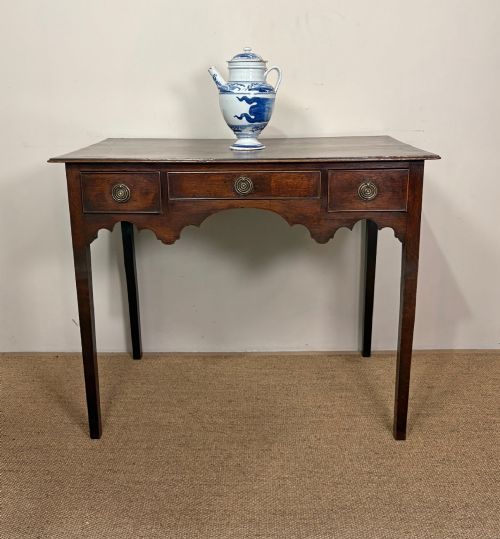
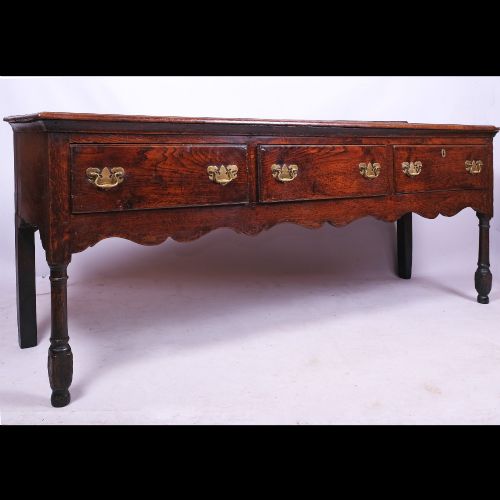
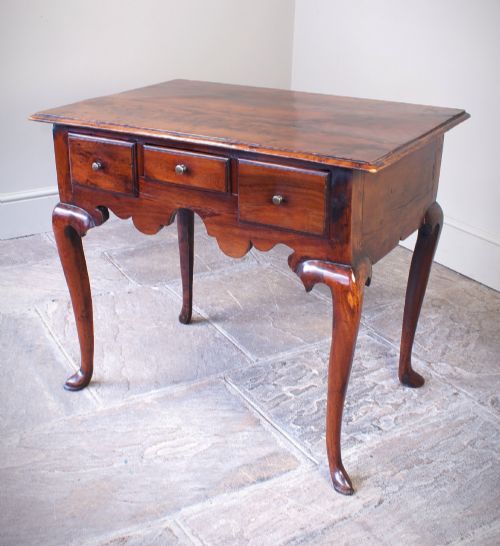
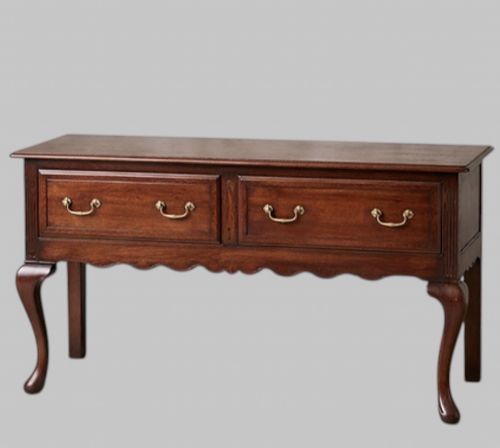


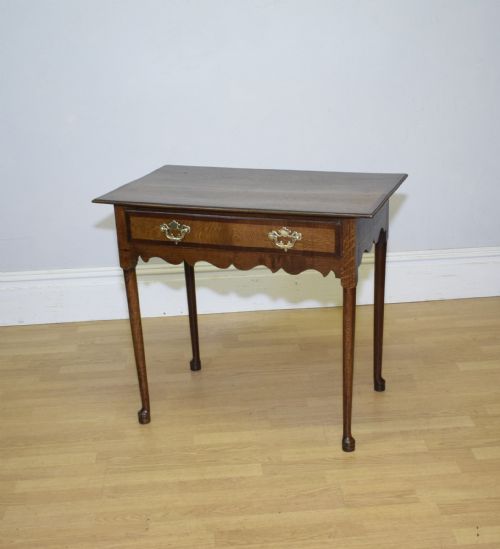

Scalloped Apron Lowboy
A scalloped apron lowboy is a compact side table with a shaped skirt, prized for its delicate silhouette and practical drawers.
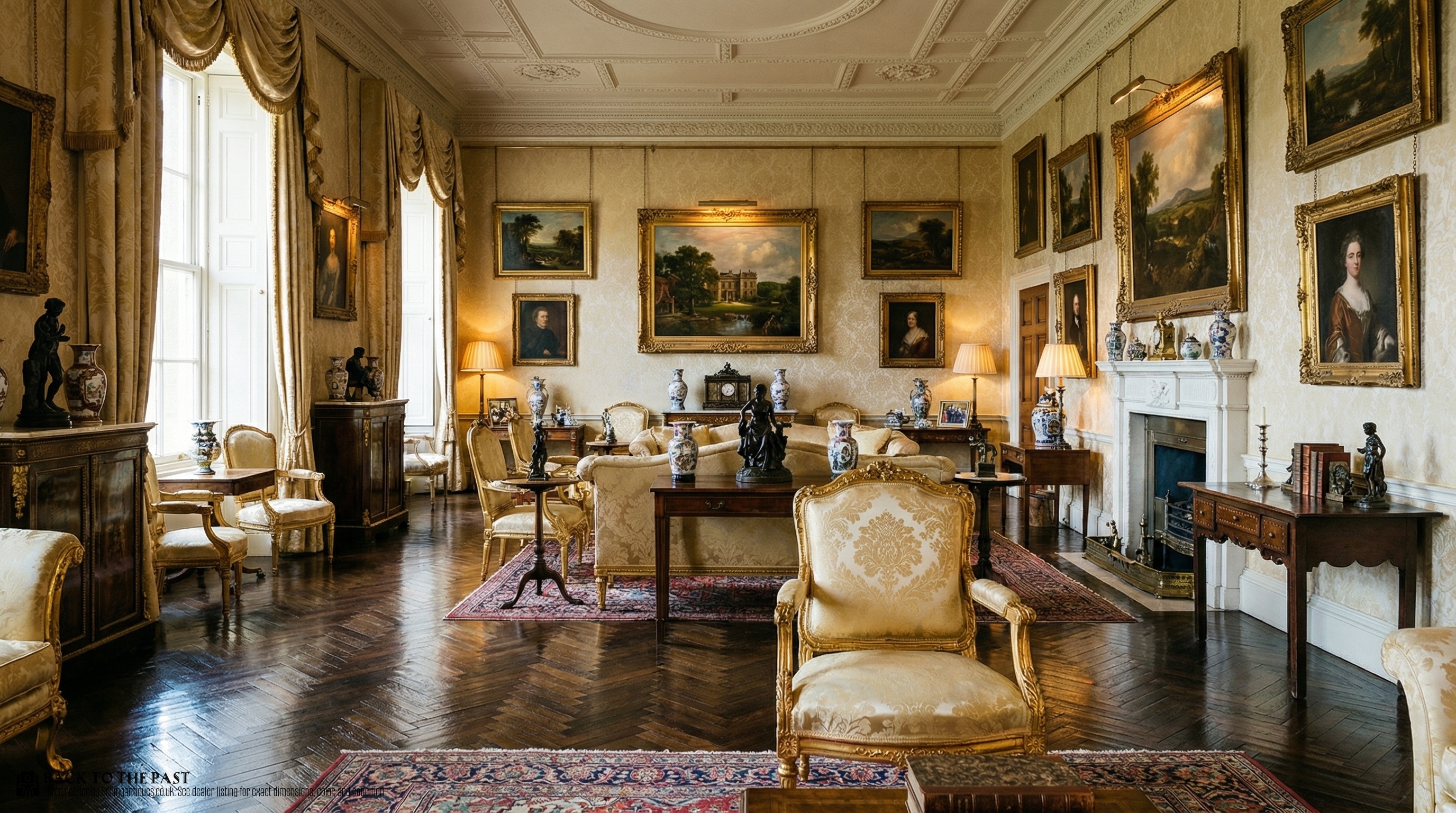
Scalloped Apron Lowboy
A scalloped apron lowboy is essentially a small table featuring one or more drawers and a distinctive shaped lower edge. When searching for a scalloped apron lowboy, buyers typically encounter examples fashioned from oak, mahogany, or yew wood originating from the eighteenth and nineteenth centuries.
The pieces on offer span several related forms, including side tables, lamp tables, and dresser bases executed in styles such as Queen Anne, Early Georgian, and the later Georgian revival. Oak and yew wood versions frequently display regional vernacular characteristics, whilst mahogany examples often adhere to more formal urban traditions.
Most entries date from the eighteenth century, with occasional nineteenth-century interpretations built in the Georgian taste. These tables function well in hallways or as compact writing desks, offering storage without overwhelming smaller spaces.
Materials and construction methods
Cabinetmakers constructed these pieces primarily using solid timbers like oak, mahogany, yew wood, and cherry, occasionally incorporating timber inlay for decorative effect. Brass fittings, particularly drop handles and escutcheons, complete the drawer assemblies on mahogany and oak carcasses.
Regional workshops utilised traditional joinery techniques, shaping the aprons by hand to create the characteristic curves. Surface finishes range from polished hardwood to painted wood, depending on the specific domestic context and period of manufacture.
Object forms catalogued here include side tables, dresser bases, lamp tables, and console tables in Georgian and Queen Anne styles.
Distinguishing quality factors
The refinement of the apron's carved or sculpted outline largely dictates the visual success of the piece, separating standard utility furniture from finer examples. Crisp execution of the timber grain and the preservation of original brass hardware contribute significantly to the standing of any given table.
Proportion and timber selection play major roles, as denser figures in yew wood or rich patination on eighteenth-century oak elevate the piece. The integrity of the structural joints and the subtlety of the curves determine how successfully the table holds its historical character.
The Scalloped Apron Lowboy Glossary
- Lowboy
- A small dressing or side table typically fitted with one or more drawers set beneath the work surface. They gained popularity in the late seventeenth century and remained standard household furnishings throughout the Georgian period.
- Apron
- The vertical wooden member connecting the top of the table to the legs, often shaped or scalloped along the lower edge. This decorative skirt softens the boxy geometry of the underframe.
- Dresser base
- A lower sideboard or console featuring drawers and sometimes open shelving or pot boards beneath. These robust forms share construction methods with smaller lowboys and side tables.
- Vernacular
- Furniture made by regional craftsmen for local use rather than high-style urban workshops. Welsh vernacular pieces, for instance, often display distinct local interpretations of prevailing national styles.
- Patina
- The deep surface sheen and colour acquired by wood through age, use, and waxing over decades. It serves as a visual indicator of authenticity and historical care.
Scalloped Apron Lowboy: Frequently Asked Questions
What is a scalloped apron lowboy used for today?
These compact tables serve admirably as hallway console tables, bedside surfaces, or small writing desks. Their modest footprint allows them to fit easily into narrow spaces while providing useful drawer storage.
They also function well as display surfaces for lamps or decorative objects, adding period character to both traditional and contemporary interiors.
How do I distinguish between an 18th-century and a revival lowboy?
Examination of the timber movement, tool marks, and construction joints generally reveals the age of the piece. Eighteenth-century examples display hand-cut joinery and natural surface wear consistent with extended use.
Revival pieces, such as those from the late nineteenth century built in the Georgian taste, often exhibit more uniform machine-prepared timber and different ageing patterns on the internal components.
Are all lowboys made of mahogany?
Mahogany is common, but many regional examples utilise native British hardwoods such as oak, yew wood, and cherry. Oak versions frequently reflect vernacular traditions, particularly from regions like Wales.
Yew wood provides a distinctive figured grain that makes smaller tables and dresser bases visually striking, while cherry wood offers a warm, reddish tone.
How should I care for an antique wooden table?
Maintain these tables by keeping them away from direct heat sources and strong sunlight, which can dry out the timber and crack the finish. Occasional application of quality beeswax helps nourish the wood and preserve the existing patina.
Avoid using modern silicon-based polishes, as they can build up over time and degrade the historic finish of the surface.