

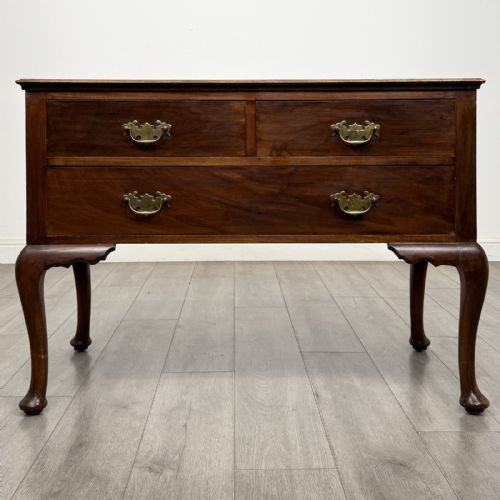
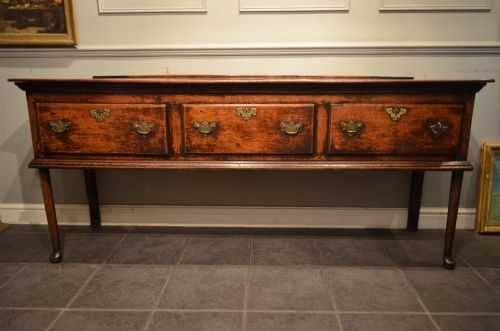
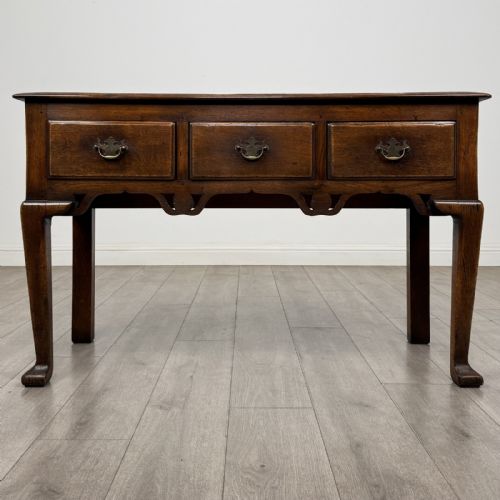
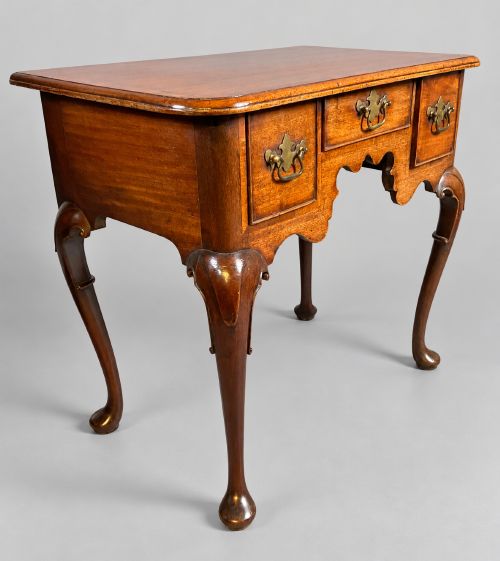
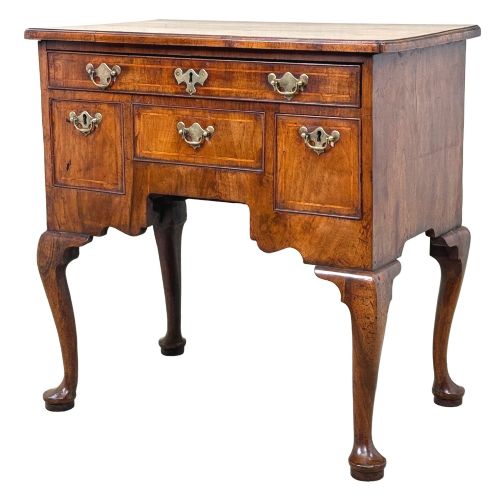
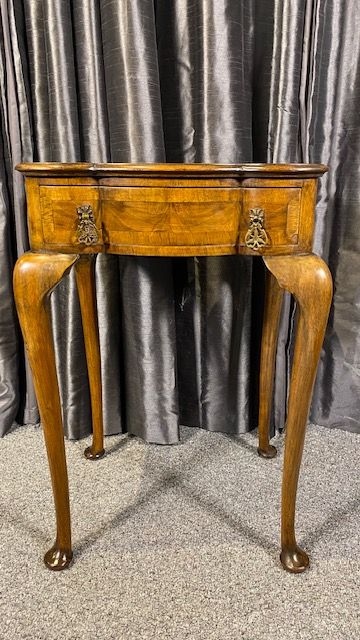
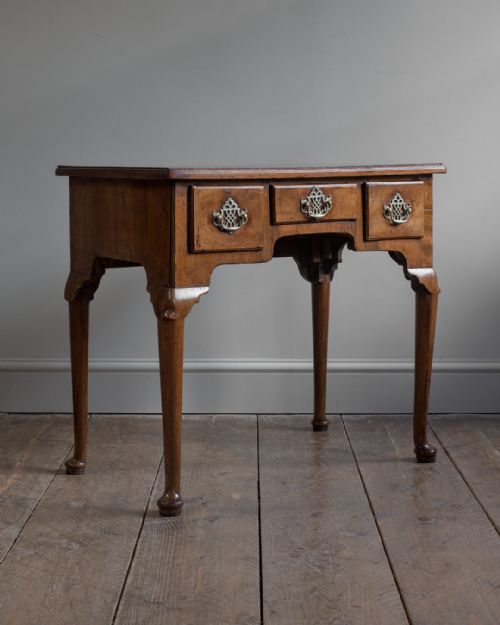
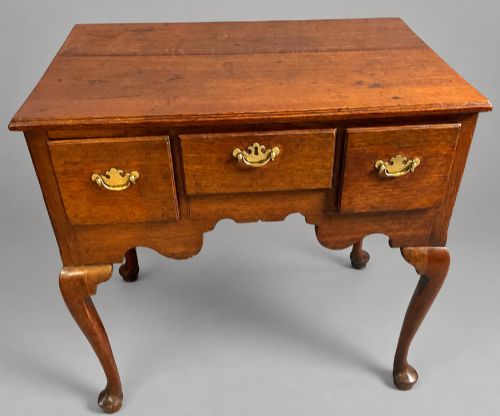

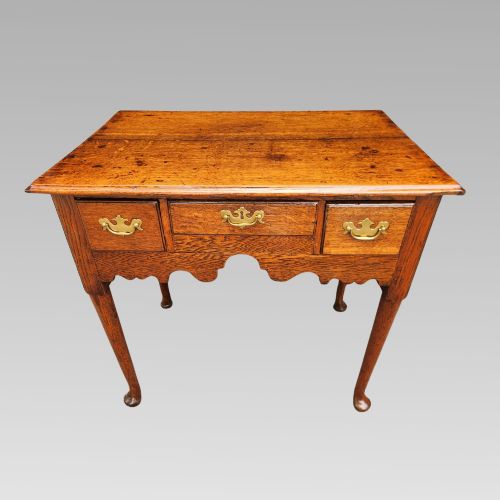
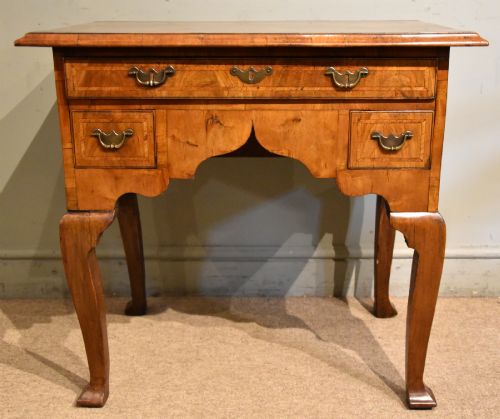
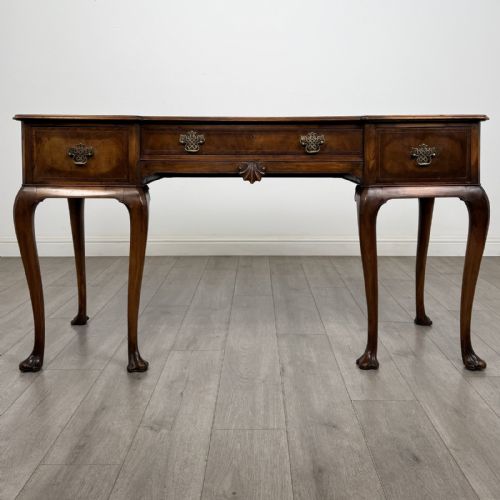
Cabriole Leg Lowboy Table
A cabriole leg lowboy table is a compact serving or dressing piece raised on curved supports, sought after for its refined proportions and utility.
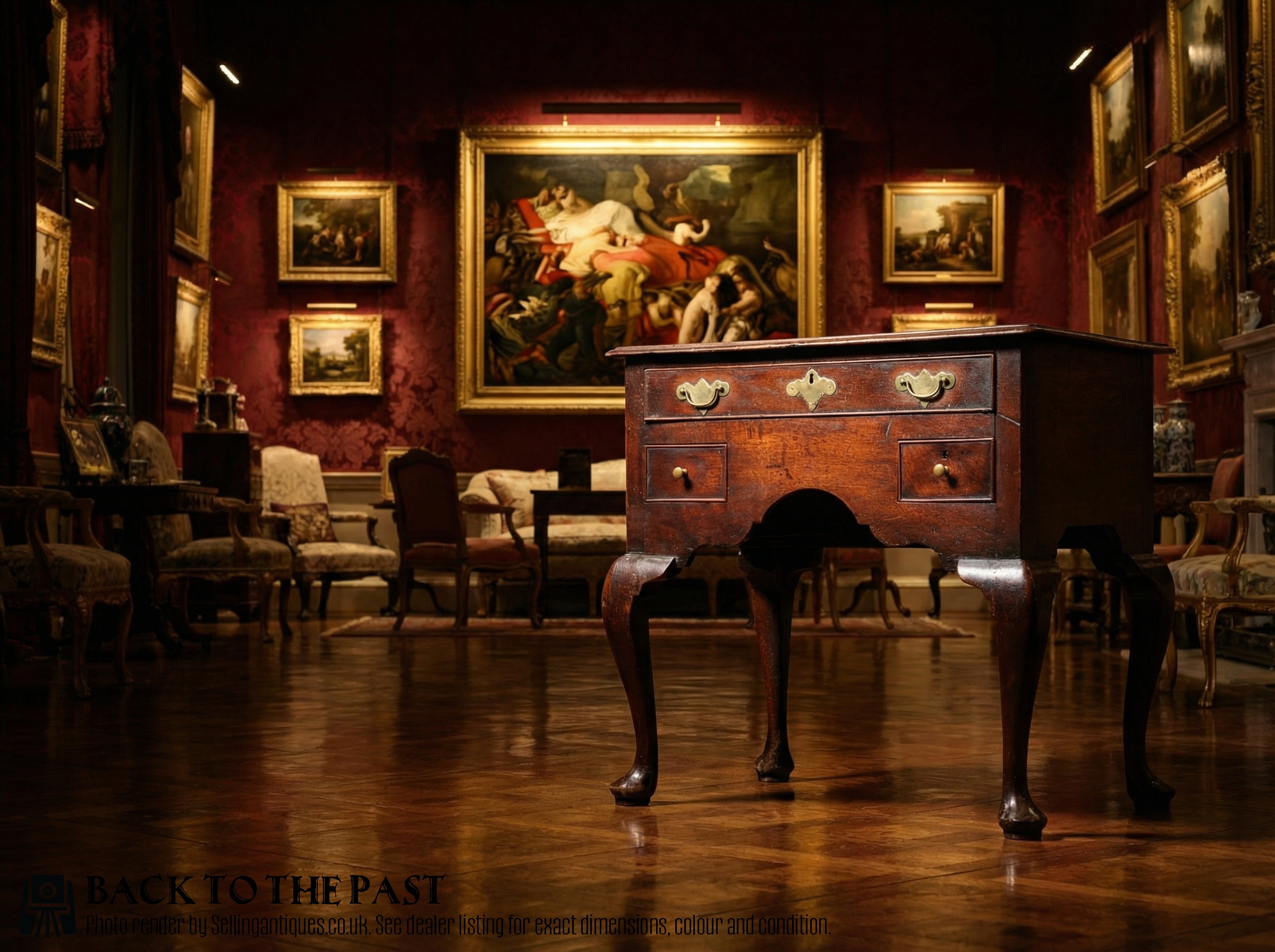
Cabriole Leg Lowboy Table
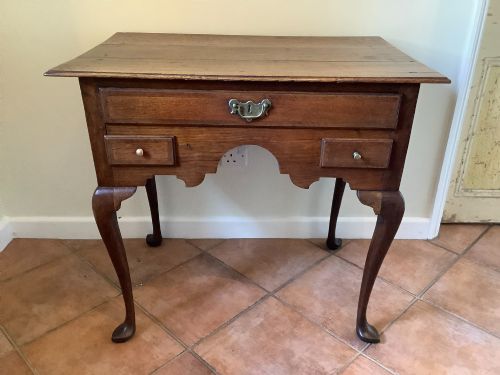
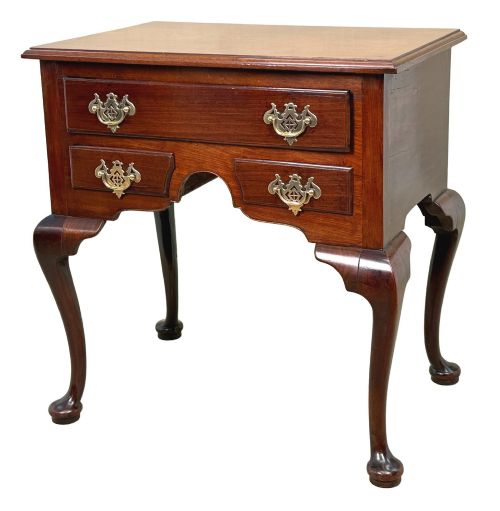
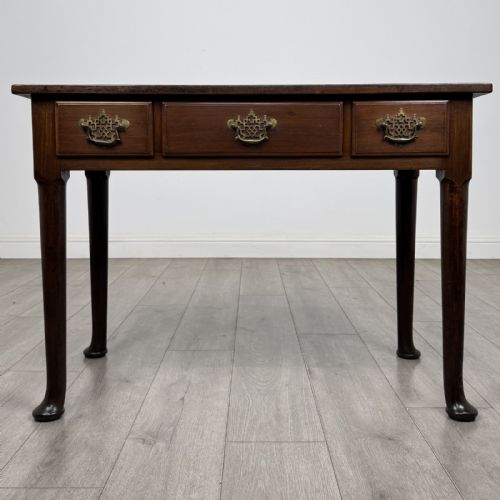
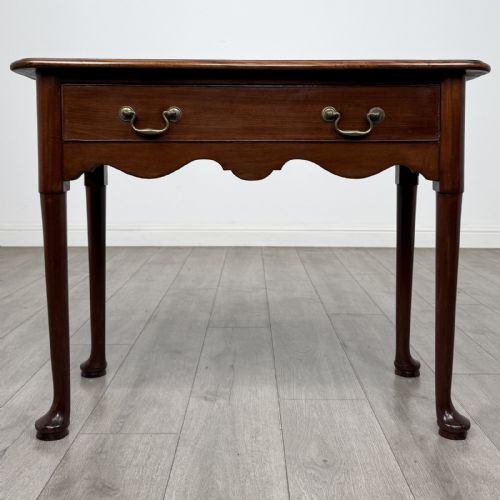
A cabriole leg lowboy table is a low serving table or small desk typically fitted with one to three drawers beneath the top. The form appears most frequently from the Georgian and 18th century periods, executed in oak, walnut, or mahogany. These tables serve as versatile side furniture in traditional interiors, offering surface display space alongside enclosed storage.
Buyers will encounter multiple regional and stylistic iterations on this page, ranging from plain oak examples to highly figured walnut and burr elm pieces. The Queen Anne and George II eras dominate the selection, bringing characteristic curved supports and understated drawer configurations. Later revival pieces from the twentieth century also appear, echoing these earlier eighteenth-century designs.
How they were made
Cabinet makers constructed these tables primarily using solid timbers such as oak, mahogany, and walnut, frequently selecting burr veneers for decorative drawer fronts. Secondary woods provided structural stability inside the drawer boxes and carcases, while brass hardware fulfilled functional and decorative roles on pulls and escutcheons.
The defining structural feature involves shaping solid timber to form the sweeping profile of the supports, often tapering down to pad or club feet. Joinery techniques relied on traditional hand-cut joints, ensuring stability without modern adhesives.
Cabriole Leg Lowboy Table Retail Price Guide 2026
Typical asking prices for cabriole leg lowboy table among the pieces listed under this phrase on Sellingantiques today, from the lower quarter to the upper quarter. They describe what is for sale here now, not the wider market.
What varies in quality
The quality of a cabriole leg lowboy table rests in the selection of timber figure, particularly the richness of walnut or the density of early oak. Finer examples display meticulous shaping to the curved supports, where the transition from knee to foot flows with organic balance rather than stiffness.
Proportion and execution of the drawer arrangement further differentiate standard utility items from superior pieces. Crisp edge mouldings, original brass hardware, and careful grain matching across multiple drawers indicate a higher tier of cabinet making.
The Cabriole Leg Lowboy Table Glossary
- Cabriole leg
- A furniture support that curves outward at the knee and tapers inward toward the foot, mimicking animal limbs. This form became a defining characteristic of early eighteenth-century design.
- Lowboy
- A small occasional table with drawers, standing on four supports, commonly utilised as a dressing table or side table. The designation distinguishes it from taller tallboy chests.
- Dresser base
- A heavy low storage table featuring multiple drawers, sharing construction traits with lowboys. These pieces often provided kitchen or dining room utility.
Cabriole Leg Lowboy Table: Frequently Asked Questions
What is a lowboy used for?
A lowboy functions primarily as a small side table, occasional desk, or dressing surface with integrated drawer storage. Historically placed in bedrooms or parlours, it held personal items or served as a compact serving station.
Today, these tables fit easily into hallways and living spaces where surface area is required without occupying much floor space.
How do I date an 18th-century lowboy?
Dating relies on observing timber choices, construction methods, and stylistic cues such as the profile of the curved supports and drawer linings. Early eighteenth-century examples often utilise walnut or figured oak with hand-cut dovetails and pegged joints.
Later revival pieces from the twentieth century utilise similar forms but display more uniform machine sawing and modern secondary timbers upon close inspection.
Are all lowboys made of oak?
While oak is common among eighteenth-century examples, makers also utilised walnut, mahogany, yew wood, and burr elm. Timber choices often reflected regional availability and the prevailing style of specific decades.
Walnut and mahogany frequently denote higher status pieces intended for formal reception rooms, whereas oak served both domestic and provincial settings.
How do I care for a antique lowboy?
Maintenance requires keeping wooden furniture away from direct heat sources and fluctuating humidity to prevent timber splitting or veneer lifting. Regular dusting with a dry, soft cloth preserves the polish without chemical buildup.
Applying traditional beeswax occasionally helps nourish historical wood surfaces and maintains a gentle, protective sheen.