
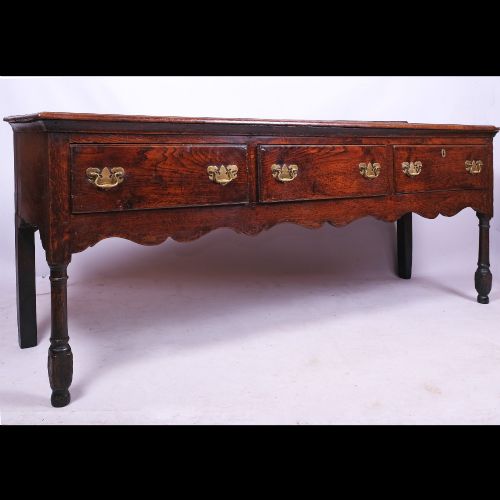
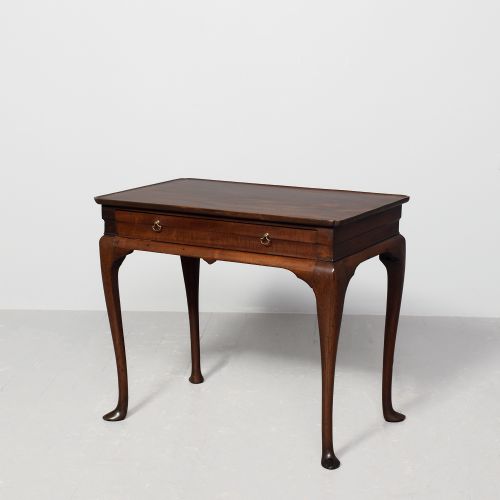
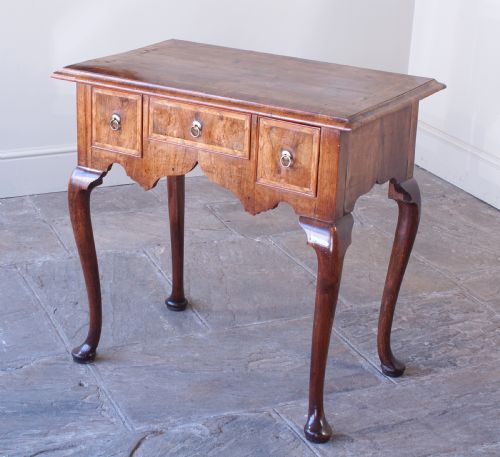
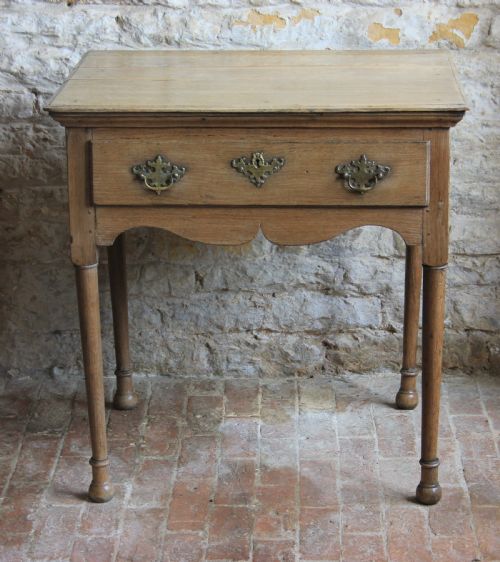
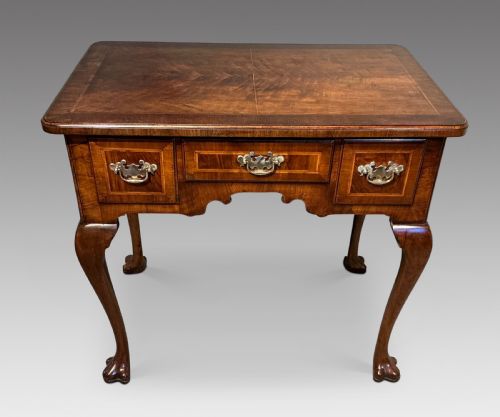


Early 18th Century Lowboy
An early 18th century lowboy is a compact, elegant table with drawers, designed for personal grooming or correspondence.
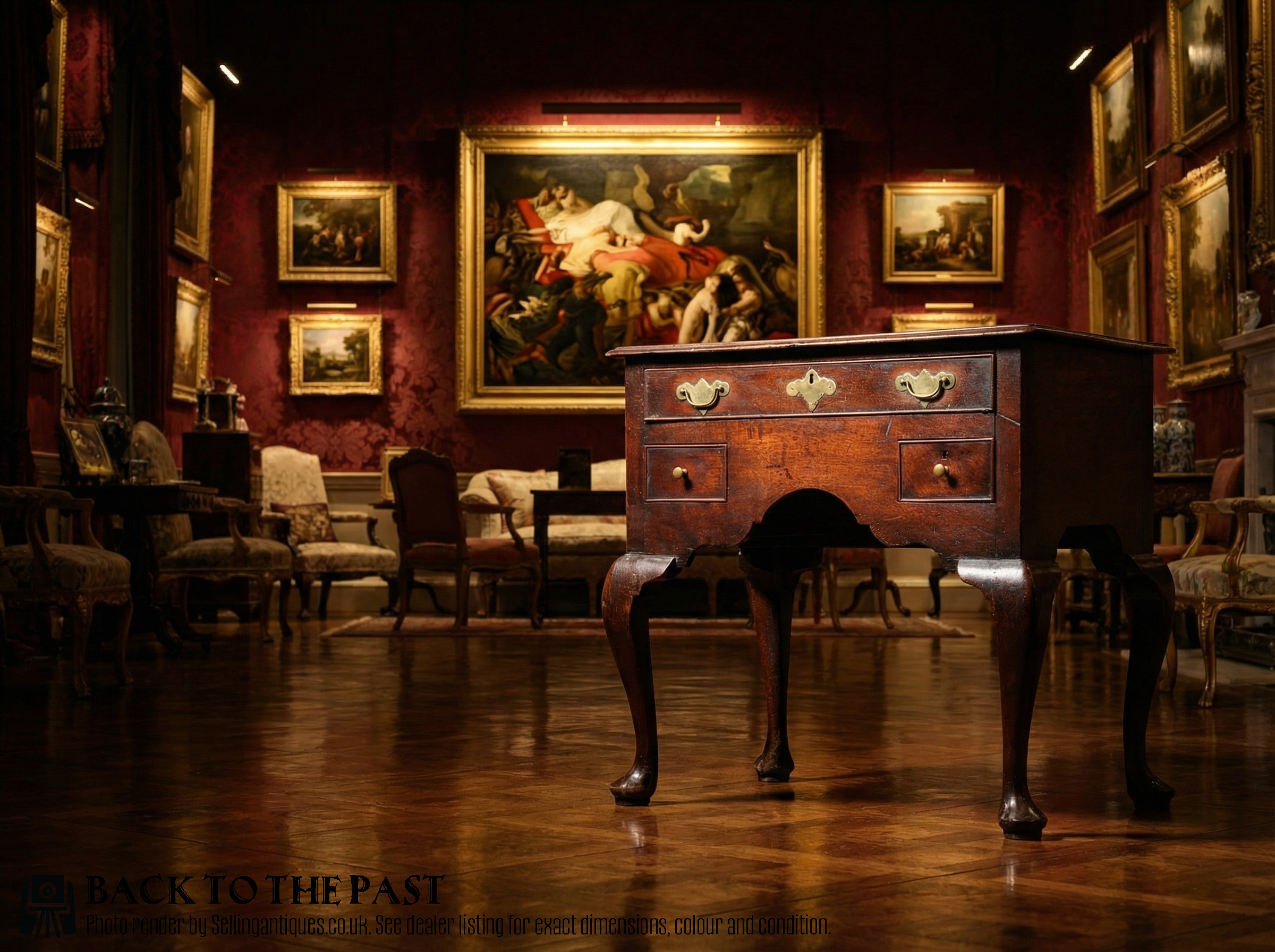
Early 18th Century Lowboy
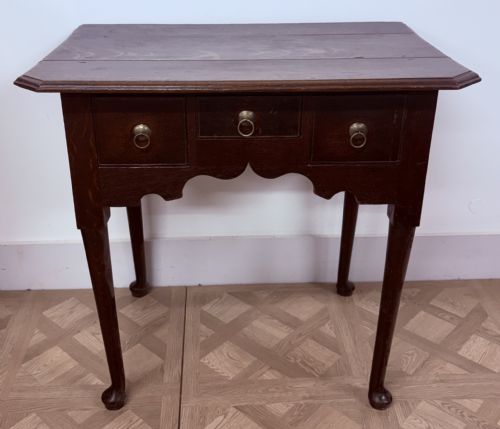
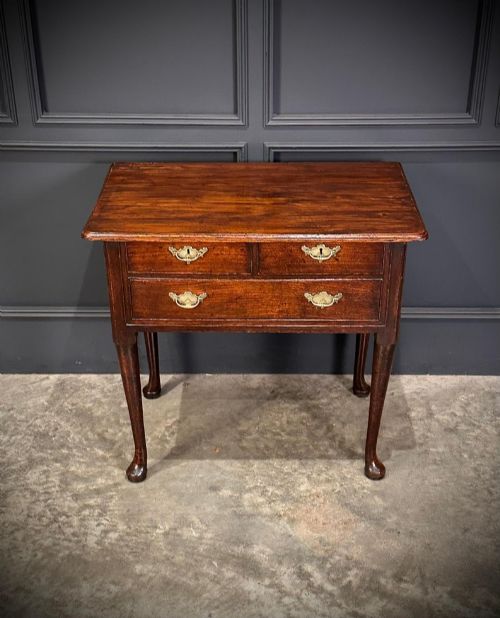
An early 18th century lowboy is essentially a small dressing table or side table fitted with one or more drawers beneath the surface. These pieces sit low on slender legs, often terminating in cabriole shapes, and served private chambers or parlours for writing and grooming.
The versions met most frequently on this page span the Queen Anne, George I, and early George II periods, displaying the transition from austere vernacular designs to more sophisticated urban cabinetry. Oak and walnut dominate the forms, reflecting the regional workshops and metropolitan London makers of the era.
Beyond the standard lowboy, the category bleeds into related side tables, dressing tables, and dresser bases. Their modest proportions and kneehole clearances distinguish them from larger chests and writing desks, making them adaptable as accent furniture in modern rooms.
Materials and construction
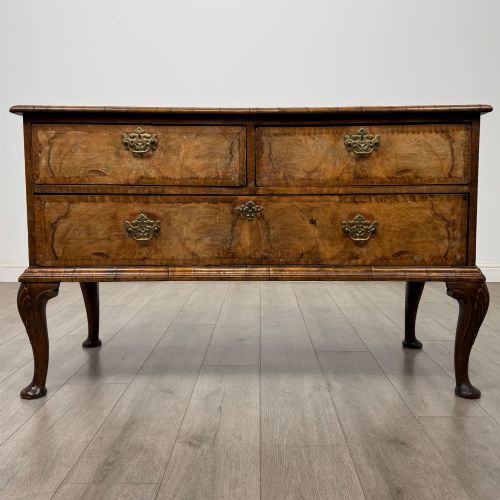
Makers constructed these tables primarily in solid oak and walnut, frequently utilising figured walnut veneers, crossbanding, and featherbanding on primary surfaces. Secondary timbers like pine and elm often appear in drawer linings and internal framing.
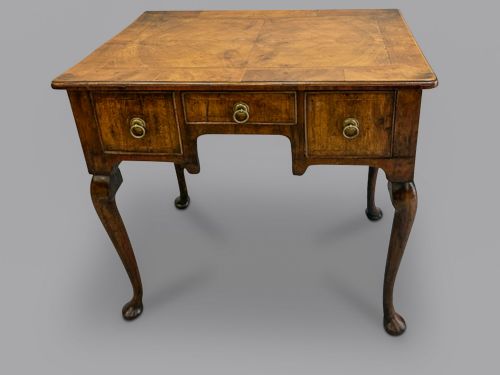
Joinery relied on hand-cut dovetails for drawer construction and pegged mortise and tenon joints for the frame. Cabriole legs were carved directly from the timber or joined at the knee, sometimes featuring pad feet or Spanish feet.
The documented periods span the 17th century through the Georgian era, centred tightly on the early 1700s to 1750.
What distinguishes finer examples
Quality rests heavily on the choice of timber and the execution of surface decoration, such as intricate walnut veneers and precise banding. Pieces featuring dense, highly figured graining or rich red walnut command greater appreciation.
Structural integrity and the survival of original brass hardware, surface patination, and uncompromised cabriole legs separate superior survivals from heavily restored pieces.
The Early 18th Century Lowboy Glossary
- Cabriole leg
- A furniture leg that curves out at the knee and tapers inward to an ankle, mimicking an animal's limb. This style became prominent during the Queen Anne and Georgian periods.
- Crossbanding
- A decorative border of veneer where the grain runs perpendicular to the length of the moulding. It frames the primary walnut surfaces of finer tables.
- Featherbanding
- A delicate inlay technique using small strips of veneer arranged in a herringbone pattern. It typically borders the drawer fronts of walnut pieces.
- Dresser base
- A heavy wooden framework with drawers, functioning similarly to a lowboy in vernacular country interiors. These pieces lack the upper shelving tier of a full Welsh dresser.
- Pad foot
- A simple, rounded foot shape that sits flat on the floor at the base of a cabriole leg. It appears frequently on early 18th-century oak and walnut tables.
Early 18th Century Lowboy: Frequently Asked Questions
What was a lowboy used for originally?
These tables functioned primarily as dressing tables in bedchambers, holding mirrors, cosmetics, and personal items. They also served as writing desks or side tables for correspondence in private studies.
The small drawers provided secure storage for documents, inkwells, and valuables, keeping surfaces clear for daily tasks.
How do I tell oak lowboys from walnut ones?
Oak examples tend to display a more robust, rustic character with visible grain patterns, frequently associated with regional or Welsh vernacular workshops. They have a lighter, paler tone unless darkened by age and wax.
Walnut pieces usually present a smoother, highly figured surface, often enhanced with decorative veneers and banding. They date predominantly to metropolitan cabinetmakers working under Queen Anne and the early Georges.
Where should I place a lowboy today?
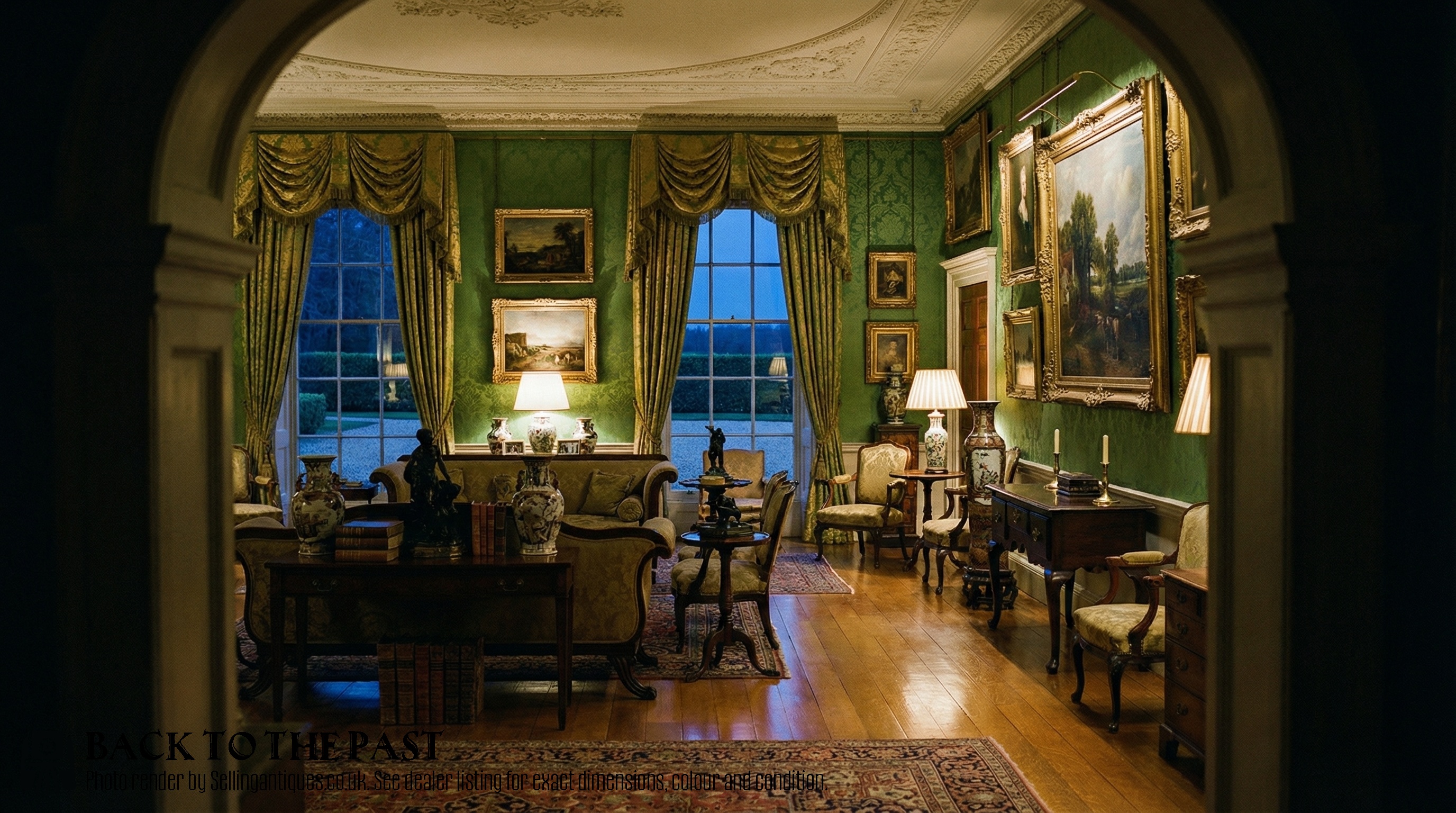
Their compact scale allows these tables to function effectively as hallway console tables or dressing desks in bedrooms. The kneehole clearance ensures they occupy minimal floor space.
In living areas, they serve as accent tables against walls, offering surface space for lamps or decorative objects alongside concealed drawer storage.