





Bone Inlay Coffee Table
A bone inlay coffee table brings intricate geometric pattern and warm regional character into a sitting room.
Bone Inlay Coffee Table
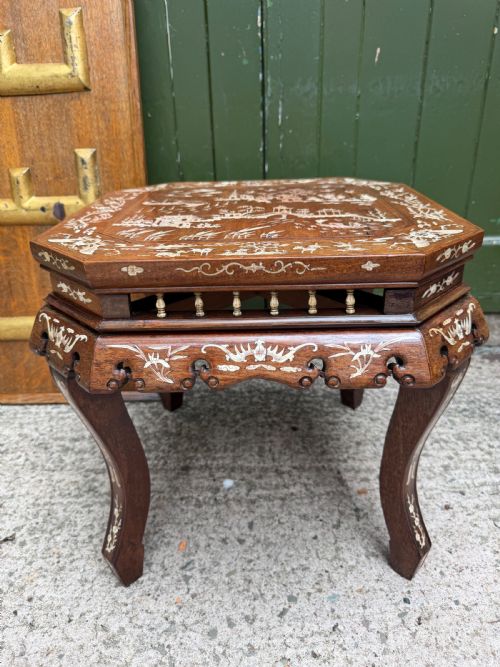
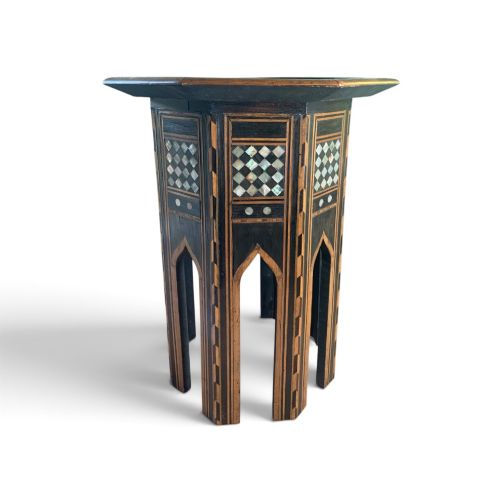
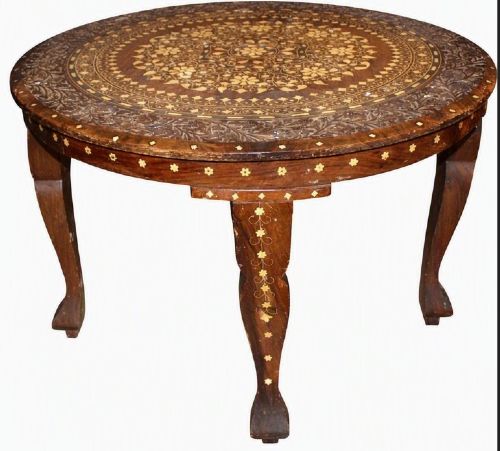
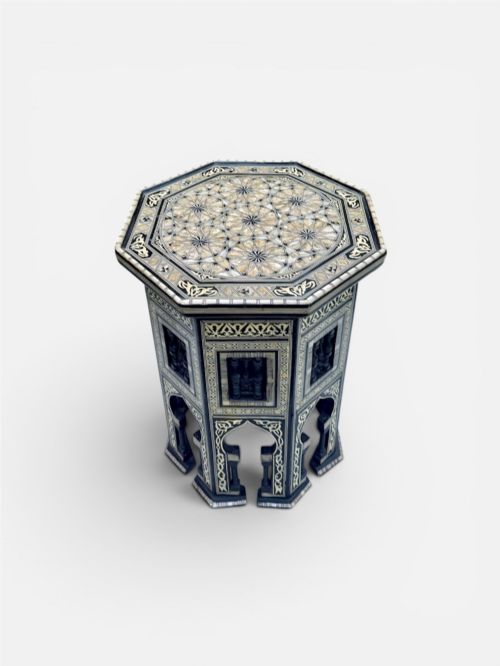
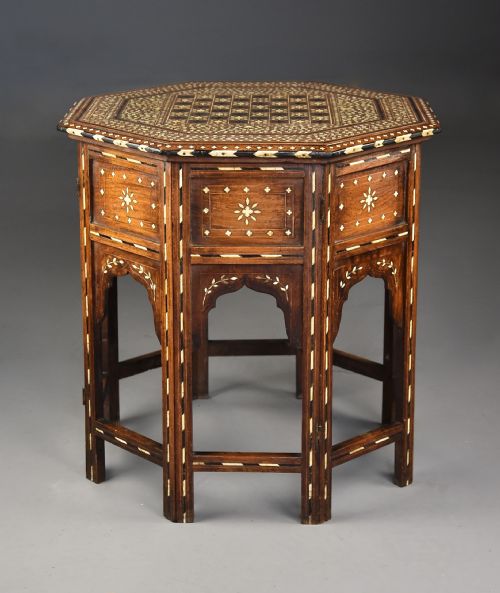
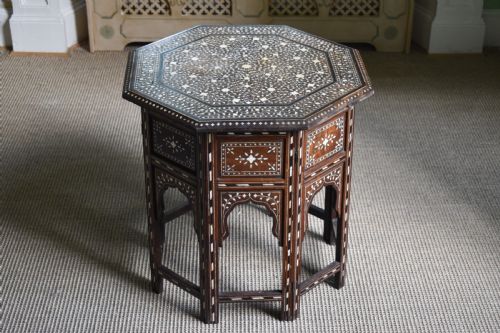
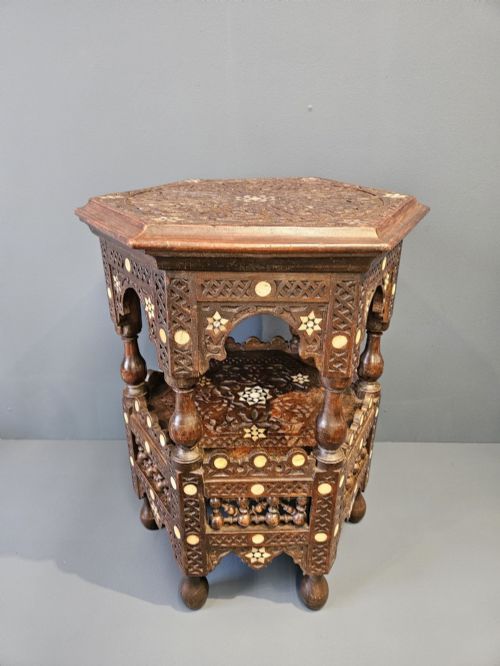
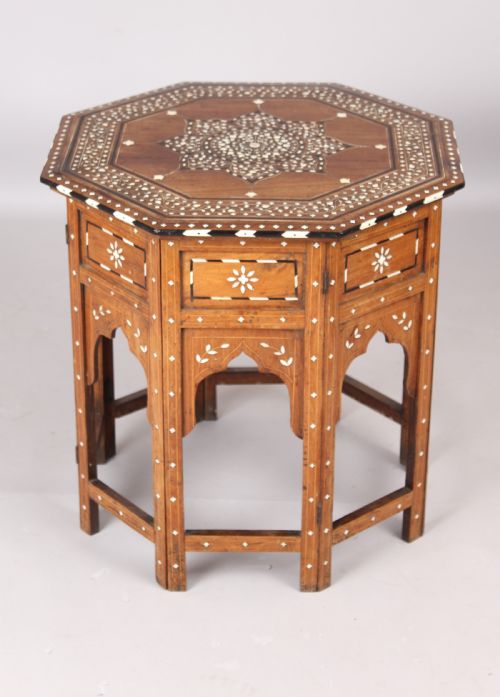
A bone inlay coffee table is typically encountered as an octagonal, hexagonal, or circular occasional or side table dating from the nineteenth and early twentieth centuries. These pieces encompass Moorish Revival, Anglo-Indian, Ottoman, and Syrian styles produced across distinct global workshops.
Makers often utilised low-slung, polygonal forms that function well beside modern seating while retaining traditional craftsmanship. The selection spans carved occasional tables, lamp tables, and low coffee tables adapted from earlier forms.
Originating largely from India, the Middle East, and British colonial production, these tables reflect nineteenth-century and early twentieth-century taste for exotic Revival design. Pieces frequently bear stylistic links to retailers such as Liberty & Co.
How they were made
Makers constructed the structural carcase from dense timbers including rosewood, walnut, hardwood, and ebonised wood. These dark woods provided a high-contrast foundation for the pale decorative elements.
Artisans pressed delicate pieces of animal bone and mother-of-pearl into hand-carved recesses across the timber surface. The intricate geometric and floral patterns were secured with adhesive and finished with detailed incised linework on the bone sections.
What varies in quality
The density and precision of the geometric mosaic work distinguish finer examples from simpler production. Superior pieces feature dense, unbroken patterns of bone and mother-of-pearl with minimal gaps in the surrounding timber.
Carving depth and the crispness of the secondary woodwork on legs and aprons determine the overall refinement of the piece. Tables with maker stamps or attribution to workshops like Hoshiarpur or retailers such as Liberty & Co display higher standards of design and assembly.
Liberty & Co
The Bone Inlay Coffee Table Glossary
- Bone inlay
- A decorative technique where small pieces of shaped bone are pressed and glued into carved recesses in a wooden base. This method creates striking contrasting patterns across the surface.
- Mother-of-pearl
- The iridescent inner layer of certain mollusc shells used alongside bone to add shimmering tonal variation to inlaid table tops. It catches the light differently depending on the viewing angle.
- Hoshiarpur
- A Punjabi city renowned during the nineteenth century for producing finely carved and inlaid woodwork. Tables from this region often feature dense floral and geometric bone decoration.
- Moorish Revival
- An architectural and decorative style popular in the nineteenth century that reinterpreted Islamic design motifs. It heavily influenced European and Anglo-Indian domestic furniture.
- Octagonal
- Having eight sides, a frequent geometric shape for the top and base of these tables. This form allows complex symmetrical patterns to radiate outwards from the centre.
Bone Inlay Coffee Table: Frequently Asked Questions
How do I clean a bone inlay coffee table?
Dust the surface gently with a dry, soft cloth to prevent particles settling in the intricate crevices of the inlay. Avoid using liquid polishes, water, or chemical cleaners, which can discolour the bone and loosen the adhesive.
Keep the table away from direct sunlight and radiators to prevent the wood from shrinking and the bone pieces from lifting. Wax can be applied very sparingly to the timber sections only if the manufacturer finish permits.
Can I use an antique side table as a coffee table?
Many nineteenth-century occasional and side tables share heights and proportions that suit modern seating layouts. Their compact polygonal footprints make them adaptable as central coffee tables in smaller sitting rooms.
Verify the stability of the base and the flatness of the top before placing heavy items on the surface. Antique low tables were originally built for varied domestic uses but transition easily into contemporary living spaces.
How do I date an inlaid table?
Examine the timber construction methods, screw types, and wood patination visible on the underside of the table top. Nineteenth-century examples often display hand-sawn elements and traditional joinery distinct from later twentieth-century production.
Reference stylistic indicators such as Moorish Revival motifs or retailer stamps from firms like Liberty & Co. The presence of specific regional carving styles, particularly from Hoshiarpur, helps narrow down the period of manufacture.
What woods are used beneath the bone?
Dark tropical hardwoods, walnut, rosewood, and ebonised fruitwood form the structural foundation of these tables. The deep colour provides a strong visual contrast against the pale bone and iridescent mother-of-pearl.
Makers selected stable timber substrates that could support the dense mosaic work without warping significantly over time. Ebonised finishes were frequently applied to cheaper domestic timbers to mimic more costly exotic woods.