





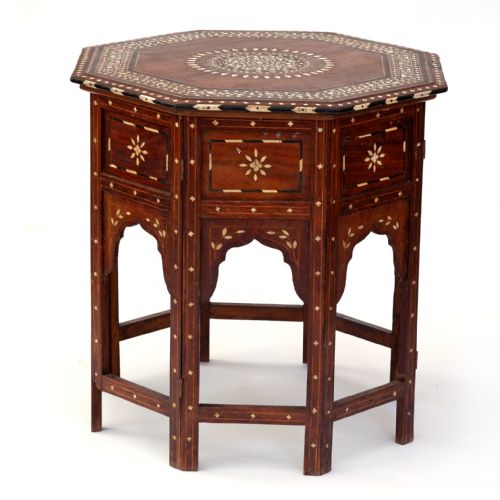


Bone Inlay Plant Stand
These bone inlay plant stand examples bring intricate craftsmanship and historic character into a room through detailed surface patterns.
Bone Inlay Plant Stand
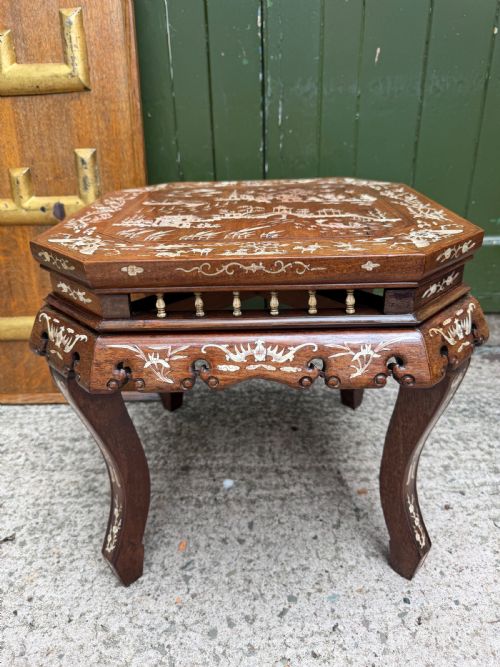
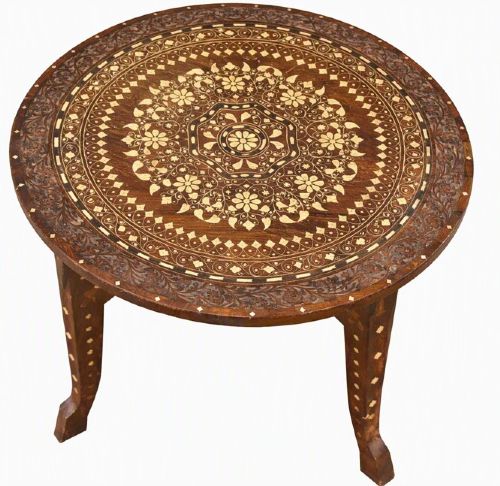
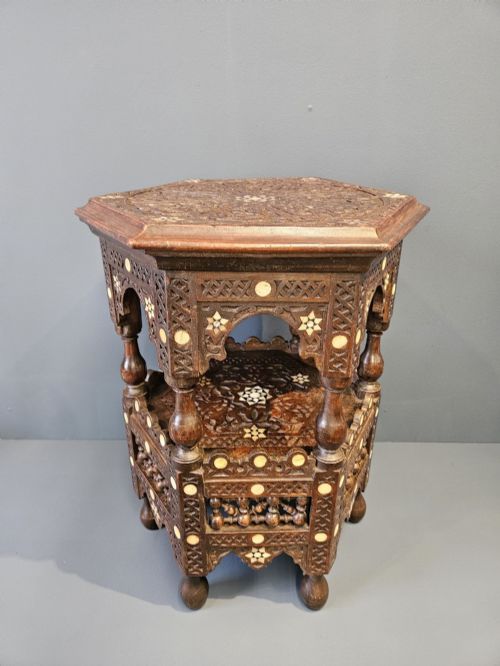
A bone inlay plant stand takes various forms, most commonly appearing as occasional tables, side tables, and pedestal tables across this selection. These pieces originate from distinct periods including the Victorian era, the nineteenth century, and the early twentieth century.
Buyers encounter diverse regional traditions and stylistic influences within this category, ranging from Anglo-Indian and Moorish Revival to Syrian and Italian designs. The forms serve both decorative and functional purposes in a domestic interior.
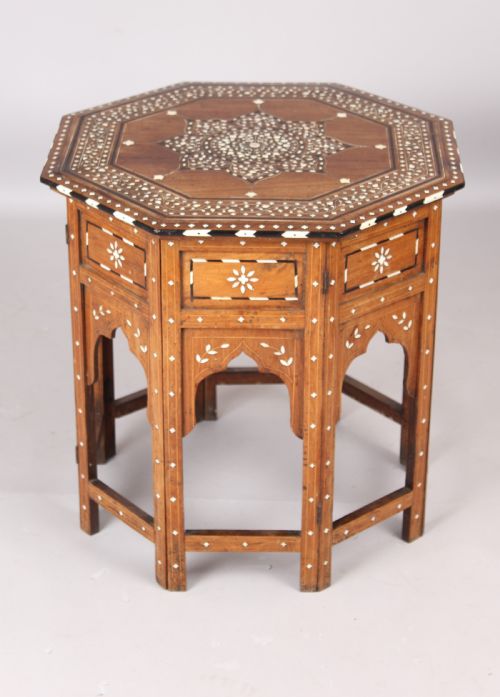
The objects frequently utilise circular or octagonal tops, supported by folding frames, tripod bases, or rigid pedestals. Such variety reflects the global exchange of design ideas during the nineteenth and early twentieth centuries.
How they were made
The construction relies on solid timber foundations, with listings recording materials such as teak, walnut, padauk, sandalwood, sheesham wood, and ebonised wood. Artisans shaped these hardwoods to form structural elements like folding tables, pedestal stands, and multi-legged bases.
Surface ornamentation combines natural bone and mother-of-pearl, hand-cut and pressed into recesses carved within the wood. Master craftsmen also employed intricate woodwork carving and marquetry techniques to complete the detailed geometric and floral motifs.
Bone Inlay Plant Stand Retail Price Guide 2026
Typical asking prices for bone inlay plant stand among the pieces listed under this phrase on Sellingantiques today, from the lower quarter to the upper quarter. They describe what is for sale here now, not the wider market.
What varies in quality
Quality rests upon the precision of the surface work and the integration of the decorative elements into the wooden frame. Pieces demonstrating greater skill feature tightly fitted bone and mother-of-pearl segments with minimal gaps in the surrounding resin or ground.
The complexity of the carving on the structural woodwork further separates standard examples from finer works. Deeply undercut foliage, figural details such as elephants, and well-balanced proportions indicate higher standards of regional workshop production.
Liberty & Co
The Bone Inlay Plant Stand Glossary
- Bone inlay
- A decorative technique where small pieces of animal bone are shaped and set into a wooden substrate to create intricate patterns. This method defines the primary aesthetic of these items.
- Mother-of-pearl
- The iridescent internal layer of mollusc shells utilised alongside bone for contrasting highlights on inlaid surfaces. It adds luminosity and varied colour tones to the design.
- Hoshiarpur
- A region in Punjab known for historic wood-carving and inlay work, particularly associated with tables featuring dense floral and geometric bone decoration. Pieces from this tradition often utilise teak or sheesham wood.
- Moorish Revival
- An architectural and decorative style popular in the nineteenth century that reinterpreted Islamic design elements. It manifests in these tables through geometric lattice patterns and octagonal forms.
- Marquetry
- The art of applying pieces of veneer to a structure to form decorative patterns. In these objects, it works alongside bone elements to enrich the visual texture.
Bone Inlay Plant Stand: Frequently Asked Questions
How do I care for bone inlay?
Keep these items away from direct sunlight and excessive moisture to protect the natural materials and adhesives.
Dust gently with a dry, soft cloth and avoid chemical polishes that can discolour the exposed bone and wood.
Are these tables sturdy enough for plants?
Many historical examples function effectively as plant stands, provided the weight remains balanced across the base.
Check the stability of the joints and folding mechanisms before placing heavy ceramic pots on the surface.
What defines Anglo-Indian style?
This style combines British furniture forms with traditional South Asian carving and inlay techniques from the colonial period.
It results in distinctive occasional tables, desks, and stands featuring dense botanical motifs and exotic hardwoods.
How do I distinguish regional origins?
Look closely at the choice of timber, the specific motifs in the carving, and the geometric layout of the inlay.
Syrian and Moorish pieces often lean towards intricate mother-of-pearl stars, whereas Hoshiarpur pieces showcase dense overall bone scrollwork.