





Brown Bone Inlay Table
These brown bone inlay table examples bring intricate patterns into a room, offering functional surfaces made with traditional craftsmanship.
Brown Bone Inlay Table
A brown bone inlay table serves as a functional surface while displaying complex geometric or figurative patterns across its wooden structure. Buyers seeking a brown bone inlay table often encounter pieces originating from the nineteenth and early twentieth centuries, featuring distinct regional carving traditions.
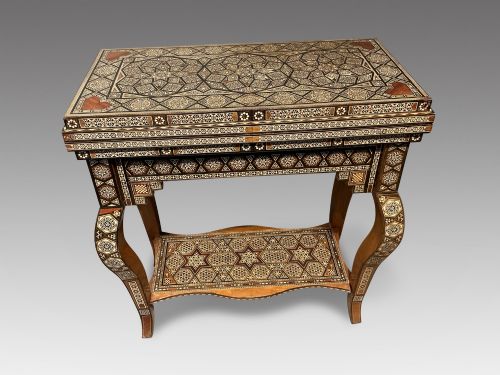
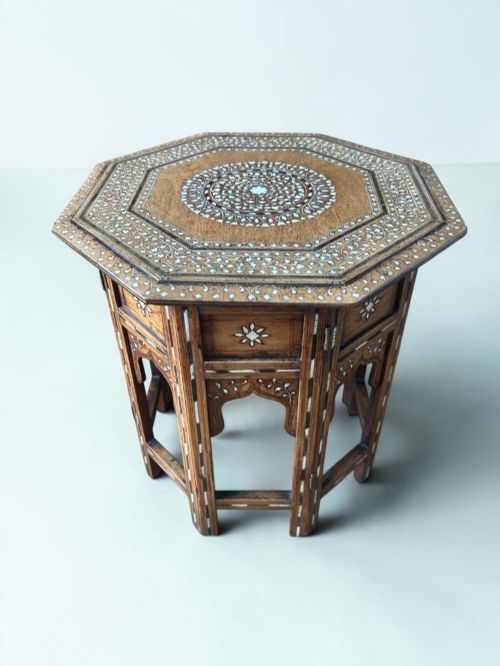
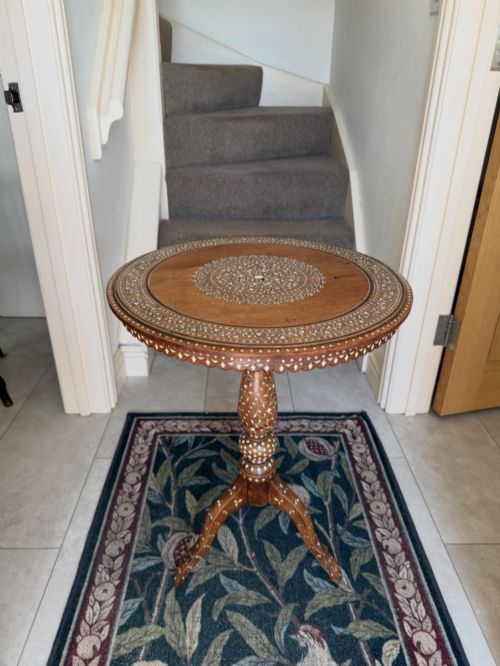
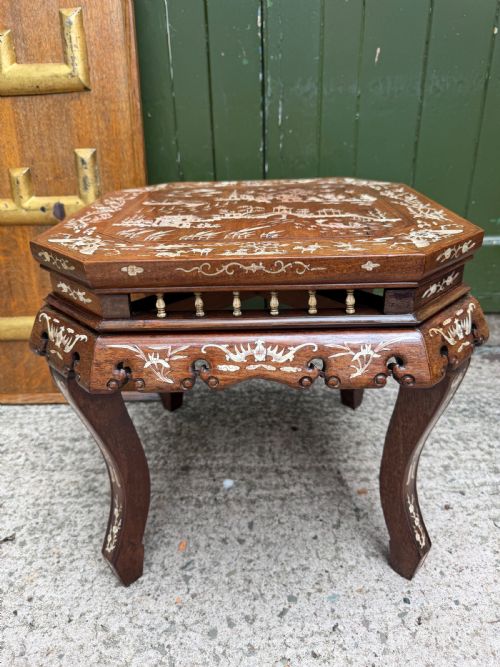
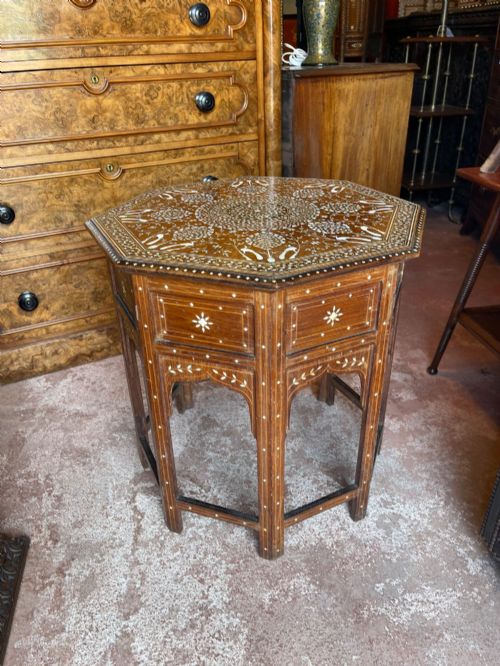
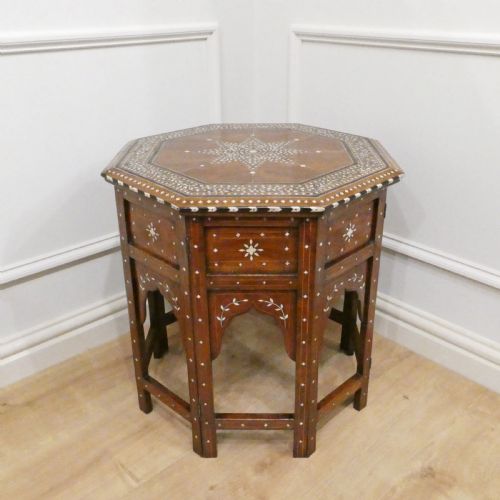
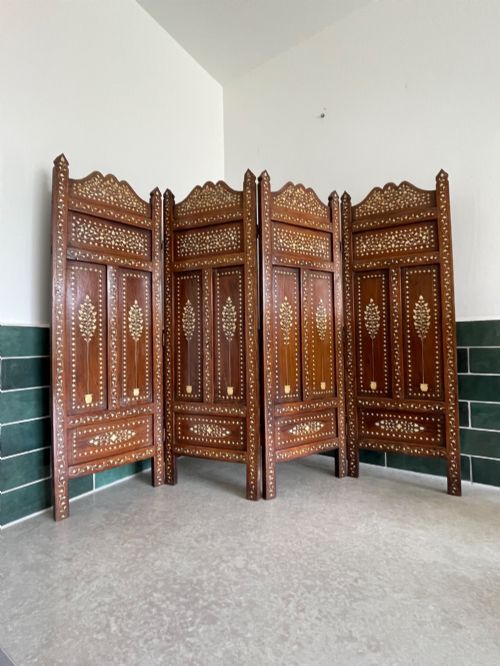
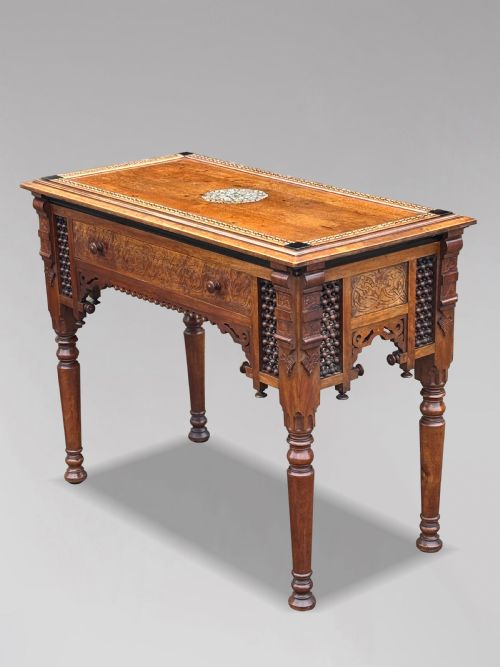
The selection on this page centres heavily on Anglo-Indian pieces, particularly octagonal and folding tables from Hoshiarpur, alongside related Moorish Revival and Ottoman influences. Occasional side tables, games tables, and work tables demonstrate the wide variety of forms utilising this decorative technique.
Earlier periods also appear, including examples from the sixteenth century showing Italian Renaissance Revival styles and nineteenth-century French work. These diverse origins mean a buyer can find both small occasional items and larger pedestal or console furniture.
How they were made
The construction relies on dense tropical hardwoods such as teak, sheesham, sandalwood, rosewood, and walnut to form the structural carcass of the furniture. Artisans shape these timbers into folding frames, octagonal tops, or fitted compartments before applying the decorative surface elements.
Intricately cut fragments of bone, and occasionally bovine material or mother-of-pearl, are set by hand into shallow recesses carved into the wood. The surrounding spaces are typically filled with dark resin or stained mastic to create the characteristic high-contrast brown and cream visual effect, sometimes accented with brass wire.
Brown Bone Inlay Table Retail Price Guide 2026
Typical asking prices for brown bone inlay table among the pieces listed under this phrase on Sellingantiques today, from the lower quarter to the upper quarter. They describe what is for sale here now, not the wider market.
The listings span the sixteenth to the twentieth centuries, with the nineteenth century dominating the selection through Hoshiarpur and Moorish Revival works.
What varies in quality
The standard of carving and the density of the inlay work dictate the visual impact of the piece. Finer examples display minute, precisely fitted bone segments forming continuous geometric lattices or detailed pictorial motifs, whereas simpler items utilise broader, more repetitive patterns.
The choice of underlying timber also marks a distinction between pieces, with dense aromatic woods like sandalwood or finely grained rosewood and teak representing more substantial construction than simpler hardwoods.
The Brown Bone Inlay Table Glossary
- Hoshiarpur
- A city in Punjab, India, renowned for producing intricately carved wooden furniture inlaid with bone and shesham. Pieces from this region often feature dense floral and geometric patterns on folding or octagonal table structures.
- Octagonal table
- A piece of furniture featuring an eight-sided top, commonly found in Anglo-Indian and Moorish Revival designs. This shape allows artisans to display complex radial patterns of inlay.
- Moorish Revival
- An architectural and decorative style popular in the nineteenth century that incorporates elements of Islamic art, horseshoe arches, and intricate surface patterns. In furniture, it manifests as elaborate pierced carving and dense bone inlay.
- Sheesham wood
- Also known as Indian rosewood, this durable timber provides a strong foundation for carving and inlay work. Its rich grain contrasts effectively with the pale tones of inlaid bone.
Brown Bone Inlay Table: Frequently Asked Questions
How do I care for a bone inlay surface?
Keep the timber and bone nourished by applying a microcrystalline wax sparingly with a soft cloth.
Avoid placing these items in direct sunlight or near heat sources, as fluctuations in temperature cause the wood to expand and bone segments to loosen.
Are folding tables sturdy enough for daily use?
Many traditional tables utilise a clever interlocking lattice mechanism that allows the base to collapse flat while remaining stable when assembled.
While suitable for holding lamps or drinks, they benefit from careful handling due to the intricate nature of the wooden hinges and joints.
What is the difference between Hoshiarpur and Syrian tables?
Hoshiarpur tables typically employ dense overall floral or geometric bone carving on teak or sheesham, often featuring octagonal or tripod forms.
Damascus and Ottoman pieces frequently incorporate contrasting mother-of-pearl alongside bone, utilising polygonal shapes and distinct Middle Eastern geometric cartouches.
Why do some tables feature sandalwood?
Sandalwood was selected by makers for its fine grain, smooth finish, and natural aromatic properties which persisted long after manufacture.
Its pale brown tone blends harmoniously with the creamy white of the bone inlay, though it is softer than teak and requires gentle treatment.