




Hoshiarpur Octagonal Table
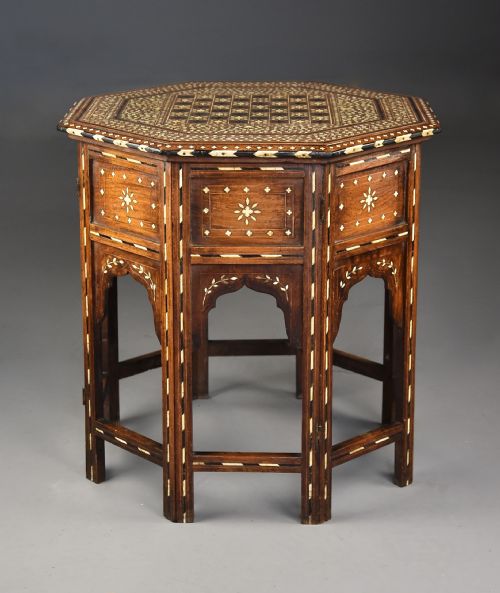
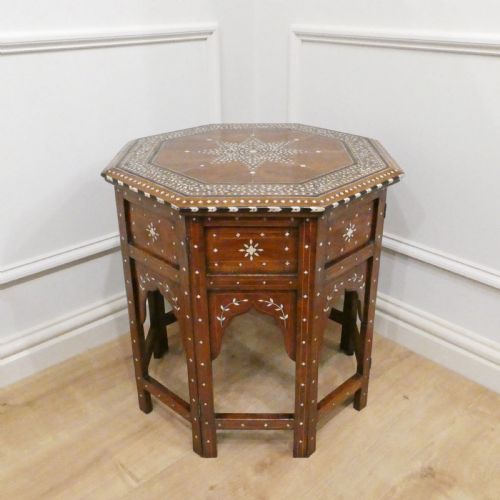
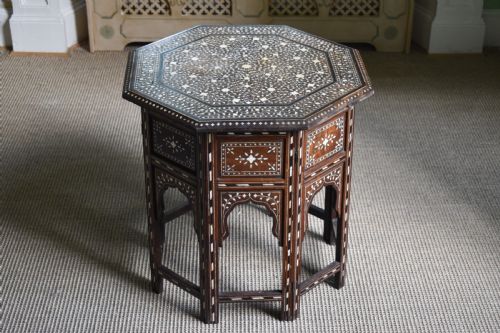
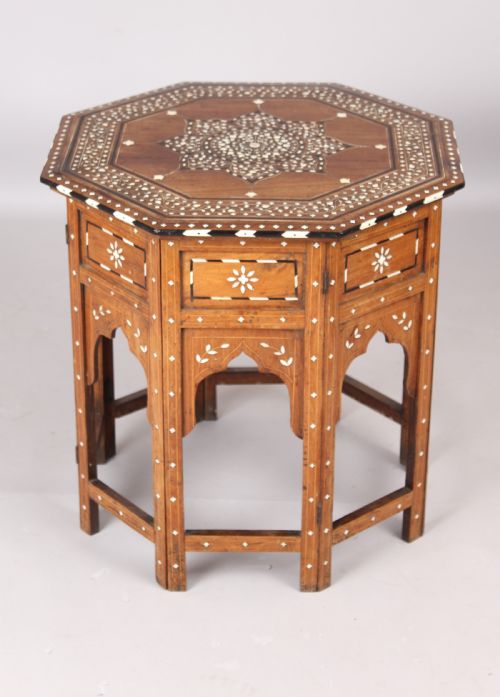
A hoshiarpur octagonal table brings complex Anglo-Indian geometric craftsmanship and folding convenience into a room.
Hoshiarpur Octagonal Table
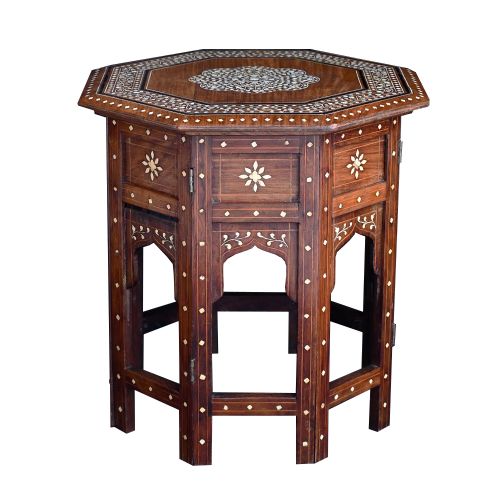
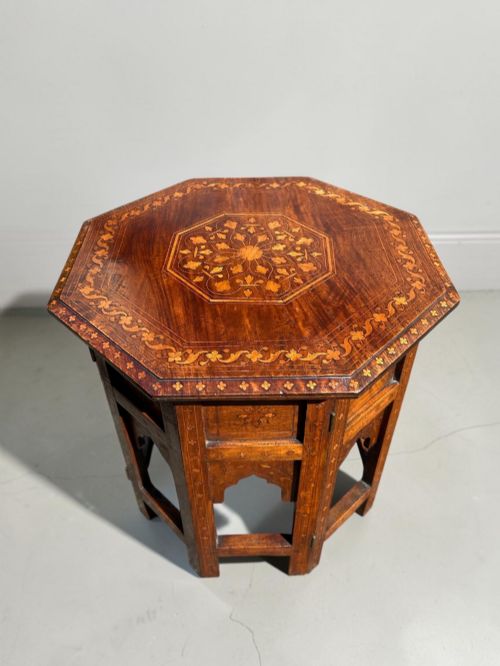
When you search for a hoshiarpur octagonal table, you encounter distinctive occasional and side tables originating from Northern India during the nineteenth and early twentieth centuries. These pieces typically display an eight-sided top supported by a collapsible base, functioning as practical furniture that moves easily around a home.
The Anglo-Indian style defines these objects, combining traditional Indian woodworking with British colonial demand for portable and exotic furnishings. Most examples you meet here belong to the late nineteenth century and the early decades of the nineteen-hundreds, reflecting a specific period of international trade and design exchange.
Materials and construction
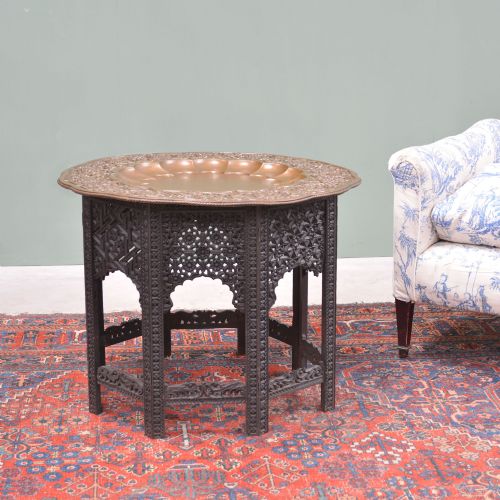
Maker workshops built these pieces using dense hardwoods such as teak, shisham, padauk, rosewood, sandalwood, and ebony as the structural foundation. Artisans then pierced and carved the wooden frames intricately into folding bases designed for compact storage.
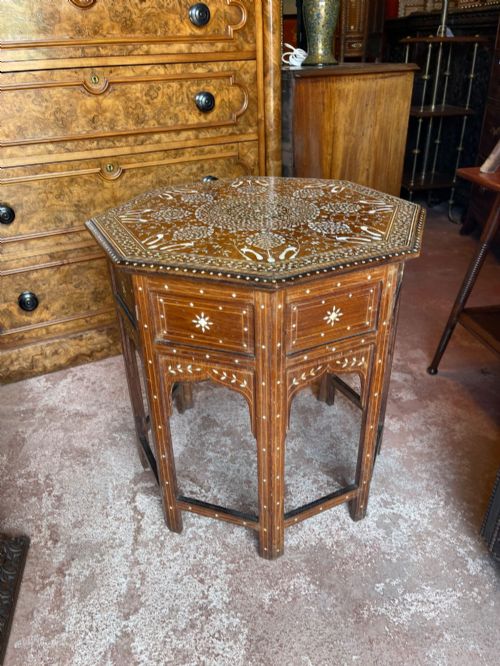
Surfaces received elaborate ornamentation through precise inlay work utilising bone, ivory, brass, copper, and general wood inlay. This combination of dark timber and pale or metallic geometric inserts creates the striking contrast characteristic of the region.
Many of these tables fold entirely flat, proving that nineteenth-century artisans understood the demands of flat-pack furniture long before modern warehouses did.
Judging quality and execution
Quality reveals itself in the density and precision of the surface decoration, where superior examples maintain tight, flush geometric patterns without missing inlay segments. The intricacy of the pierced carving on the folding base also separates standard utility pieces from finer artistic commissions.
Material selection dictates the upper tier of the range, with denser hardwoods and the inclusion of bone or ivory providing greater visual depth than simpler wood-only surfaces. The structural stability of the collapsible mechanism when open indicates the original precision of the carpentry.
The Hoshiarpur Octagonal Table Glossary
- Anglo-Indian
- A design style produced in India under British colonial influence, merging local craftsmanship with European furniture forms. These items were often brought back to Britain by returning officials.
- Shisham
- A durable Indian rosewood frequently utilised for traditional carving and inlay work. It provides a dark, stable base for contrasting decorative elements.
- Bone Inlay
- The technique of embedding small pieces of carved animal bone into recesses within the wooden surface. This method creates pale geometric patterns across dark timber.
- Occasional Table
- A small, movable table designed for versatile use around living spaces. These pieces function well as display surfaces or bedside stands.
- Folding Base
- A collapsible wooden support structure made of interconnected pierced panels. It allows the table top to be removed and the base folded flat.
Hoshiarpur Octagonal Table: Frequently Asked Questions
How do I care for my hoshiarpur octagonal table?
Keep the wood conditioned with appropriate wax and avoid placing the table in direct sunlight or near heat sources, which can dry out the timber and cause inlay materials to loosen.
Dust the intricate carved and inlaid surfaces regularly with a soft brush to prevent dirt accumulation within the detailed recesses.
Were these tables made for the British market?
Yes, British colonial demand heavily influenced the production of these tables during the nineteenth century. Officers and merchants stationed in India commissioned or purchased them to send home as portable decorative items.
The folding design proved particularly practical for long sea journeys and changing room layouts.
How do I date a hoshiarpur octagonal table?
Dating relies on examining the timber species, the choice of inlay material, and the style of the carving. Pieces from the late nineteenth century often feature dense shisham or teak with detailed bone or ivory work.
Later examples extending into the twentieth century sometimes shift towards simpler brass or wood inlay techniques on alternative hardwoods.
Are the folding bases original to the tables?
Most bases operate on an interlocking lattice system specifically carved to match the dimensions of the octagonal top. Checking the timber grain and wear patterns helps confirm that the base and top belonged together originally.
Because the pieces were built as portable units, the folding mechanism remains an integral part of their design.