
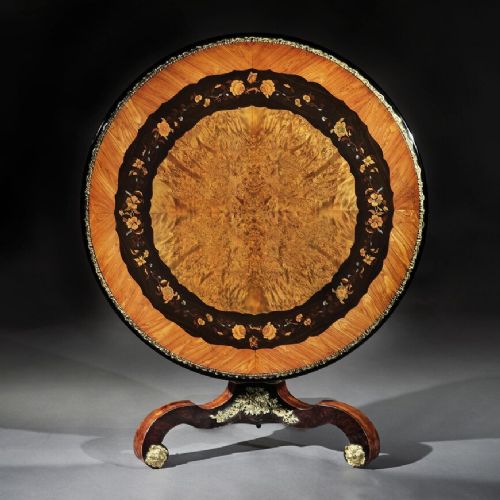

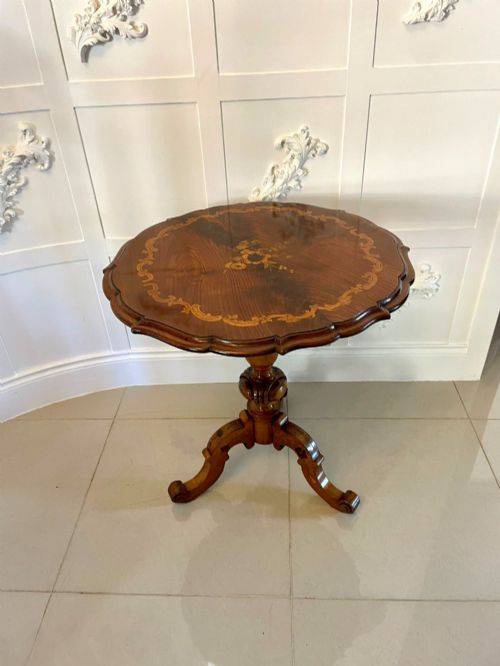
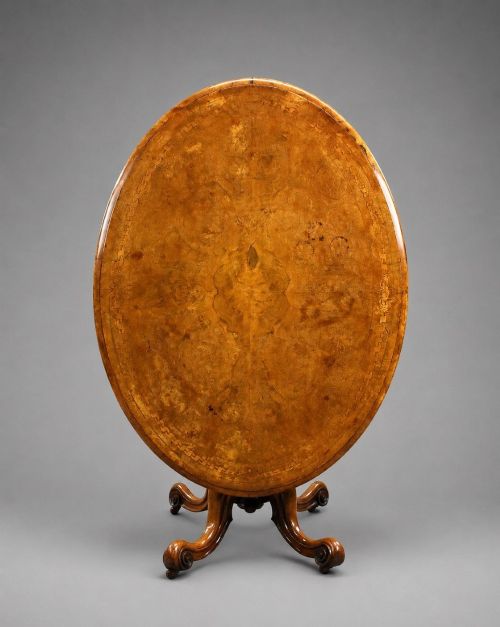
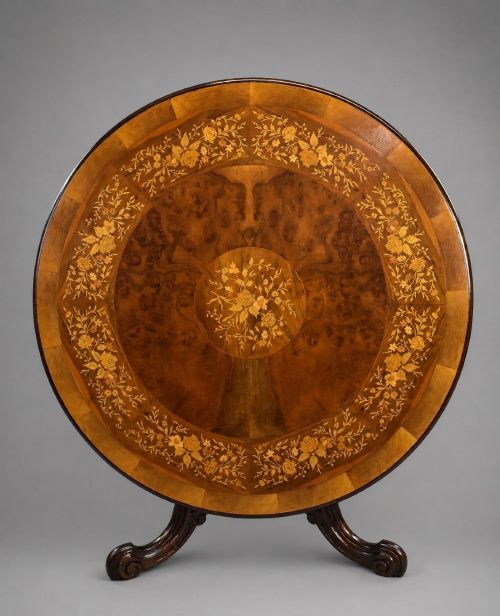



Inlaid Walnut Loo Table
When you choose an inlaid walnut loo table, you acquire a versatile Victorian centrepiece designed for grand drawing rooms.
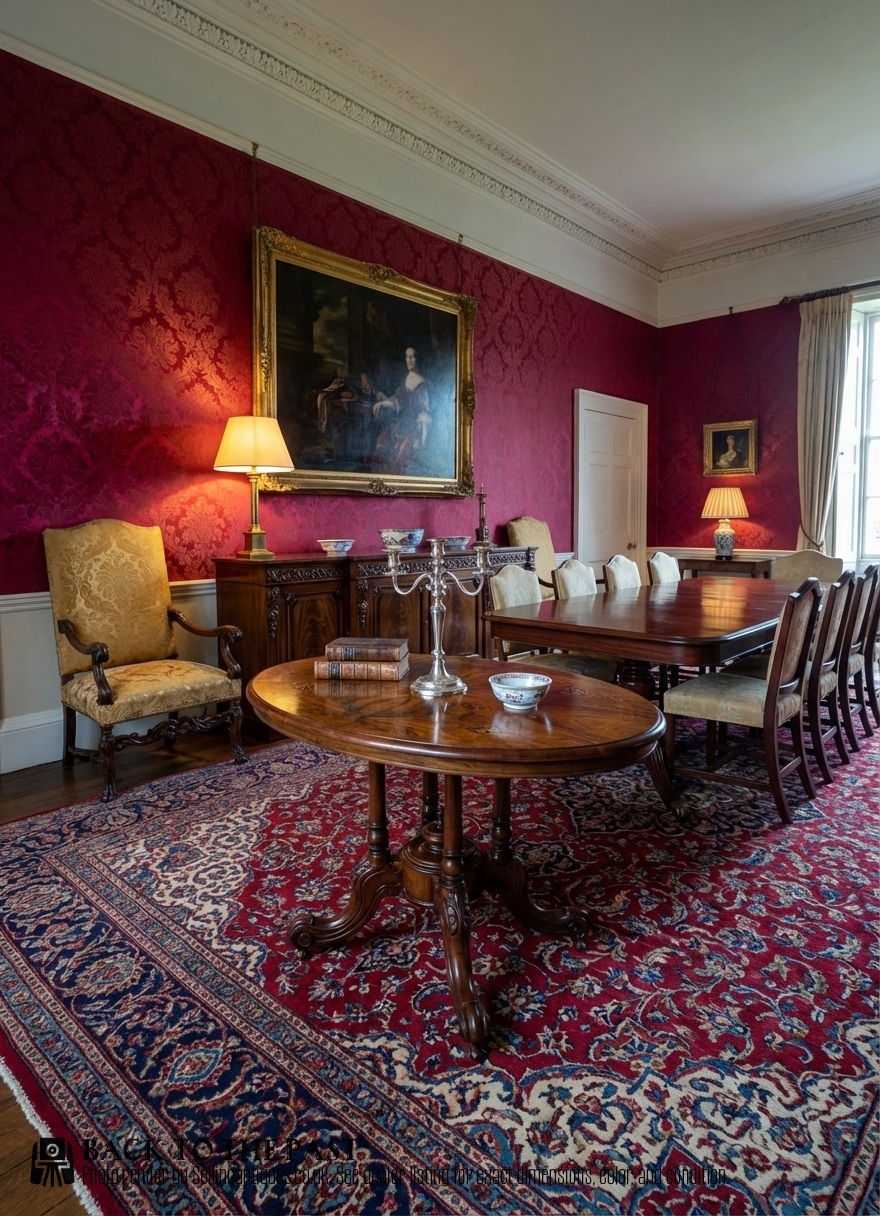
Inlaid Walnut Loo Table
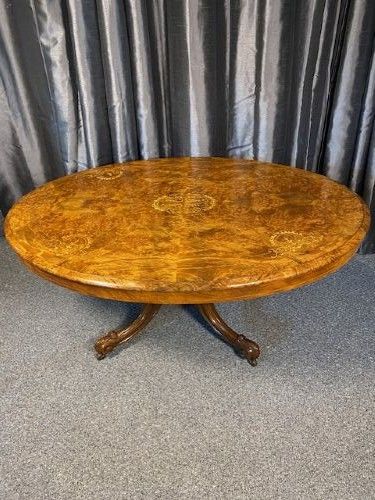
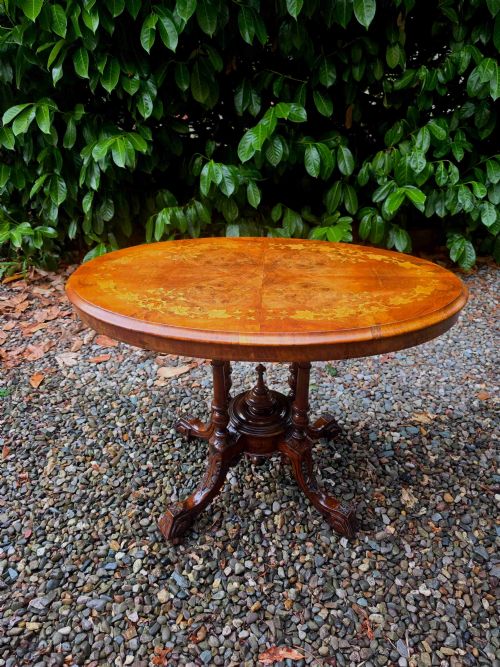
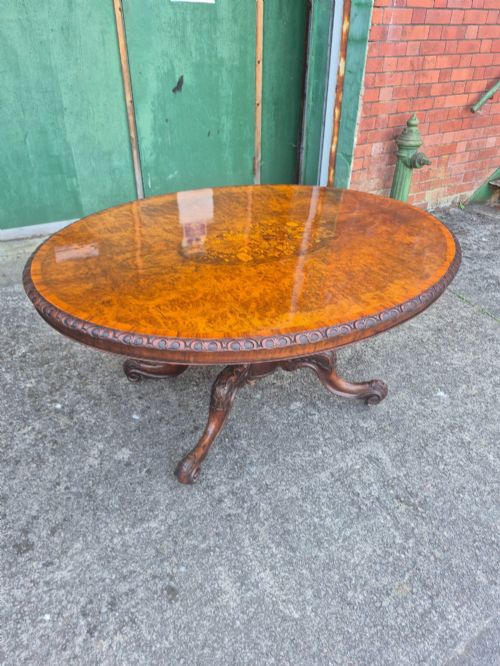
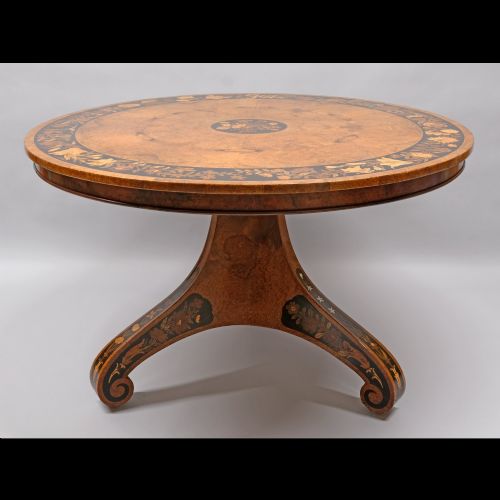
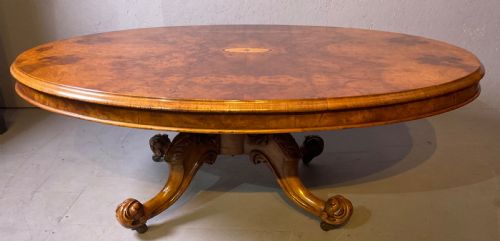
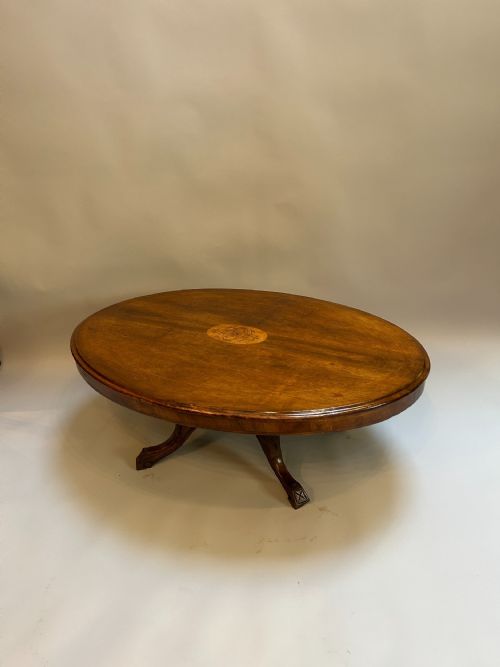
An inlaid walnut loo table functions as a substantial multi-purpose centrepiece, originating primarily from the Victorian period and spanning the mid to late nineteenth century. These pieces combine utility with formal display, emerging in circular, oval, and occasional formats.
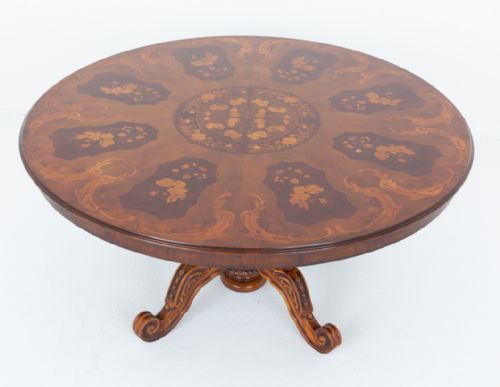
The primary forms on this page include tilt-top breakfast tables and pedestal centre tables, often featuring decorative marquetry or boxwood stringing. Makers constructed these items for principal reception rooms where family members gathered for cards or conversation.
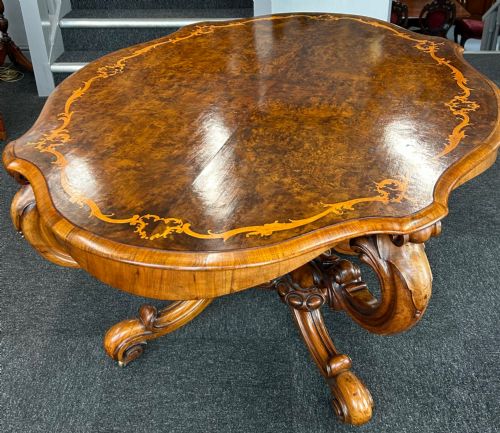
The dominant material signature across these listings is burr walnut, valued for its rich grain and mottled figure. This timber serves as a dark canvas for contrasting light wood details.
Materials and Construction
Cabinet makers utilised choice cuts of burr walnut veneer laid over stable secondary timbers to achieve the characteristic figured surfaces of an inlaid walnut loo table. They applied contrasting stringing in boxwood and fruitwood alongside intricate floral marquetry panels.
Many examples incorporate a tilt-top mechanism mounted upon a carved pedestal base with three or four legs. Workshops combined brass hardware and internal iron bracing to support the heavy timber tops safely.
Assessing Craftsmanship
The distinction between standard production and exceptional work rests on the precision of the marquetry and the choice of burl timber. Master workshops selected veneers with deep, even figuring and executed tight, seamless inlay without excessive filler.
Proportion and structural stability separate better pieces from simpler ones, particularly in the carving of the pedestal and the alignment of the tilt-top mechanism. Finer examples display meticulous attention to secondary timbers and hidden joinery.
Edward Holmes Baldock·Gillows·Holland and Sons
The Inlaid Walnut Loo Table Glossary
- Burr walnut
- A prized timber harvested from walnut tree growths, producing swirling, highly figured grain patterns that catch the light. Cabinet makers applied it as a decorative veneer across table surfaces.
- Marquetry
- The art of forming decorative patterns using thin pieces of wood veneer applied to a structure. Craftsmen cut various species like boxwood and fruitwood to create floral or geometric motifs.
- Tilt top
- A mechanism allowing the table surface to pivot vertically against the pedestal when not in use. This clever design saved valuable floor space in Victorian drawing rooms.
- Loo
- A nineteenth-century card game popular in polite society, which gave its name to large tables designed specifically for evening parlour entertainment.
- Crossbanding
- A decorative border of veneer laid around the perimeter of a table top with the grain running perpendicular to the centre panel.
Inlaid Walnut Loo Table: Frequently Asked Questions
What is a loo table?
A loo table is a large nineteenth-century occasional table originally built for playing the card game loo. These pieces typically feature pedestal bases and generous top surfaces.
Many examples include tilt mechanisms so owners could store them upright against a wall when the parlour required open space for dancing or entertaining.
How do I identify a Victorian walnut table?
Victorian walnut tables generally display dark, richly figured timber enhanced by applied boxwood stringing or floral marquetry. Makers often incorporated heavy central pedestals with carved cabriole legs.
Examine the construction underneath to check for period joinery and hand-cut screws, which help confirm nineteenth-century origins.
Can I use a tilt-top table daily?
You can easily incorporate a tilt-top table into modern rooms as a lamp table or breakfast surface. The mechanism remains sturdy after generations of domestic use.
Ensure you lock the top securely into the horizontal position before placing heavy decorative objects or dinner items upon the surface.
Why is burr walnut so desirable?
Burr walnut exhibits unique, swirling grain patterns caused by tree growths that absorb minerals and nutrients irregularly. This natural variation creates rich visual depth across large table tops.
Cabinet makers reserved these scarce veneers for their finest reception furniture, ensuring each finished piece possesses a distinct appearance.