
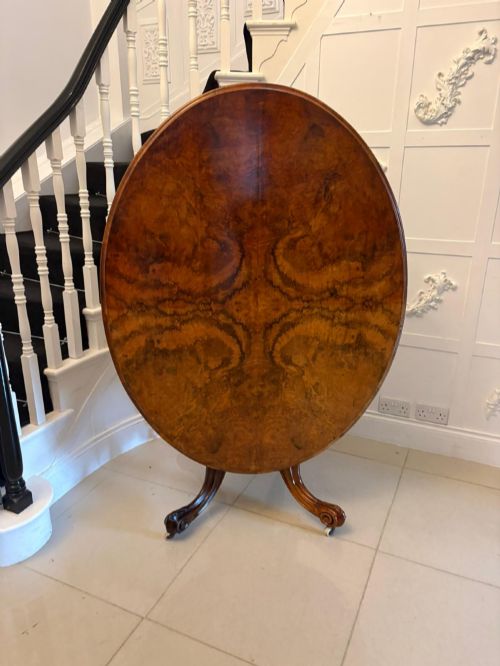
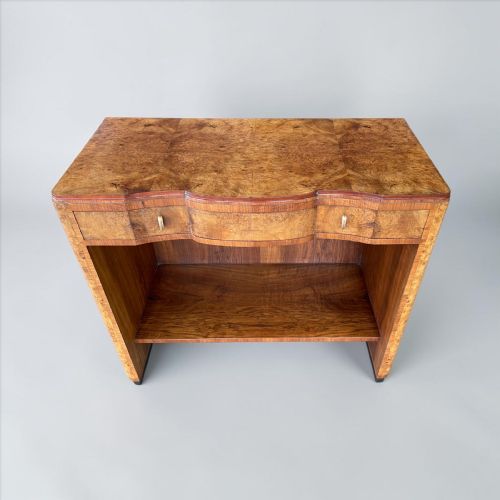


Brown Burr Walnut Table
A brown burr walnut table brings rich grain and warmth to a room, offering a tactile surface shaped by Victorian and Art Deco makers.
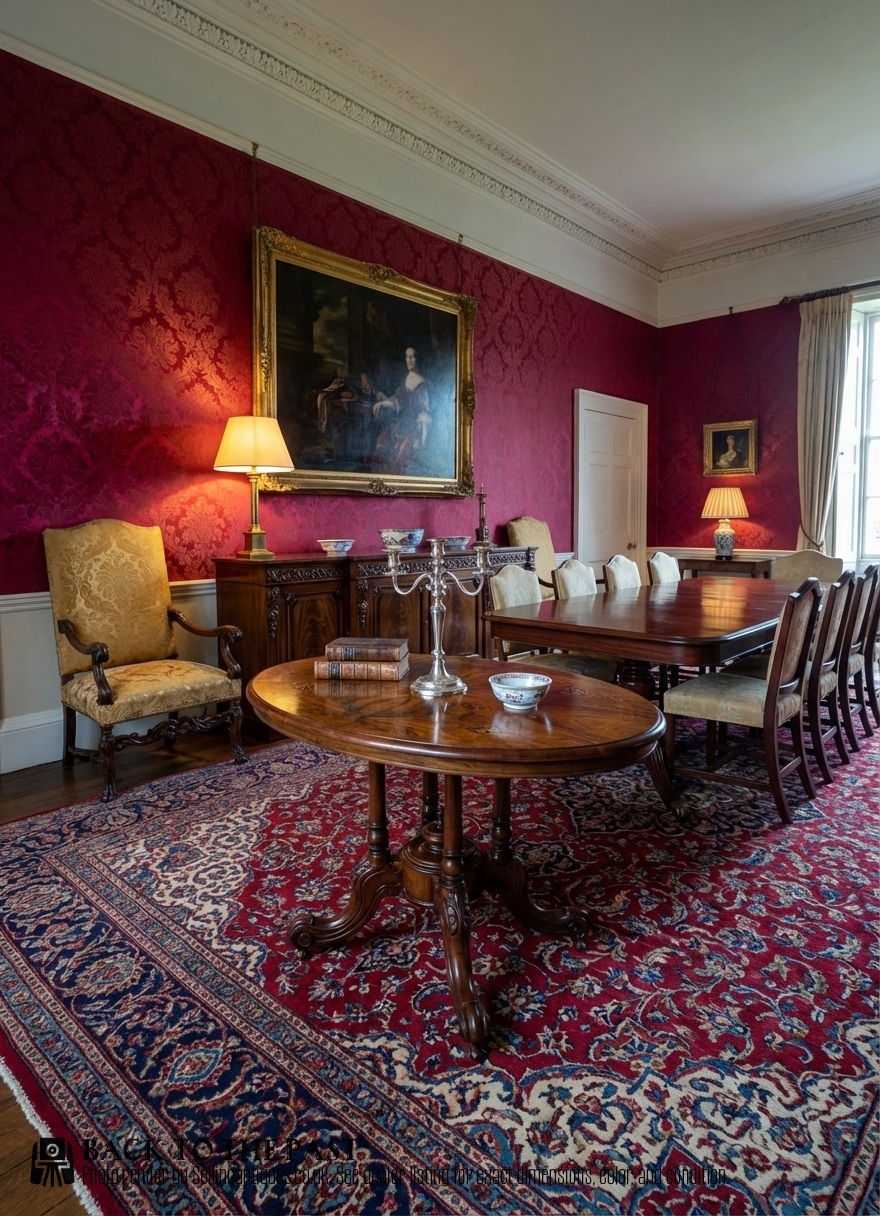
Brown Burr Walnut Table
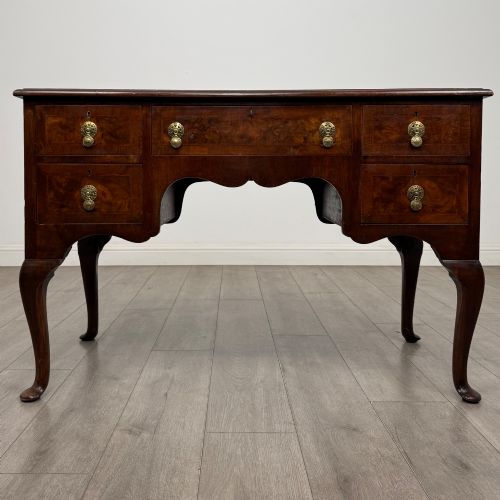
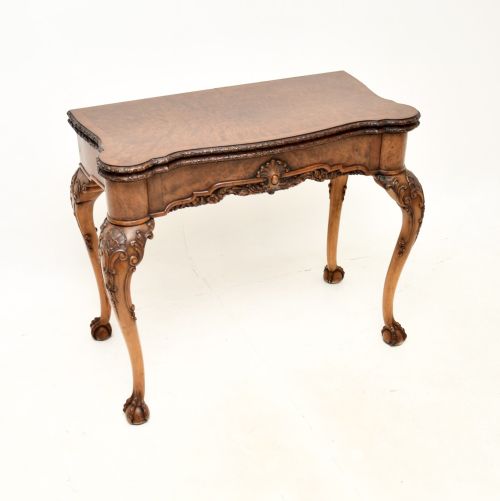
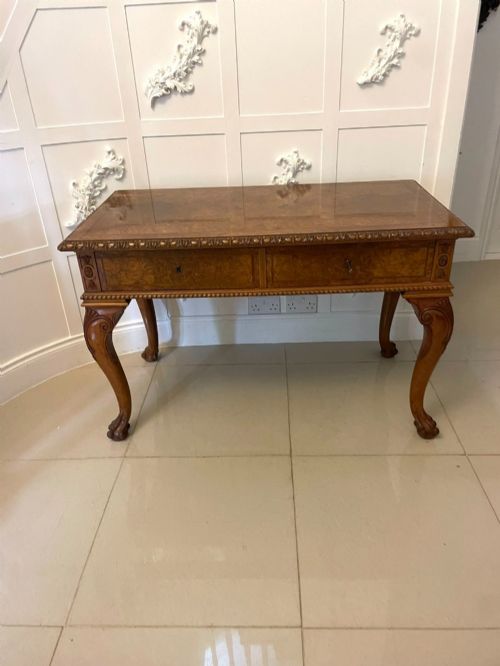
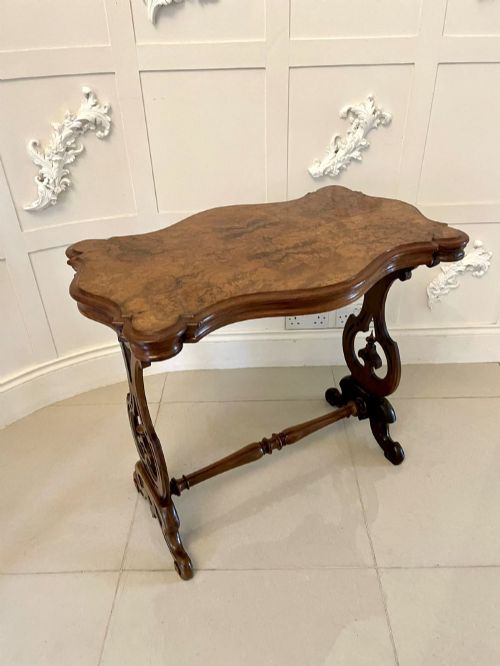
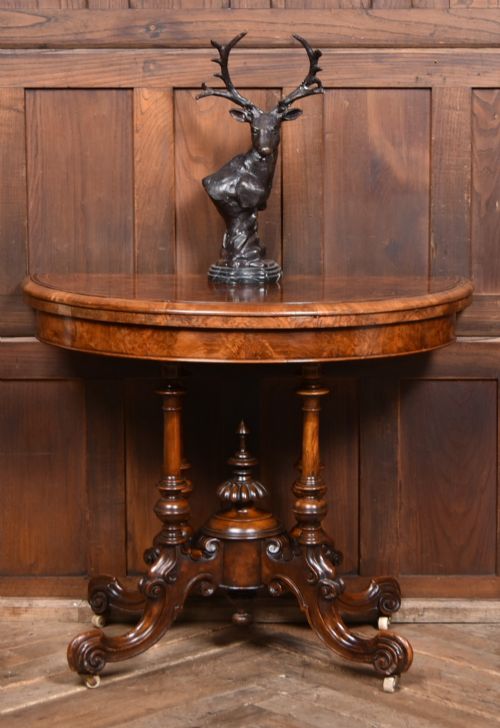
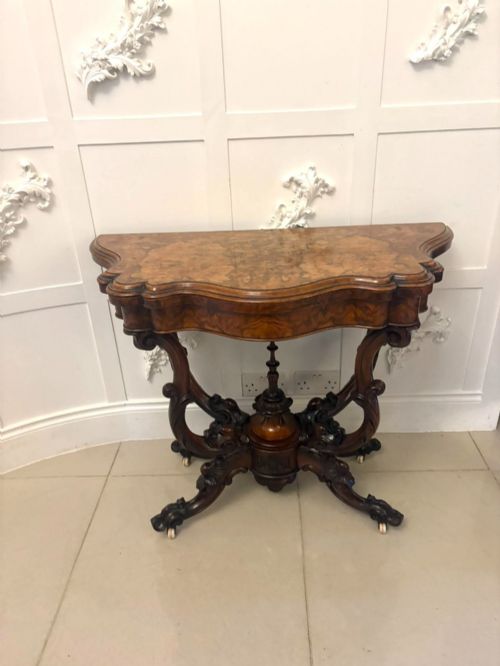
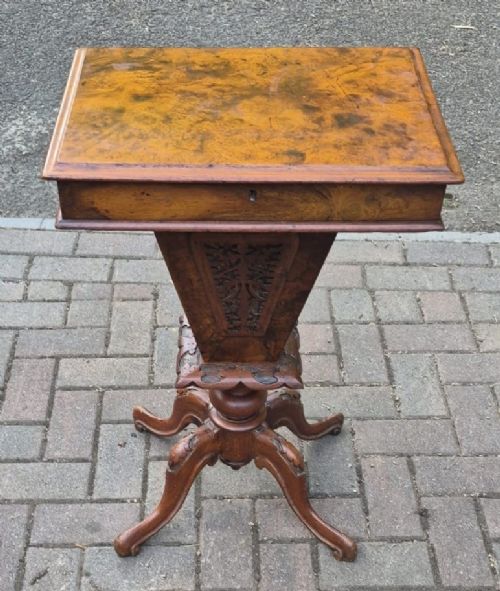
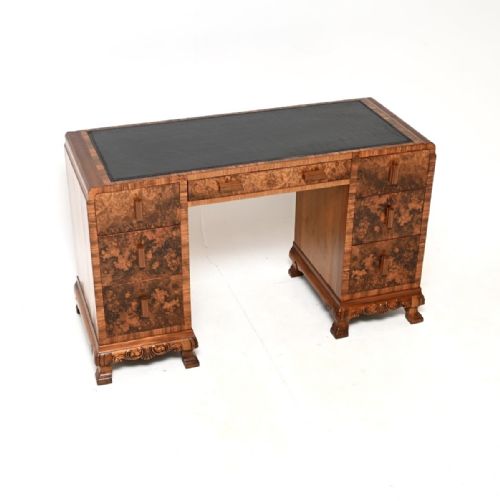
A brown burr walnut table brings together rich natural timber figure and functional domestic forms suited to living spaces and studies. When searching for a brown burr walnut table, buyers encounter formats ranging from occasional and centre tables to fold-over games tables and desks.
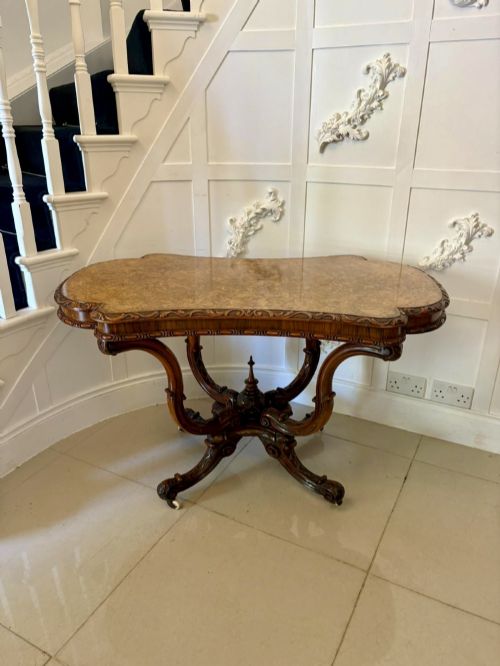
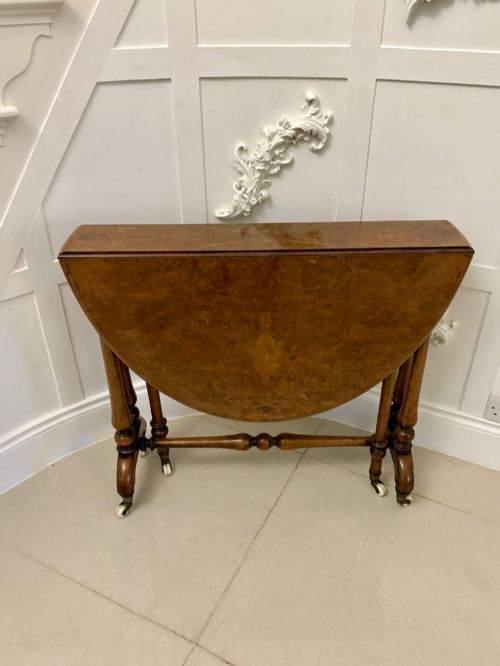
The Victorian period supplies many of the circular centre tables, Sutherland tables, and lamp tables found here, often featuring shaped tops and carved supports. Later twentieth century examples lean towards Art Deco coffee tables and pedestals with clean lines and striking grain patterns.
Originating largely from British workshops across the nineteenth and early twentieth centuries, these pieces combine utility with decorative presence. A buyer is most likely to meet Victorian and 1930s interpretations that showcase the distinctive swirling patterns of the wood.
Materials and Techniques
Makers utilised burr walnut veneer applied to solid timber carcases to display the knotty, swirling figure of the wood on table tops and panels. This technique required precise cutting and matching of thin leaf veneers to create symmetrical patterns across the surface.
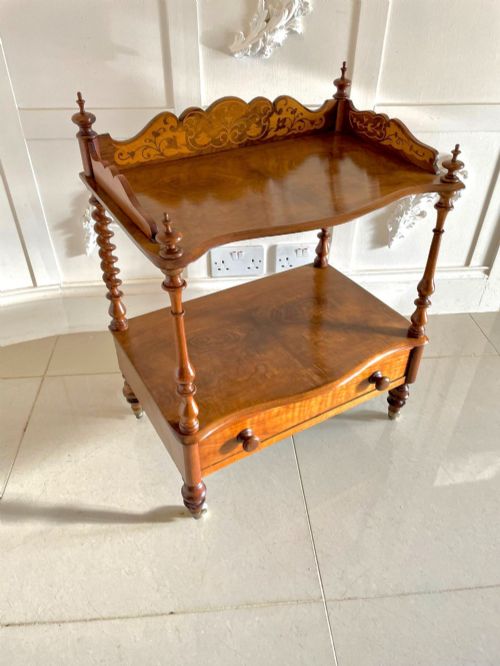
Secondary timbers like oak and pine provided structural stability for frames and drawer linings, whilst brass hardware and leather inserts added functional contrast. Wood inlay and marquetry occasionally bordered the tops, framing the central burr figures with contrasting dark and light lines.
A mantel clock featuring a three-tune movement sits quietly among the writing desks and sewing tables.
Assessing Quality and Execution
Quality rests primarily in the visual impact and symmetry of the burr walnut veneer selected for the top, where dense, lively figuring distinguishes superior examples. The crispness of carved details on pedestals, basket bases, and friezes also separates ambitious workshop production from simpler output.
Construction integrity shows in the stability of tilt mechanisms, the alignment of fold-over card tables, and the smooth operation of drawers in desks and cabinets. Superior pieces maintain tight veneer joints and rich polish depth that highlights the natural grain without obscuring the timber.
Maurice Adams·Comitti Of London
The Brown Burr Walnut Table Glossary
- Burr walnut
- Timber taken from a tree growth or burl, yielding dense, swirling patterns of knots and eyes. This highly decorative veneer defines the aesthetic of these tables.
- Fold-over table
- A piece with a hinged top that opens to double its surface area, frequently utilised for games or card playing in Victorian parlours.
- Marquetry
- The art of creating decorative patterns on furniture using thin pieces of wood veneer and other materials. It frequently borders table tops with geometric or floral motifs.
- Pedestal desk
- A flat-top writing table supported by two columns of drawers rather than four separate legs. This form provides substantial storage beneath the working surface.
- Loo table
- A large round Victorian table designed for the card game loo, featuring a tilt-top mechanism for convenient storage against a wall.
Brown Burr Walnut Table: Frequently Asked Questions
What periods do these tables come from?
The pieces span the Georgian era through the Victorian period and into 1930s Art Deco designs. Victorian examples predominate, alongside early twentieth-century interpretations.
Craftsmanship and silhouettes shift noticeably between these eras, moving from ornate carved bases to streamlined modernist forms.
How do I care for a burr walnut surface?
Keep the wood away from direct sunlight and steady heat sources to prevent the veneer from drying out or splitting. Gentle dusting with a dry cloth preserves the polished finish.
Avoid placing wet glasses or hot items directly onto the timber to protect the historic polish.
Were these tables used for dining?
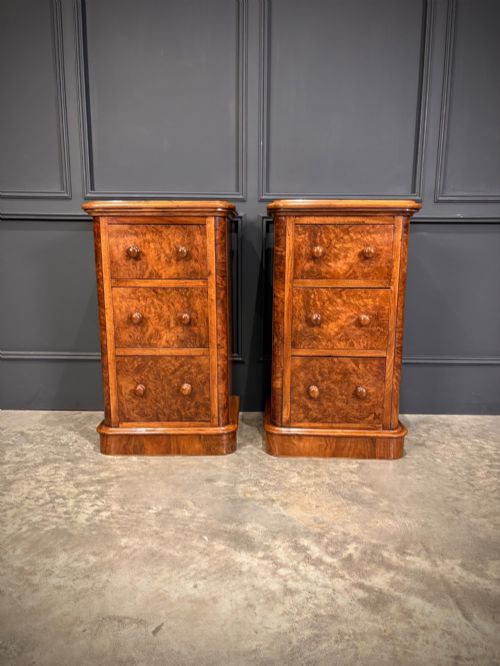
Certain large formats, such as oval centre dining tables and tilt-top loo tables, served meals or large gatherings. Smaller variants functioned as lamp tables, coffee tables, or bedside chests.
Their domestic roles varied widely depending on whether the top was fixed, folding, or tiltable.
How do I distinguish Victorian from Art Deco pieces?
Victorian models typically display rich carving, turned columns, and inlaid borders around figured burr walnut tops. Art Deco versions favour geometric simplicity, smooth leather inserts, and unadorned skyscraper or pedestal silhouettes.
The structural lines and decorative motifs immediately separate the two design vocabularies.