


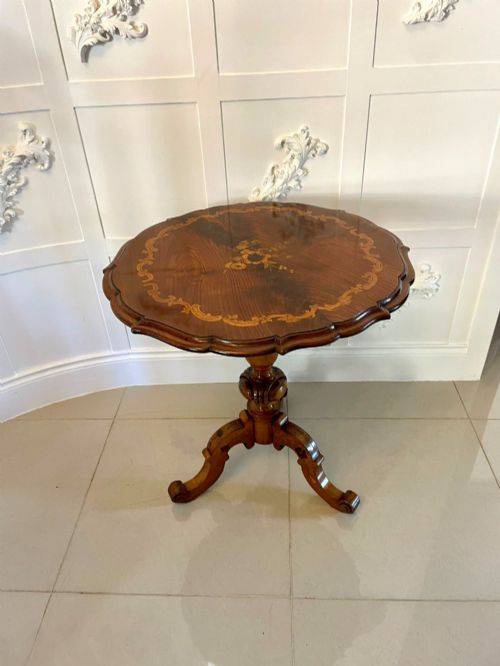
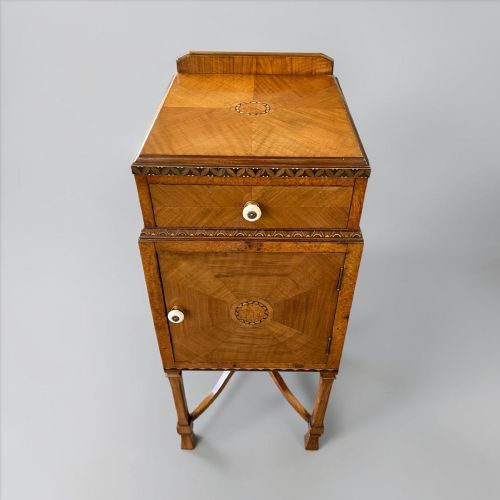
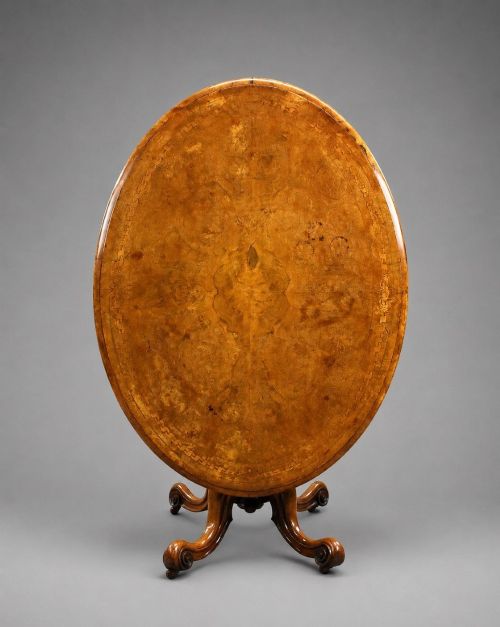
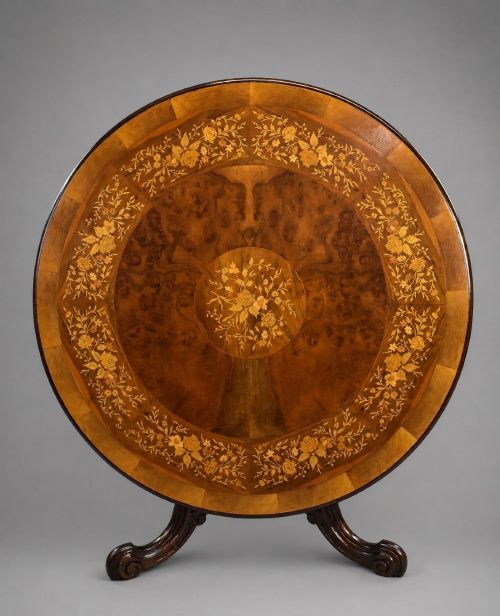
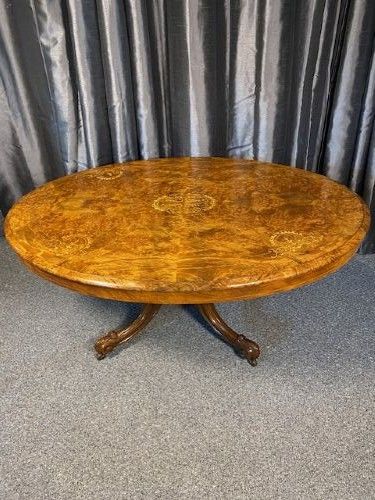
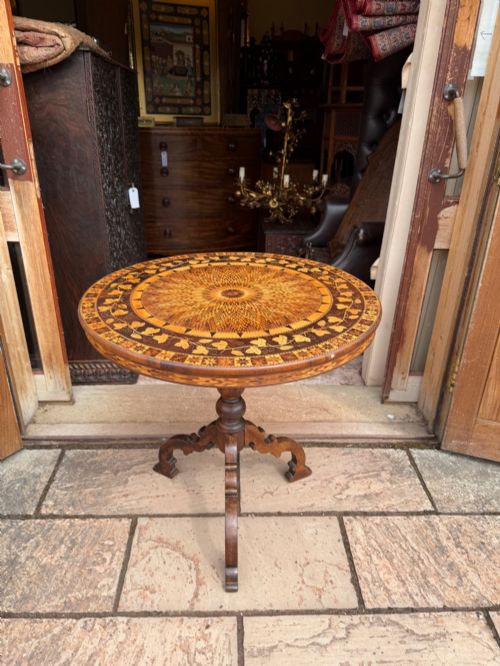
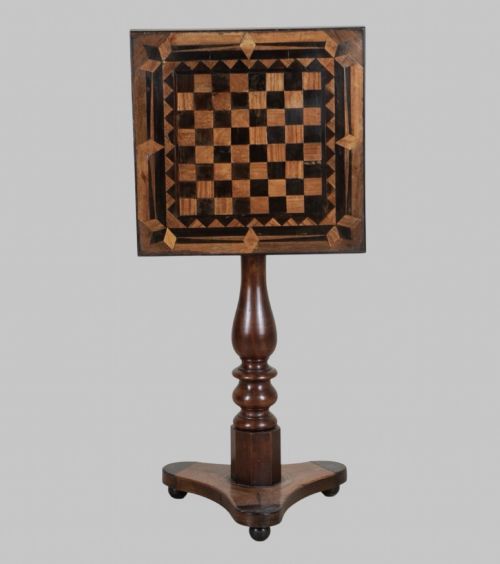
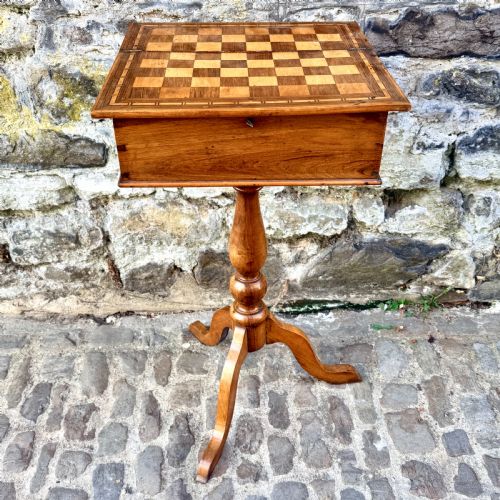

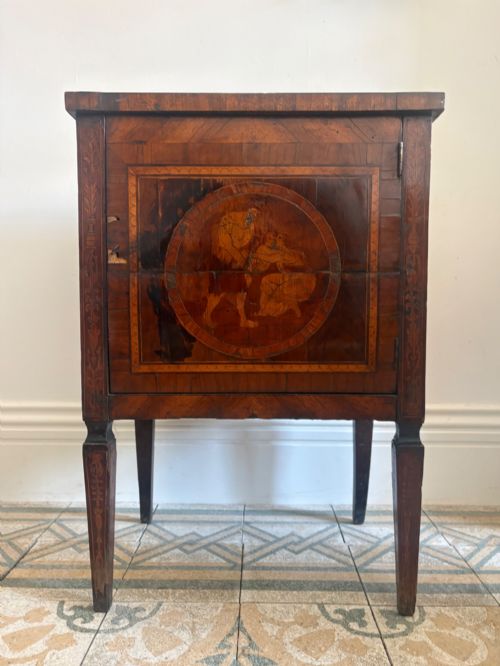
Inlaid Walnut Pedestal Table
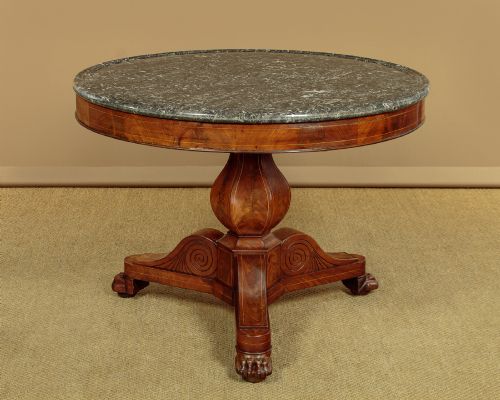
An inlaid walnut pedestal table combines figured timber with intricate decorative banding, offering a stable central support for display or daily use.
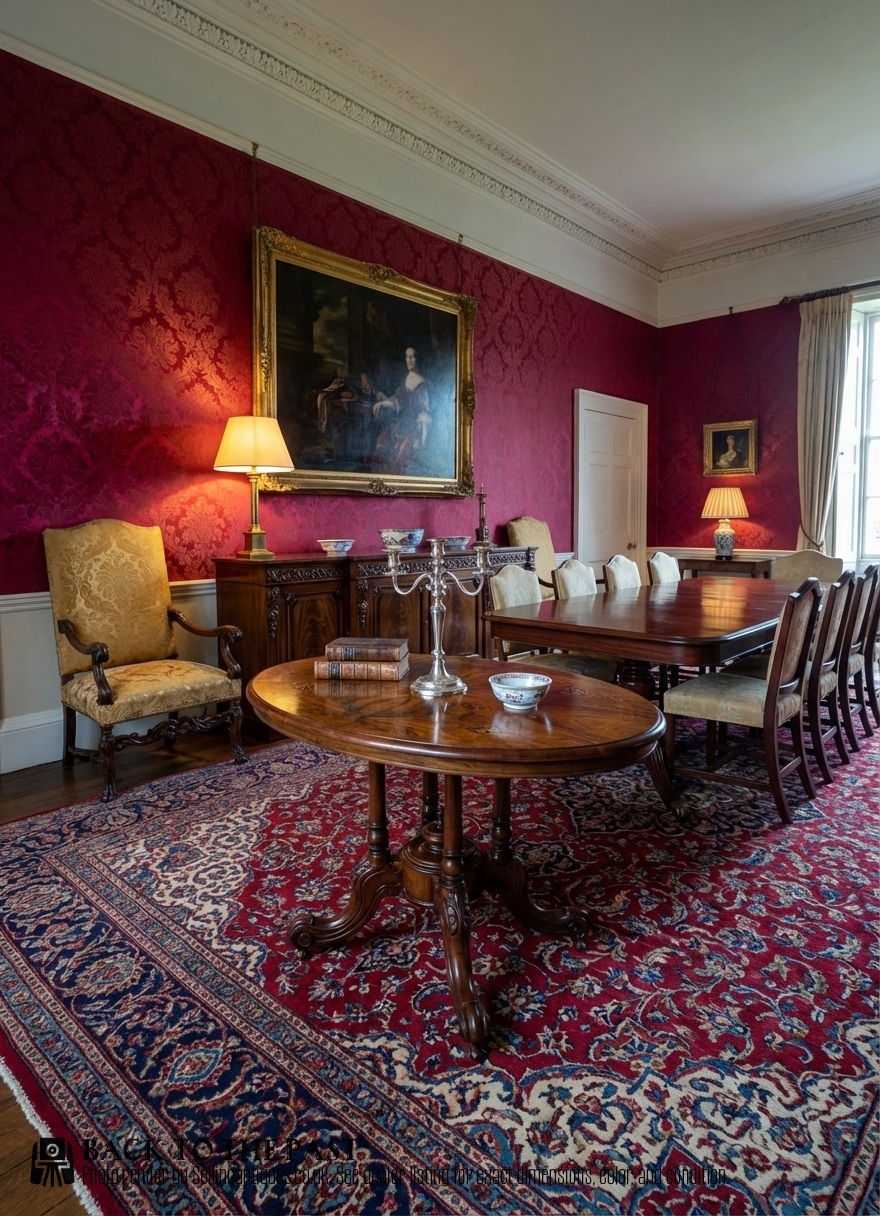
Inlaid Walnut Pedestal Table
An inlaid walnut pedestal table is a piece of furniture defined by a central column support and a timber top decorated with contrasting wood motifs. When searching for this form, a buyer encounters a strong representation of Victorian examples alongside earlier Georgian and later Edwardian or Art Deco pieces.
The utility of these tables spans several domestic functions, including oval centre tables, card and games surfaces, and occasional lamp stands. Victorian iterations frequently appear as oval loo tables or breakfast tables featuring tilt-top mechanisms supported by carved pillar bases.
Regional variations also emerge within the selection, ranging from English parlour tables to Italian Sorrento work and French provincial designs. Walnut and burr walnut dominate the surfaces, providing a rich background for boxwood, fruitwood, and marquetry details.
How an inlaid walnut pedestal table was made
Cabinet makers utilised solid walnut for structural frames and turned pillars, while applying fine burr walnut veneers to table tops to display complex grain patterns. Burr timber, harvested from tree growths, provided the highly figured surfaces characteristic of nineteenth-century reception furniture.
Decorative surface patterns relied on marquetry and wood inlay techniques, incorporating lighter species such as boxwood and fruitwood alongside darker woods and brass accents. Artisans cut recesses into the walnut ground to fit contrasting botanical or geometric veneers precisely before scraping and polishing the surface to a smooth finish.
Several Victorian specimens double as sewing tables, hiding domestic needlework compartments beneath inlaid game boards.
What varies in quality in an inlaid walnut pedestal table
Quality rests significantly on the selection and matching of the veneer timbers, where symmetrical burr patterns indicate careful cutting by the maker. Superior pieces exhibit tight, crisp inlay work without visible gaps or coarse filler between the contrasting wood species.
Structural integrity of the central column and base assembly determines daily reliability, particularly on tilt-top mechanisms where joints must remain firm and aligned. The crispness of carved details on the pedestal feet and the balance of the overall proportions distinguish standard domestic work from master cabinet maker production.
Walter Carter Harrods·Holmes Baldock·Gill & Reigate
The Inlaid Walnut Pedestal Table Glossary
- Marquetry
- A decorative technique where small pieces of veneer are arranged to form pictorial or geometric designs on a timber ground.
- Burr Walnut
- Wood taken from a tree knot or growth, valued by cabinet makers for its swirling, highly figured grain patterns.
- Loo Table
- A large Victorian card or parlour table, frequently built with a tilting top mechanism to save space when not in use.
- Boxwood
- A dense, pale yellow wood frequently utilised for fine stringing and contrasting inlay details.
- Sorrento Ware
- Inlaid woodwork originating from an Italian coastal town, known for intricate geometric and pictorial marquetry panels.
Inlaid Walnut Pedestal Table: Frequently Asked Questions
How do I identify a Victorian example?
Victorian pieces typically present rich burr walnut veneers paired with elaborate marquetry inlay and turned central pedestals. They often take oval or circular forms designed for central parlour placement.
Closer inspection of the construction methods, such as timber thickness and secondary woods beneath the top, helps confirm the nineteenth-century origin.
What is a tilt-top mechanism used for?
Tilt-top mechanisms allow the table top to pivot vertically via a brass or wooden catch, enabling the furniture to stand flat against a wall when not in use.
This space-saving design is common on larger Victorian breakfast and loo tables supported by central pedestals.
How should I care for a walnut surface?
Walnut furniture requires protection from direct sunlight and excessive heat sources to prevent the natural timber and delicate veneer from drying or splitting. Regular dusting with a soft, dry cloth preserves the polished finish.
Application of appropriate wax polish maintains the moisture and lustre of the burr walnut grain over time.
What is the difference between inlay and marquetry?
Inlay involves setting pieces of contrasting material into recessed cavities cut directly into a solid wood background. Marquetry creates an entire picture or pattern assembled from various veneer sheets before being applied to the core surface.
Both techniques appear frequently on the tops of nineteenth-century tables.