


Inlaid Walnut Wine Table
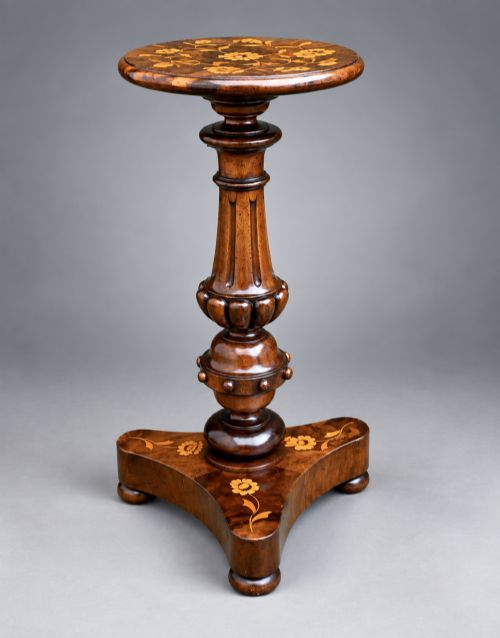
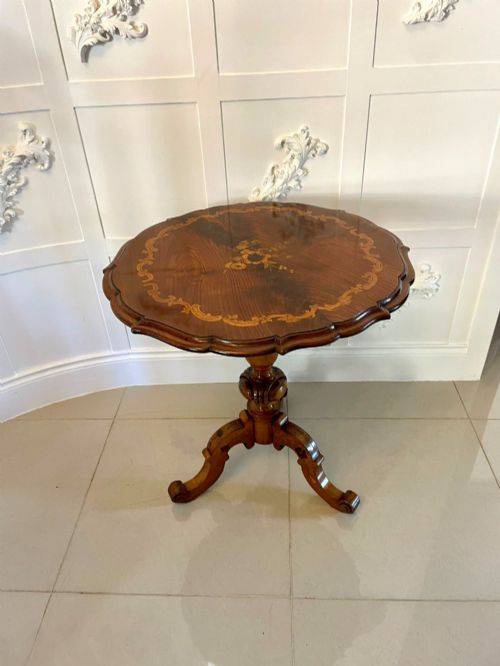
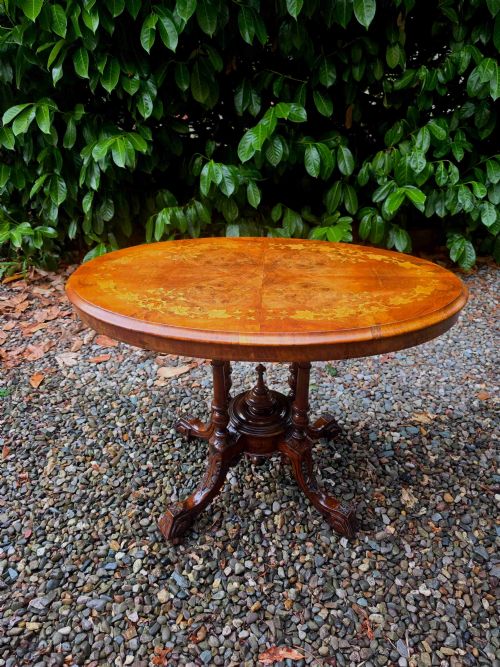
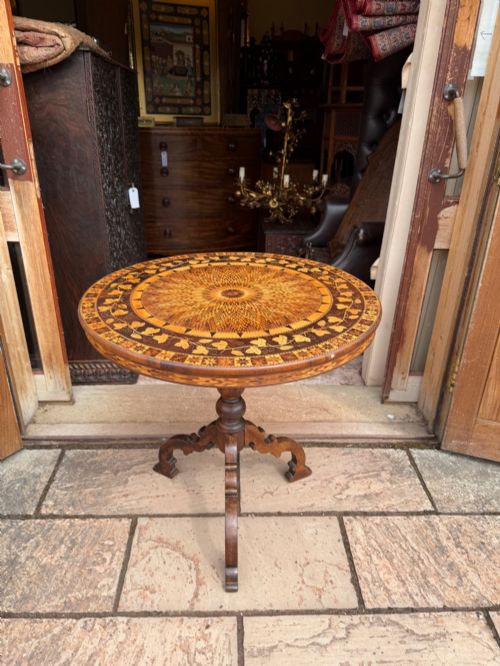
An inlaid walnut wine table brings rich timbers and intricate floral decoration to a quiet corner.

Inlaid Walnut Wine Table
An inlaid walnut wine table is a compact occasional piece designed for holding glasses or candles beside a chair. When you search for this phrase, you meet small circular, oval or hexagonal surfaces supported by pillar and tripod bases.
The selections span the nineteenth century and the early twentieth century, showing strong Victorian influences alongside Italian Sorrento and French marquetry traditions.
Many examples double as lamp tables, small centre tables or pedestal stands, offering versatile proportions for modern rooms.
How they were made
Cabinet makers utilised solid walnut and decorative burr walnut veneers over secondary timbers, building up rich figured surfaces for the tops.
Marquetry and parquetry inlay introduces contrasting fruitwoods, tulipwood and satinwood to form floral or geometric motifs.
Turned pedestals stand on tripod legs, occasionally incorporating brass elements, tilt top mechanisms or carved tripod bases.
Some nineteenth century Swiss Black Forest examples incorporate musical movements inside the occasional table frame.
What varies in quality
The distinction between ordinary and exceptional examples lies in the depth of figure in the walnut veneer and the precision of the marquetry cutting.
Top tier pieces display crisp floral or geometric pictorial work integrated smoothly into the surrounding timber rather than relying on heavy surface stamping.
The Inlaid Walnut Wine Table Glossary
- Marquetry
- Decorative veneer work arranged in pictorial patterns. Skilled artisans cut contrasting woods like fruitwood and satinwood to form floral or landscape designs across the table top.
- Burr walnut
- Timber taken from the abnormal growths of a walnut tree. It yields highly figured, swirling grain patterns prized by nineteenth century cabinet makers.
- Tripod base
- A support structure with three feet diverging from a central pillar. This design provides stable footing for small occasional surfaces on uneven floors.
- Parquetry
- Geometric mosaic woodwork formed by small fitted blocks of timber. The technique creates checkerboard or diagonal patterns across tabletops.
Inlaid Walnut Wine Table: Frequently Asked Questions
What was a wine table used for?
These small stands held glasses, decanters and candles close to seating areas during evening gatherings in nineteenth century drawing rooms.
Their portable proportions allowed servants to reposition them easily around the room as guests moved.
How do I place an inlaid walnut wine table at home?
Position the piece beside an armchair or sofa where the decorative top remains visible. Avoid placing it in direct sunlight to protect the delicate fruitwood and walnut veneers.
Keep humidity stable to prevent timber movement and preserve the integrity of the marquetry inlay.
How do I tell Victorian tables apart from later pieces?
Victorian examples generally exhibit heavier timber construction and denser burr walnut figuring. The hand-cut marquetry often incorporates naturalistic floral sprays.
Later Edwardian or twentieth century interpretations tend to show lighter framing and more stylised geometric banding.
What is a tilt top mechanism?
A hinge block beneath the tabletop allows the surface to rotate and lock into a vertical position. This enabled servants to store the tables flat against walls when rooms needed clearing.
When lowered, a small brass catch secures the top firmly to the central pedestal.