



Mother of Pearl Side Table
These mother of pearl side table pieces bring intricate geometric inlay and rich hardwood into a room, offering both function and striking visual depth.
What these mother of pearl side table pieces are
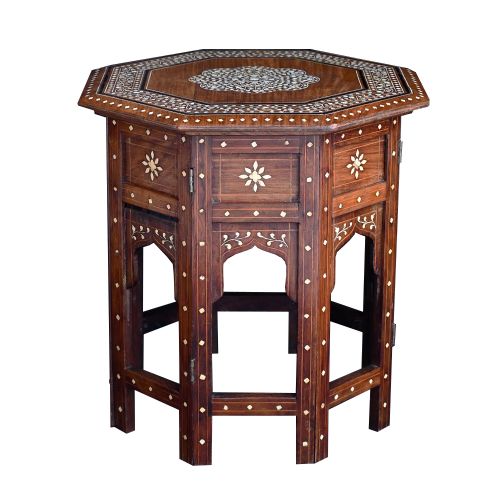
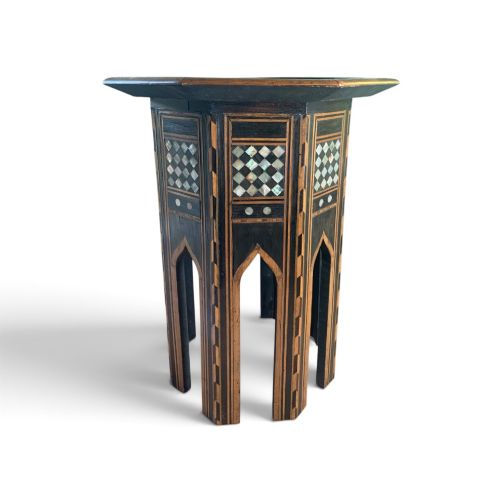
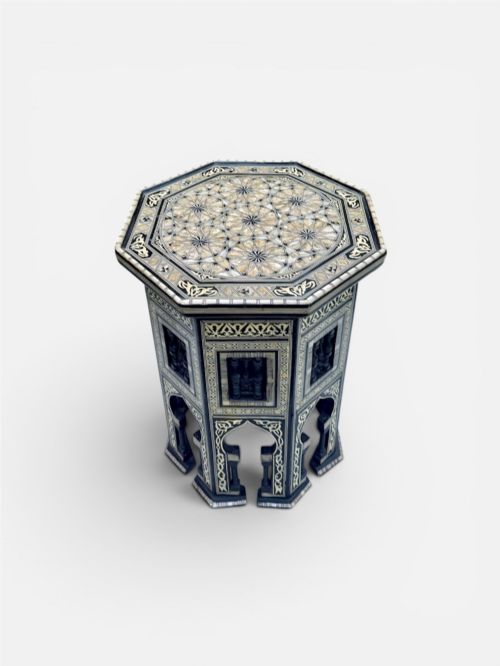
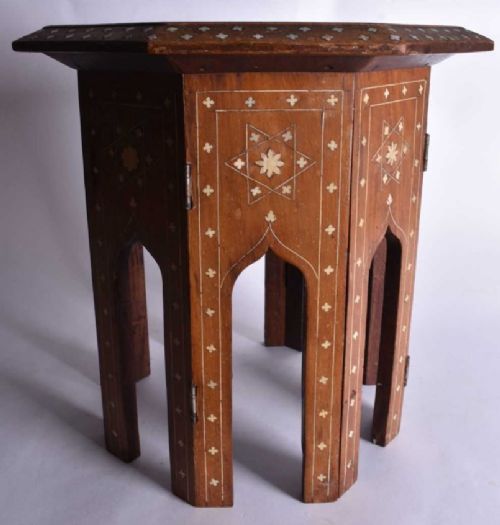
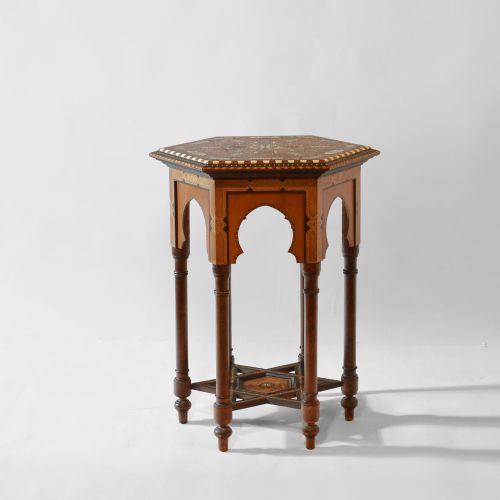
The most common formats on this page are octagonal tables, many built with clever folding bases designed to be easily stored or moved. These surfaces served as coffee, tea, or lamp tables, bringing exotic warmth to Victorian and Edwardian interiors.
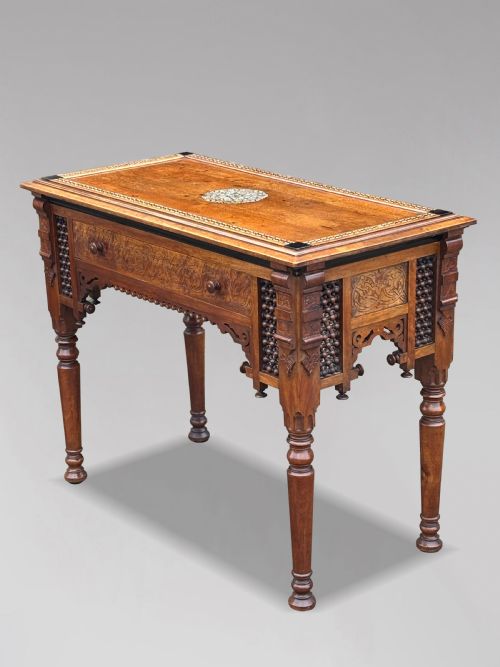
Origins span from specific nineteenth-century workshops to European adaptations in the Bohemian and Moorish styles. Makers such as Liberty & Co. reinterpreted these exotic forms for the domestic British market, producing matched pairs of occasional tables.
How they were made
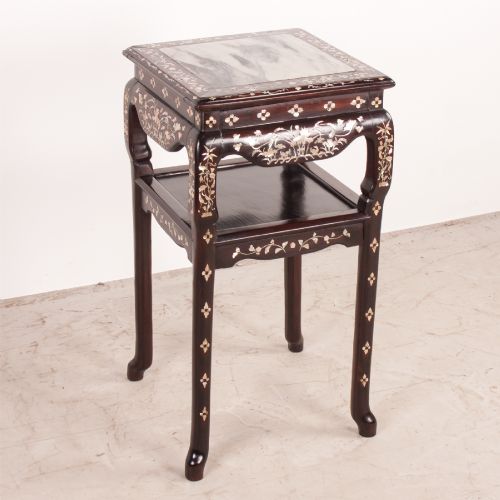
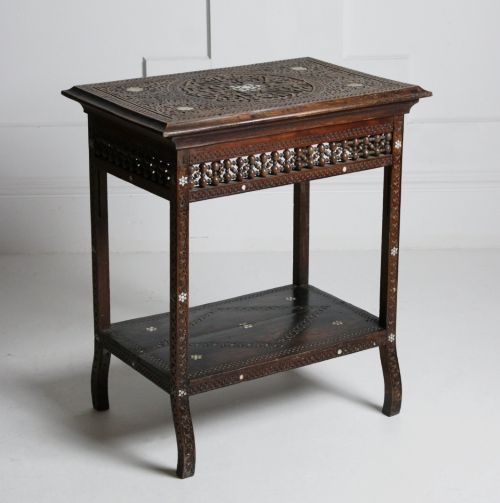
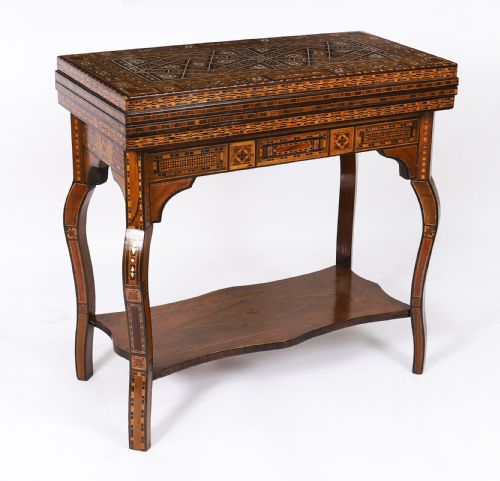
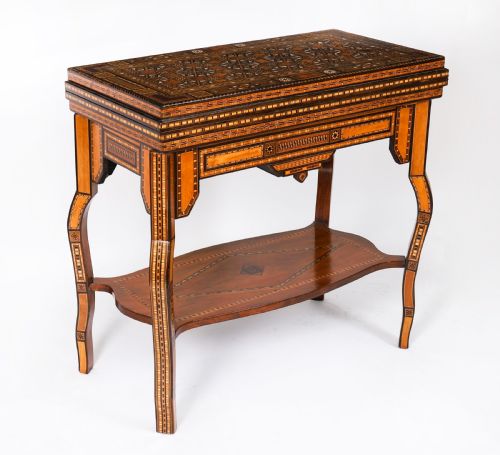
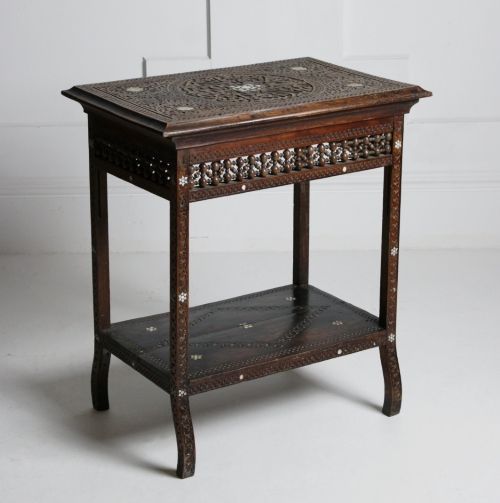
Artisans constructed these tables using hardwoods, walnut, and ebonised wood, often combining structural timber with bone and iridescent mother of pearl shell. Individual fragments of shell and bone were meticulously cut into geometric polygons and pressed into hand-carved channels within the wooden substrate.
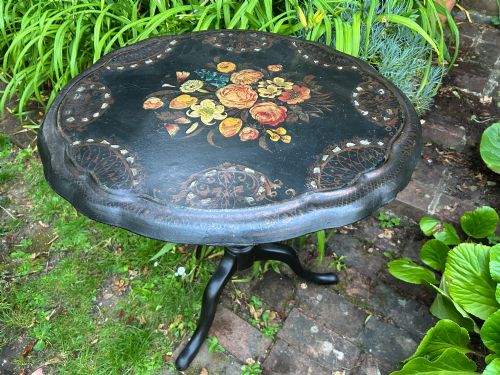
In other examples, papier-mâché and lacquered wood served as the base for mother of pearl inlay, particularly in Victorian pieces associated with makers like Jennings and Betteridge. The surfaces were then smoothed, polished, and occasionally painted to enhance the contrast between the dark ground and the luminous shell.
Retail Price Guide 2026
Typical UK retail prices for mother of pearl side table, calculated from the Sellingantiques database of over a million retail prices indexed since 2003. This retail price guide relies exclusively on Sellingantiques data; no external sources or auction records are used, so the figures do not describe the wider market.
Materials recorded across the archive include bone, papier-mâché, lacquer, and mother of pearl used in Moorish and Bohemian styles.
What varies in quality
Quality rests entirely in the density and precision of the inlay work, distinguishing master craftsmanship from simpler production. The finest examples feature tight geometric tessellation with minimal filler, where every piece of mother of pearl and bone aligns flush with the surrounding hardwood.
The integrity of the folding mechanism and the selection of secondary timbers also separate standard items from superior works. Tables retaining complete, un-chipped pearl inlay across complex octagonal surfaces represent the pinnacle of this craft.
Liberty & Co.·Jennings and Betteridge
The Mother of Pearl Side Table Glossary
- Octagonal
- Having eight sides. This geometric form is the standard shape for the tops of Middle Eastern and Moorish revival occasional tables.
- Moorish Revival
- An architectural and decorative style popular in the nineteenth century. It incorporates traditional Islamic design motifs, horseshoe arches, and intricate surface patterns into European furniture.
- Ebonised
- Wood treated to resemble ebony. This dark finish provides a high-contrast background that makes the iridescent mother of pearl inlay stand out.
- Damascus Table
- A folding occasional table originating from Syria. These pieces are traditionally constructed without metal hinges, relying instead on interlocking wooden joints.
Frequently Asked Questions
What is a mother of pearl side table?
A mother of pearl side table is a low occasional surface decorated with hand-cut pieces of iridescent shell inlaid into wood. These tables often take an octagonal form and reflect Middle Eastern, Syrian, or Victorian design traditions.
They were built to serve as functional stands for lamps, tea, or decorative objects while introducing rich texture and pattern to a room.
How were folding Damascus tables used?
Folding Damascus tables were portable occasional surfaces used flexibly around the home for entertaining or display. Their clever hinged wooden frames allowed the base to collapse flat when not needed.
In period interiors, they provided a convenient surface that could be easily moved to accommodate guests during tea or evening gatherings.
How do I date a Moorish revival table?
Dating these tables relies on examining the construction methods, materials, and stylistic context of the piece. Nineteenth-century examples often display dense hand-carved hardwood and complex bone and shell geometry.
Later pieces from around nineteen-twenty show subtle shifts in production methods and trade routes, while Victorian papier-mâché variants belong firmly to the mid-nineteenth century.
How do I care for inlaid wood furniture?
Caring for inlaid furniture requires maintaining a stable indoor environment away from direct sunlight and excessive heat. Sudden changes in humidity can cause the wood to expand or contract, putting pressure on the delicate shell and bone segments.
Dust gently with a soft, dry cloth and avoid applying modern liquid polishes that might seep into the microscopic gaps between the inlay and the timber.