
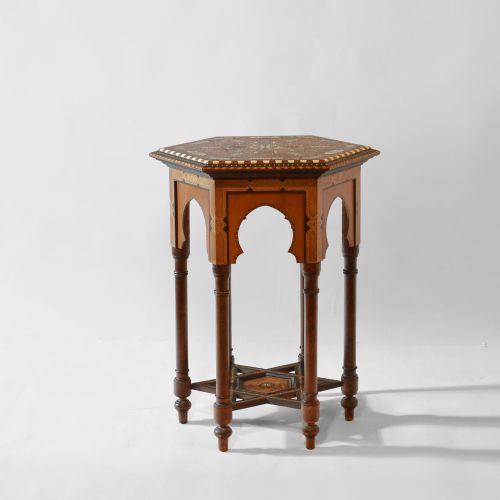


Middle Eastern Tea Table
These middle eastern tea table pieces combine rich metalwork and intricate inlay, offering a striking centrepiece for any room.
Middle Eastern Tea Table
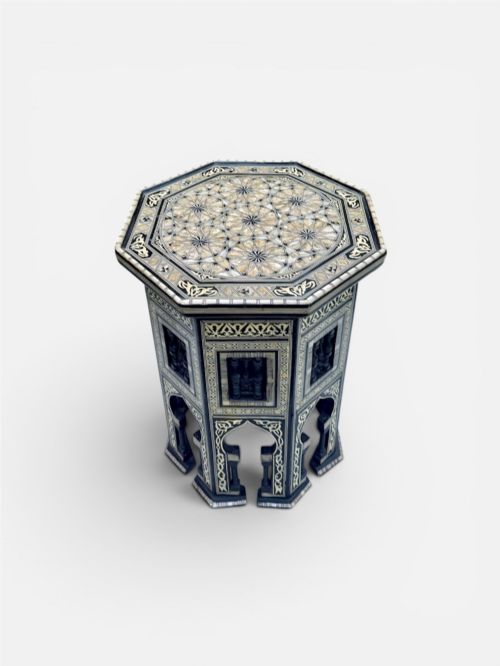
When you search for a middle eastern tea table, you encounter diverse forms including side tables, coffee tables, and folding tray tables. These items serve multiple functions around the home, acting as wine stands, lamp stands, or occasional tables.
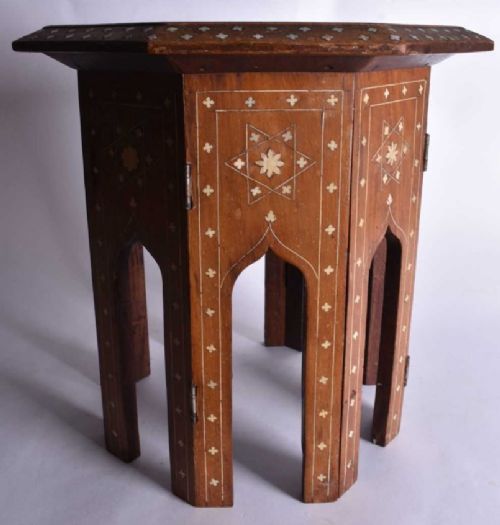
The pieces on this page span several decades and styles, notably Anglo-Indian, Mamluk Revival, Moorish Revival, Persian, Ottoman, and Syrian designs. Octagonal and hexagonal top folding Damascus tables appear frequently alongside circular brass top occasional tables.
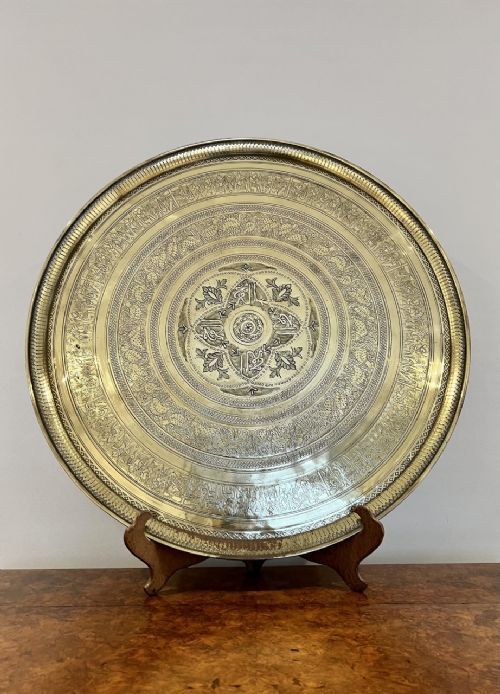
Originating across different eras from the nineteenth century into the early twentieth century, these tables reflect varied regional aesthetics. Buyers find both elaborate inlaid surfaces and simpler engraved metal trays paired with folding wooden stands.
Materials and construction
Artisans built the structural frames using hardwoods such as walnut, teak, and general timber. These wooden bases often feature intricate folding mechanisms designed for portability and easy storage.
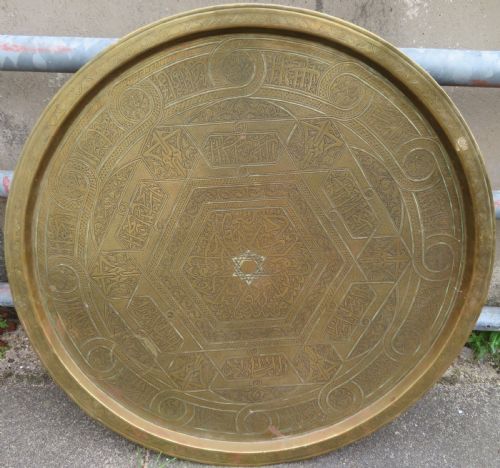
Surfaces frequently showcase elaborate metalwork executed in brass, copper, and mixed metals. Engraved motifs and inlaid bone or mother-of-pearl embellish the wood and metal components, creating high contrast and textured detail.
Middle Eastern Tea Table Retail Price Guide 2026
Typical asking prices for middle eastern tea table among the pieces listed under this phrase on Sellingantiques today, from the lower quarter to the upper quarter. They describe what is for sale here now, not the wider market.
Listings feature items dated from the 1880s through to the 1930s, constructed in brass, hardwood, walnut, teak, copper, bone, and mother-of-pearl.
Assessing craftsmanship and finish
Quality rests heavily on the precision of the inlay work and the depth of the metal engraving. Fine examples display tightly fitted mother-of-pearl and bone sections without gaps in the geometric patterns.
The weight and gauge of the brass or copper top also distinguish finer pieces from simpler items. Robust metal trays with crisp, detailed chasing demonstrate superior workshop standards compared to shallow or worn stampings.
The Middle Eastern Tea Table Glossary
- Damascus table
- A folding table featuring intricate inlay work typically associated with Syrian craftsmanship. These pieces often utilise geometric wood patterns combined with mother-of-pearl.
- Cairoware
- Metalwork originating from Cairo featuring detailed engraved or inlaid Arabic calligraphy and ornamentation. Such trays and vessels utilise brass or mixed metals.
- Mamluk Revival
- A nineteenth-century design movement inspired by the art and architecture of the Mamluk Sultanate. Objects in this style display heavy brass work and complex geometric detailing.
- Anglo-Indian
- A style blending traditional Indian forms and ornamentation with British colonial furniture requirements. These pieces frequently incorporate folding stands and dense botanical carving.
- Occasional table
- A small, movable table intended for specific, temporary uses such as holding tea sets or lamps. They appear in various heights and top shapes across these listings.
Middle Eastern Tea Table: Frequently Asked Questions
How do I fold these tables?
Most folding tables utilise a flexible wooden lattice base that collapses flat once the top is removed. The top simply lifts off or rests within the frame without permanent fixings.
Take care when lifting the top to support it evenly, avoiding pressure on inlaid mother-of-pearl or bone sections during movement.
What periods do these tables span?
The listings include items originating from the nineteenth century and the early decades of the twentieth century. Specific dates range from the 1880s through to the 1930s.
Stylistic influences and materials help indicate the era, with Victorian-era pieces appearing alongside later revival styles.
Are the trays removable?
Many examples feature a detachable metal tray resting upon a folding wooden base. This design allowed for easy transport and serving during tea service.
Some tables integrate the top more permanently into the frame, particularly heavier inlaid wooden versions.
How do I clean brass tops?
Dust brass and mixed metal surfaces regularly with a soft, dry cloth to prevent the buildup of grime. Avoid harsh chemical polishes that can strip the natural aged patina.
Preserving the darker recessed areas in engraved patterns maintains the visual contrast intended by the maker.
Where were these tables used?
These tables served domestic functions in reception rooms and parlours for serving tea and displaying decorative objects. Their portable nature suited various living spaces.
Today they function equally well as low coffee tables or accent pieces beside seating.