




Brass Tray Coffee Table
A brass tray coffee table brings portable metalwork and folding timber stands together into a practical surface for daily use.
Brass Tray Coffee Table
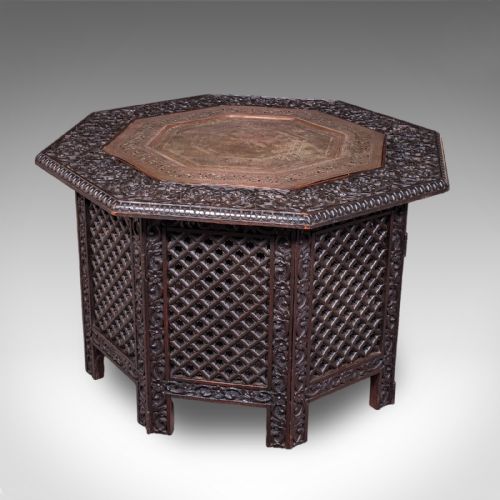
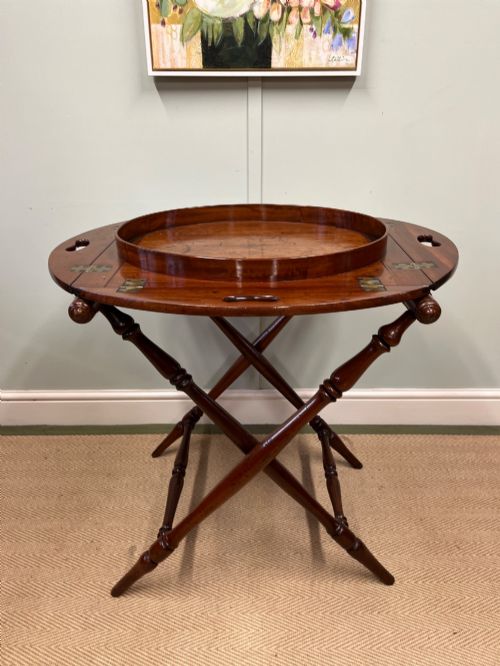
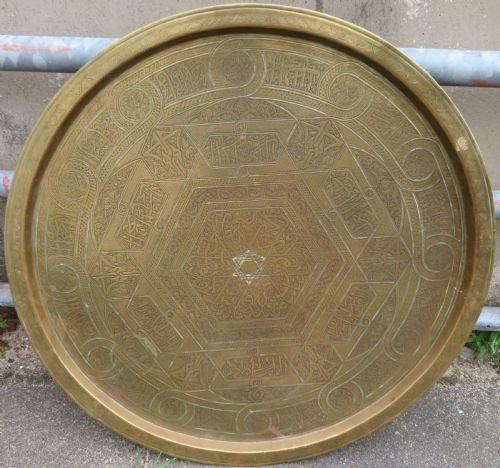
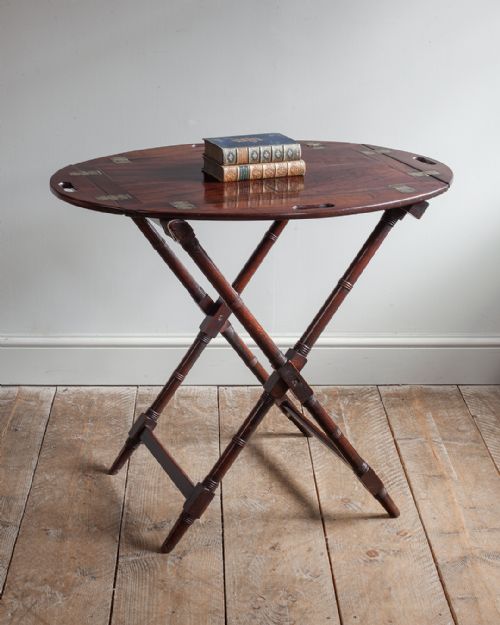
A brass tray coffee table combines a removable metal tray with a supporting wooden stand, forming a low surface suited to modern living. The examples found here range from Georgian mahogany butler's trays to folding Anglo-Indian brass top tables and Middle Eastern folding coffee tables.
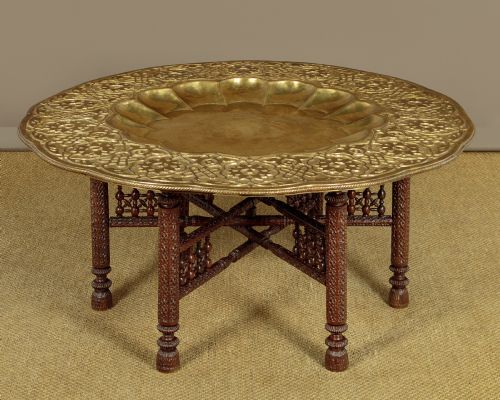
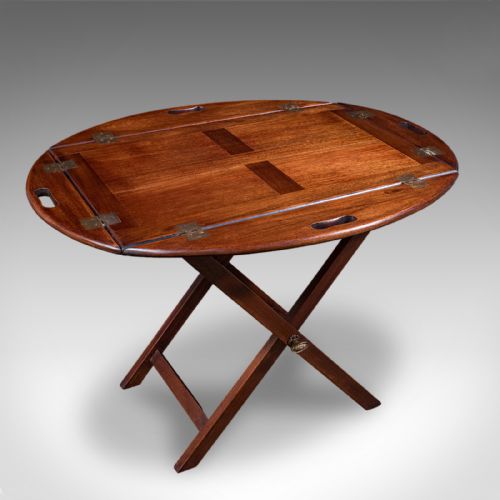
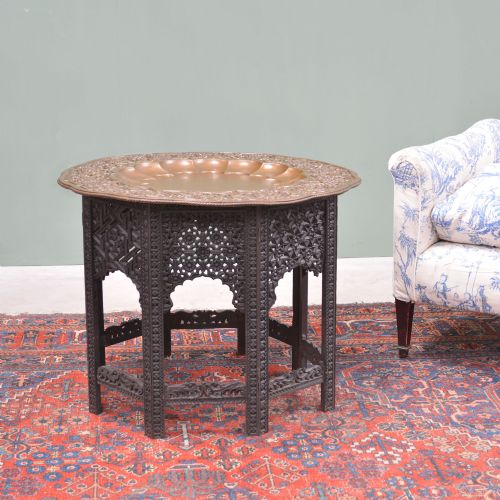
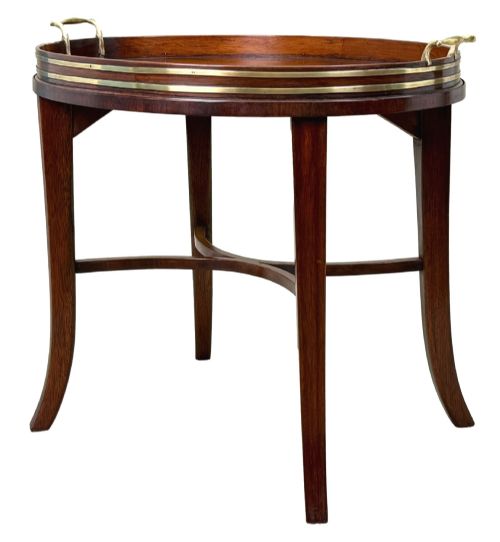
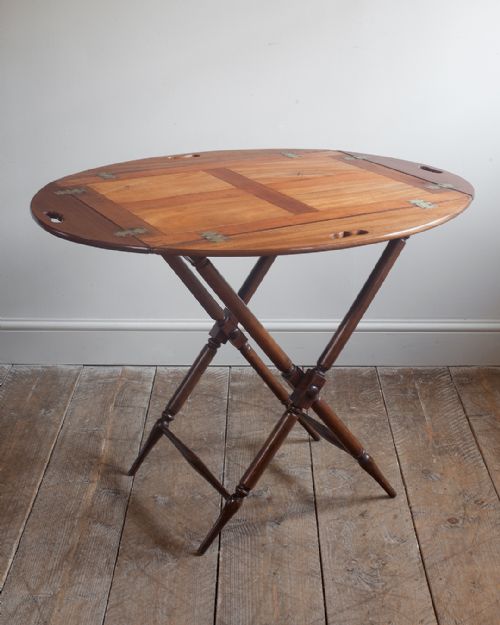
Butler's tray tables in mahogany or teak often feature drop-flaps or brass-bound edges, designed originally for carrying and serving before resting upon collapsible bases. Alternatively, round brass trays engraved in Islamic, Persian, or Benares styles sit atop folding wooden stands.
The materials span traditional hardwoods like mahogany, walnut, teak, and satinwood, paired with brass and copper. These pieces bridge formal English cabinet-making and intricate Eastern metalworking traditions.
Construction and materials
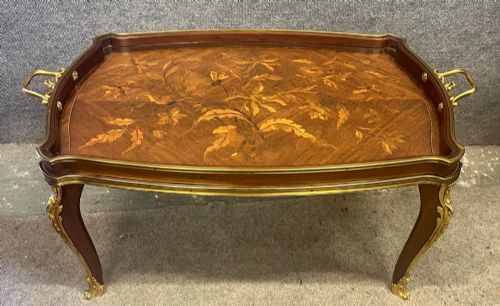
Makers utilised solid timbers such as mahogany, teak, and hardwood for the stands, often employing folding or collapsable mechanisms for easy storage and transport. Marquetry inlay, lacquer, and carved details frequently adorn the wooden frames.
The top surfaces comprise hammered, engraved, or etched brass and copper sheets. Artisans worked these metals with intricate geometric patterns, foliate motifs, and occasionally zodiac symbols or narrative scenes.
Brass Tray Coffee Table Retail Price Guide 2026
Typical asking prices for brass tray coffee table among the pieces listed under this phrase on Sellingantiques today, from the lower quarter to the upper quarter. They describe what is for sale here now, not the wider market.
Materials span traditional European cabinet woods like satinwood, walnut, and mahogany alongside hammered Eastern copper and brass.
Judging quality and craftsmanship
Quality rests upon the crispness of the metal engraving and the structural integrity of the folding timber stand. Hand-hammered brass with deep, precise chisel work separates superior trays from simpler pressed metal plates.
The timber component reveals the standard of the piece through tight joinery, carefully fitted hinges on butler's trays, and refined wood selection such as figured mahogany or detailed marquetry.
The Brass Tray Coffee Table Glossary
- Butler's tray
- A portable wooden tray with raised sides, frequently featuring hinged flaps, designed to rest on a separate folding stand. They typically appear in mahogany or walnut.
- Anglo-Indian
- A style of furniture produced in India during the British period, combining local carving traditions with European forms. These pieces often incorporate dense teak, rosewood, and brass tops.
- Mamluk Revival
- A nineteenth-century design movement inspired by medieval Islamic metalwork from Egypt and Syria. Tables in this style feature heavy brass inlay and intricate geometric engraving.
- Drop-flap
- A hinged section on the side of a tray that lowers or locks into place. This mechanism allowed servants to expand the surface area during serving.
- Marquetry
- The art of applying decorative pieces of veneer to a structure to form intricate patterns. Examples in these listings include satinwood and exotic woods on table borders.
Brass Tray Coffee Table: Frequently Asked Questions
How do I clean a brass tray top?
Dust the surface regularly with a soft, dry cloth to prevent grime build-up in the engraved recesses. Avoid harsh chemical polishes that strip away the aged patina accumulated over the centuries.
For stubborn marks, a gentle wipe with a damp cloth followed by immediate drying protects the metal. Preserving the dark oxidation in the engraved lines maintains the visual depth of the design.
Are the trays fixed to the stands?
Most trays lift off their stands entirely, following their original purpose as portable serving vessels. This design allowed domestic staff to carry food or tea before placing the tray onto the folding base.
When positioning the table in a busy room, check how securely the tray sits within the rim of the stand. Some modern or adapted pieces use small hidden brackets, but traditional examples rely on gravity and fitted ledges.
How do I date an antique tray table?
Examine the timber construction methods, tool marks on the wood, and the style of the brass engraving. Georgian pieces in mahogany show hand-cut dovetails and vernacular joinery, whereas Edwardian versions often display machine-finished elements.
Islamic and Anglo-Indian brass tops from around nineteen hundred typically exhibit dense hand-chiselling over heavy metal sheets. Comparing the wear patterns on the stand with the tray helps confirm if the pairing is original.
Can these tables handle daily use?
Solid hardwood stands and thick brass plates endure normal everyday placement of cups and books quite well. The folding mechanisms are designed for practical movement, though older hinges require gentle handling.
Using coasters prevents liquid rings from forming on older wooden stands or unsealed brass surfaces. Regular checks on the folding cross-frames ensure the table remains stable on uneven floorboards.