


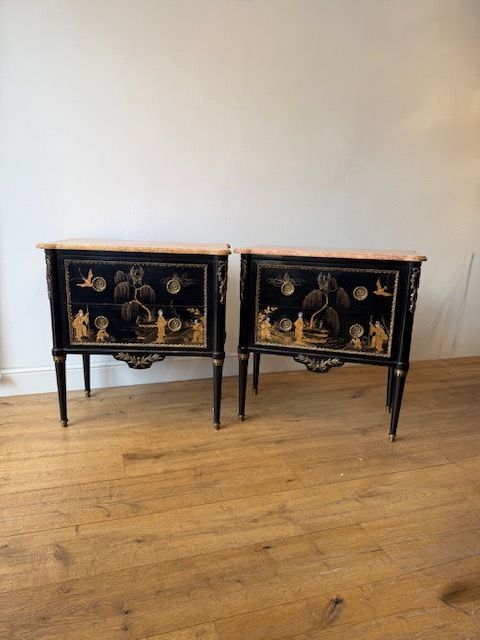


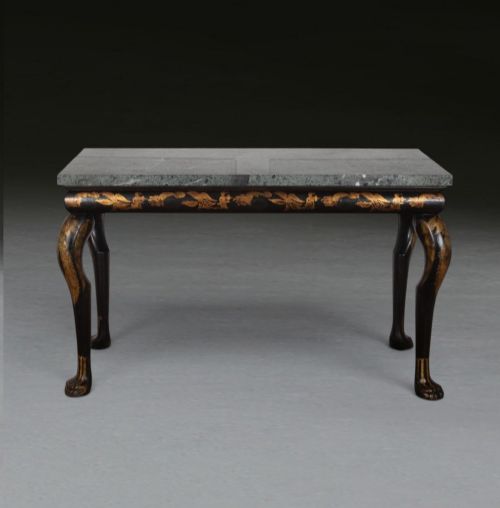

Black and Gold Side Table
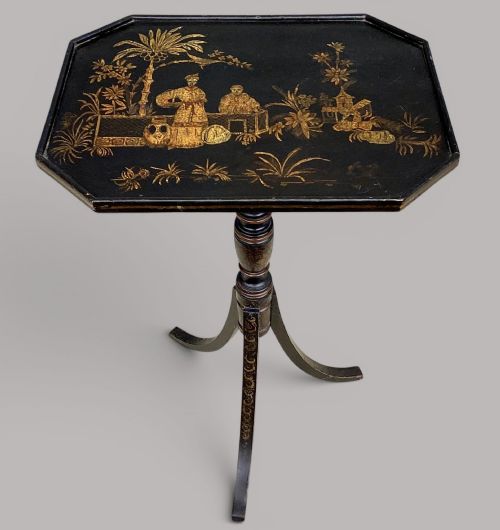
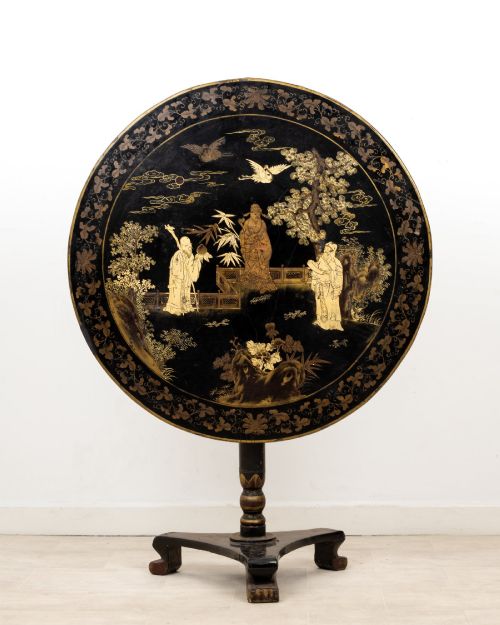
A black and gold side table brings dark elegance and gilded detail to a room, drawing the eye with rich lacquer or ebonised surfaces.

Black and Gold Side Table
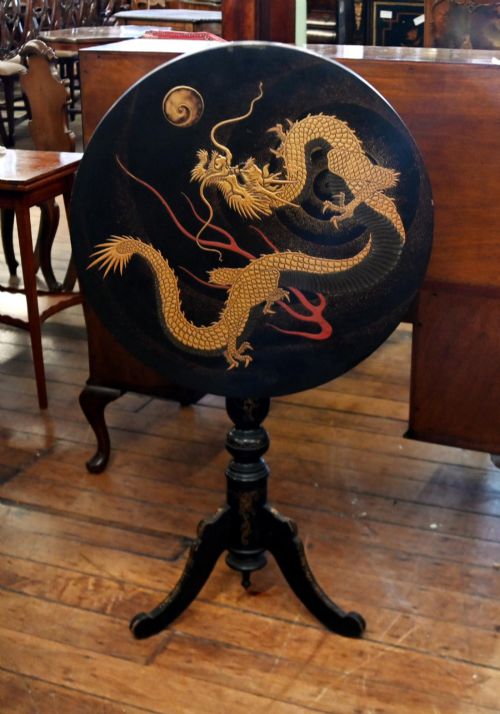
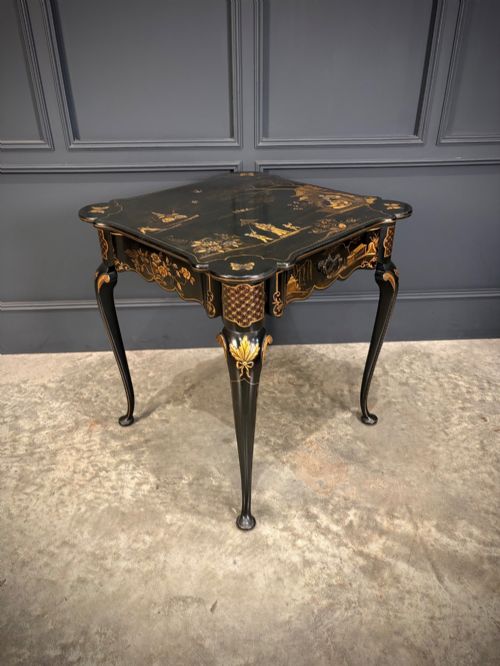
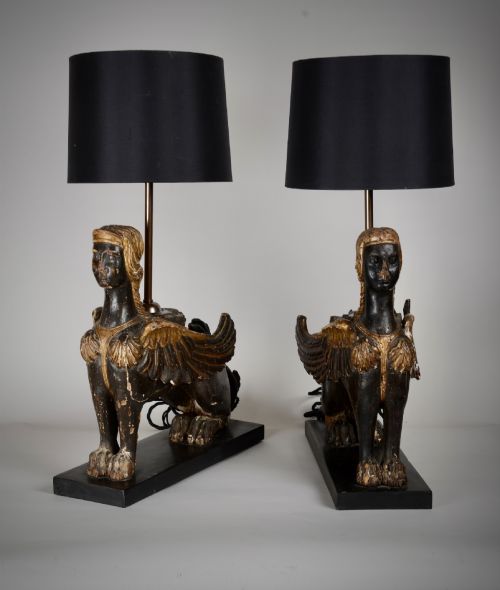
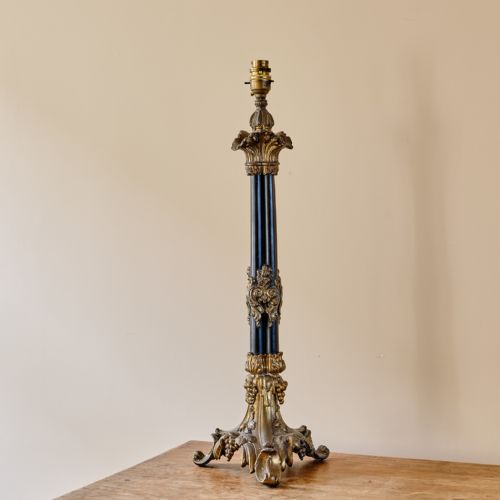
When searching for a black and gold side table, collectors encounter pieces ranging from Georgian and Regency items to Victorian papier-mâché and early twentieth-century Chinoiserie creations. These occasional tables, nests of tables, and console tables serve both decorative and practical functions in a traditional or modern interior.
The most common examples on this page date from the nineteenth and early twentieth centuries, frequently displaying hand-painted decoration or parcel-gilt highlights upon dark wood and lacquer.
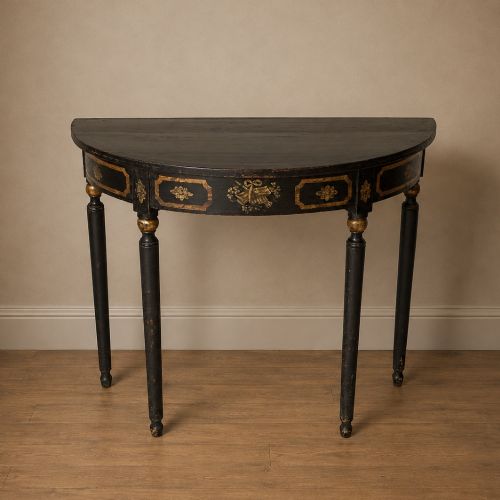
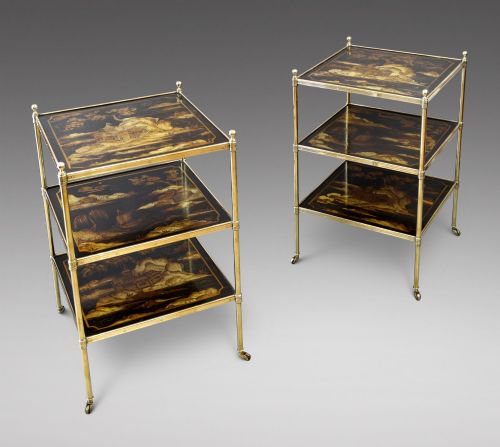
Forms vary from tilt-top occasional pieces and sewing tables to nested sets and console tables, reflecting diverse stylistic influences including Regency elegance, French Neoclassical design, and intricate Chinoiserie motifs.
Materials and Construction
Craftsmen shaped these tables using timber, ebonised wood, and papier-mâché as a base, applying layers of black lacquer or dark paint to achieve a dense, light-absorbing surface.
Decoration relied on gold leaf, parcel gilding, and intricate hand-painted details, sometimes complemented by brass mounts, marble tops, or inlaid elements such as amboyna and satinwood.
Black and Gold Side Table Retail Price Guide 2026
Typical asking prices for black and gold side table among the pieces listed under this phrase on Sellingantiques today, from the lower quarter to the upper quarter. They describe what is for sale here now, not the wider market.
Listings feature black and gold tables spanning the eighteenth century through to the 1930s, utilising lacquer, papier-mâché, and ebonised wood.
Distinctions in Quality
Quality rests upon the depth and durability of the black finish, whether through genuine layered lacquer, smooth ebonising, or carefully formed papier-mâché, contrasted against the precision and crispness of the gold leaf or hand-painted ornamentation.
Structural integrity in joints, the stability of nesting sets, and the preservation of original painted or gilded surfaces separate standard utility items from finer examples produced by skilled workshops.
Lamb of Manchester
The Black and Gold Side Table Glossary
- Ebonised
- Wood treated with a dark stain or finish to imitate ebony. This technique provides a uniform, dark surface that readily accepts parcel-gilt details.
- Parcel Gilt
- Decoration where only specific parts of an object are gilded with gold leaf. This method highlights carved details, edges, or motifs against a dark background.
- Papier-mâché
- A composite material made from paper pulp or layers of paper bound with glue, then moulded and dried. It forms a sturdy base for lacquer and hand-painted decoration on nineteenth-century tables.
- Demi-Lune
- Half-moon or semicircular in shape. Console tables often adopt this profile to sit flush against a wall.
Black and Gold Side Table: Frequently Asked Questions
What periods do these black and gold tables come from?
The pieces span the eighteenth, nineteenth, and early twentieth centuries. They encompass Georgian, Regency, Victorian, and later revival styles.
Craftsmanship evolves across these eras, moving from eighteenth-century lacquer work to Victorian papier-mâché and twentieth-century Chinoiserie interpretations.
How were lacquer tables used historically?
These tables served multiple domestic purposes, acting as occasional surfaces for tea, needlework, or display. Nests of tables provided flexible surface space that could be stored compactly.
Console tables and centre tables anchored formal rooms, often placed against walls or beneath mirrors to display decorative objects.
Are nest of tables an antique invention?
Sets of nested tables gained popularity during the nineteenth and early twentieth centuries as homes required adaptable furniture. They allowed multiple surfaces to occupy the footprint of a single table.
Chinoiserie sets from the early twentieth century continued this tradition with decorated lacquer surfaces.
How do I care for an antique lacquer table?
Protect the surface by avoiding direct sunlight, excessive moisture, and heat. Dust gently with a soft, dry cloth rather than using chemical polishes.
Preserving the fragile gold leaf and black finish requires a stable indoor climate and careful handling during relocation.